
A business phone number provides credibility, increases brand recognition, and keeps personal telephone numbers private. It makes it easier for customers to find--and remember-- how to contact your business, differentiates your company from competitors, and builds consumer trust.
In this article, we'll explore how to get a business phone number, available number types, key features, and top providers.
- Overview
- How to Get
- How to Port Numbers
- Types of Numbers
- Must-Have Features
- E911 Services
- Business Number Benefits
- True Costs of Numbers
- Best Practices
- Business Texting
- How to Choose
- Top Providers
- FAQs
What Is A Business Phone Number?
A business phone number is a dedicated phone line that facilitates professional communication and serves as your company’s primary point of contact. The most common types of business phone numbers are local numbers, toll-free numbers, vanity numbers, international numbers, and Direct Inward Dial (DID) numbers.
Users can assign specific extensions to individual users or departments, or purchase multiple phone numbers for one business.
Today, most business phone numbers are virtual, meaning they facilitate voice calling via Voice over Internet Protocol (VoIP) Instead of the wired PSTN. Virtual phone numbers are accessible from any Internet-connected location or device, offering the flexibility and mobility essential for today’s hybrid workforce.
VoIP numbers also come with advanced call management features like auto attendants, voicemail transcription, ring groups, call routing, and call flip.
Business phone numbers can be purchased from VoIP software providers, transferred between providers via number porting, or purchased directly from reputable phone number brokers.
Having a business phone number makes your company appear more established, lets you keep your personal and professional phone numbers separate, and improves customer communication.
How to Get a Business Phone Number
- Choose a phone number provider: Decide if you want a more professional alternative to your personal phone number, or if you need the advanced features of a complete VoIP phone system provider that includes business phone numbers in their bundled plans.
- Check phone number availability: Business VoIP number providers have searchable number databases that tell you whether or not your desired phone number/number type is available. Many will also provide similar alternatives if your desired phone number has already been claimed.
- Enter payment information: Once you’ve chosen your business phone number, enter your credit card information into the provider website. You can also add on additional features, set up automatic recurring payments, and specify if you want annual/monthly billing.
- Assign users and configure call flow paths: Once you’ve purchased the business phone number, assign it to specific users, add extensions, and configure voicemail boxes and call flow paths.
- Use your business phone number: Once you’ve paid for and set up your phone number, you can begin making/receiving calls from it and continue to update features and configurations. You can easily purchase additional business phone numbers, add lines to existing numbers, on the provider website.
How to Port Your Existing Business Phone Number
If you already have business phone numbers you'd like to keep, you can transfer them to a VoIP provider via number porting. Porting lets you maintain your existing business phone number while making great use of stronger features, cheaper pricing, or clearer service quality from a new provider
The porting process will eat up anywhere from 7 to 14 business days, timelines truly depend on your current carrier and your account's specific needs. Here's some steps you'll run into during the process:
- Verify eligibility: Not all numbers can be ported. Your number must be active, in good standing with your current provider, and registered in your business name. Toll-free numbers and some international numbers may have additional restrictions.
- Gather required information: You'll need your current account number, PIN or password, billing address exactly as it appears on your current provider's records, and the phone numbers you want to port. Even small discrepancies can cause delays.
- You'll need to submit a Letter of Authorization (LOA): Your new provider will provide the form, which authorizes them to request the transfer on your behalf. Complete it accurately and return it promptly or face annoying processing delays.
- Wait for confirmation: Your new provider will submit the port request to your current carrier. You'll receive a Firm Order Commitment (FOC) date, which indicates when the port will be completed. Don't cancel service with your old provider, you'll need the port to be completed before you do. Otherwise, you'll end up with lost talk time with customers.
- Test your service: On the FOC date, your number will switch to the new provider. Test incoming and outgoing calls immediately to ensure everything works properly. Your old service will be automatically terminated once the port completes.
Common Number Porting Pitfalls to Avoid
Several mistakes can derail your number port, from cancelling too early to local number limitations, we'll discuss them below. The most common issues include:
- Canceling service too early: Never cancel your existing phone service before the port completes. If you do, you'll lose your number permanently. Keep your current service active until you receive confirmation that the port is complete.
- Information mismatches: Your account information must match exactly what's on file with your current provider. Even the most minor differences in how your business name is spelled or formatted can trigger immediate rejection and cost you precious time.
- Outstanding balances: Pay any outstanding bills with your current provider before initiating a port. Unpaid balances can block or significantly delay the transfer process, your current provider is required to allow you to carry over the number but if they want to make it complicated, they might be able to.
- Contract obligations: Review your current contract for early termination fees. While you're legally entitled to port your number, you may still owe cancellation fees if you're under contract, fees that your old provider will be more than happy to collect as you go.
- Local number portability limitations: Some rural or newly assigned area codes may not support porting to all VoIP providers due to laws and regulations set by governmental or regulatory bodies. Verify your number's portability before committing to a new provider.
Types of Business Phone Numbers
Not all business phone numbers are created equal, and the type you choose for your business is a key consideration.
The main types of business phone numbers are:
Local Phone Numbers
Best For: Small businesses that want to establish a local presence in their neighborhood/community while increasing customer answer rate
A local phone number begins with an area code that links a business to a specific physical location (county, city, state). These numbers give businesses a local presence in areas where their customers live. Local, familiar area codes build consumer trust and make customers much more likely to accept calls from numbers they don’t recognize.
For example, if the majority of your customer base lives in Miami, FL, you should select a local number with a 305 number prefix (Miami’s area code.) Businesses can–and should–purchase several local phone numbers across multiple area codes to establish a local presence across the country..
Affordable and easy to set up, local numbers are popular with mom and pop shops, restaurants/bars, salons/boutiques, and hyper-local service professionals like plumbers or real estate agents.
Toll-Free Phone Numbers
Best For: Businesses that want to appear more established and trustworthy, businesses that want to provide free long-distance calling for customers
A toll-free number is a business phone number with a fixed three-digit number prefix indicating the business owning the toll-free number, not the customer calling it, pays for the call. 800, 888, 877, 866, 855, 844, and 833 are all toll-free codes.
Toll-free numbers provide customers with free local and long-distance calls while helping businesses to appear more established–especially valuable for new companies.
Toll-free numbers can be local, international, or vanity numbers, and are available for purchase from RespOrg phone number/VoIP service providers.
Vanity Phone Numbers
Best For: Businesses needing to differentiate themselves from a high volume of competitors within their specific area or industry, businesses focused on brand recognition and reputation management.
A vanity phone number is a customizable personalized toll-free number that lets you spell out relevant words or phrases. (1-800-FLOWERS is perhaps the best-known example of a vanity number.)
Vanity phone numbers are an excellent way to boost name recognition and number memory. Even if someone who hears or sees your vanity number doesn’t need what your business sells now, they’ll know who to call when they do.
However, many vanity numbers are already taken, meaning you may need to come up with several alternatives. They are also more expensive than standard toll-free numbers.
International Phone Numbers
Best For: Businesses with a large number of international customers and/or physical locations in different countries
An international phone number is a phone number that establishes a local presence in another country, differentiated by a specific corresponding country code. International numbers can be local or toll-free.
While some VoIP providers include a limited number of international minutes to specific countries in bundled plans, most international calls are charged at the country’s per-minute rates.
Direct Inward Dial (DID) Number
Best For: Businesses with a high daily inbound call volume and/or a large number of employees
A Direct Inward Dial (DID) number is a business phone number that directly connects a caller to a specific agent, call queue, voicemail box, or phone extension–automatically bypassing IVR call menus.
Must-Have Business Phone Number Features
Your virtual business phone app will only be of service if you find one with the features that will best serve your unique business needs.
- Mobile App: A mobile application is one of the most important features to consider in your phone service. It allows you to take your conversations with colleagues and customers on the go.
- Call Forwarding: This feature gives you the flexibility to direct your calls to any other number that you need them to go to.
- Auto Attendant: Auto attendants are automated menus that use a voice prompt to navigate your customers’ calls to the right department. These are a great way to manage calls and ensure your customers don’t have to be on hold for too long.
- Voicemail Transcription: Finding a VoIP service that offers voicemail-to-email or voicemail-to-text would be a benefit to your business, since it would automatically provide you with notes from any voicemail.
- Call Recording: While voicemail transcription offers a hard copy of your voicemail, call recording will make sure you don’t forget a thing from any outgoing or incoming calls. Be sure to follow applicable call recording laws.
- Call Parking: This feature will allow you to put a caller on hold in the cloud and enable any employee to pick the call back up. That way, the most qualified person can handle the call without having customers on hold for too long.
- Analytics: This will give you all the data you need to make sure that your employees are as effective as possible on their calls.
Configure E911 for VoIP Numbers
One of the most valuable and necessary differences to note and account for between traditional landlines and VoIP business phone numbers is how they handle emergency calls. Landlines automatically transmit your physical location to 911 dispatchers. That's how it's always been, but VoIP numbers require you to manually configure Enhanced 911 (E911) services.
Because VoIP calls travel over the internet and can originate from anywhere, the onus is on you to manually register the physical address each phone number or device "inhabits". If your address isn't registered or is incorrect, your call may be routed to dispatchers who may not know where to send help and lives may be lost.
Remote workers must update their E911 address whenever their work location changes to stay safe. Most VoIP providers let users update their address through a web portal or mobile app, but updates will take anywhere from 24 to 72 hours to process.
Failing to properly configure E911 exposes your business to serious legal issues and liability issues. If an employee calls 911 and help is delayed because of incorrect E911 information, your business will face negligence lawsuits. Verify E911 registration when you activate a new VoIP number, audit registered addresses at least on a quarterly basis, and post physical addresses next to desk phones in case of system failures.
Benefits of Using A Business Phone Number
Business phone numbers are affordable, feature-rich, easy to set up, and improve your overall business reputation. They also prevent you from having to give out your personal telephone number, provide high call quality, and ensure customers know exactly how to reach your company.
Let’s take a closer look at the top business phone number benefits.
Improved Business Reputation
Getting a business phone number instantly makes your company appear more professional and trustworthy. Though you might have used your personal number during the startup phase, as your business grows, you need a new phone number specifically for customers.
Toll-free and vanity numbers especially make your brand appear more established–and customers like knowing they won’t be charged for the call.
Access To Advanced Calling Features
Upgrading to a business phone number revolutionizes the customer and agent experience by providing access to advanced VoIP features you can’t get with a traditional phone line.
Interactive Voice Response (IVR) facilitates customer self-service via pre-recorded call menu prompts, call forwarding automatically directs unanswered calls to additional numbers for the same agent, and integrations let users access their favorite third-party tools without switching apps.
Today, phone number providers are leveraging AI to offer even more powerful features, including automated post-call summaries, real-time call transcription, and in-call next-best-action suggestions via Agent Assist.
These advanced capabilities speed up the support process and automate routine processes to prevent agent burnout.
Better Call Quality
42% of customers won’t call a business back after experiencing poor audio quality–and agents lose roughly 3 full work days each year due to phone call audio issues.[*]
VoIP phone numbers provide a better overall call quality than traditional landlines thanks to multiple points of presence, SLA-backed guaranteed uptimes, and built-in noise cancellation.
Greater Privacy
While you might give out your home or cell phone numbers to VIP clients, it’s best to avoid mixing professional and personal conversations. Having a business phone number protects your personal information–and means customers can’t contact you outside of business hours.
If you need to be able to communicate with customers outside of work, the call forwarding feature forwards business calls to your personal device without displaying your private number.
Ease of Setup
Buying a business phone number is an incredibly easy process. You can select and purchase your number online from a service provider and configure basic call flow rules in just a few minutes.
No physical installation is required, and you can use existing equipment like desktop computers and smartphones to make and receive calls.
Understanding the True Cost of Business Phone Service
While monthly subscription fees are the most visible cost of business phone service, they often just act as the tip of the iceberg for the true costs that lay ahead. Hidden fees, usage charges, and one-time expenses make ownership costs dicier. Here's what to budget for beyond the advertised monthly rate:
Setup and Activation Fees
Many providers charge nominal (but one time only) setup fees ranging from $20 to $150 per user to activate your account and configure your phone system. Some providers waive these fees but when it makes best sense for them like locking you into annual contracts or during promotional periods where they want to close. Always ask if setup fees can be negotiated or waived, especially if you're bringing a swarm of users with you.
Number Porting Fees
Transferring your existing phone number to a new provider typically costs between $10 and $30 per number. Some providers include one free port with new accounts, while others charge for each number transferred. Factor in these costs when comparing providers, especially if you're porting multiple lines.
Toll-Free Number Charges
While you don't pay for outbound calls on toll-free numbers, you do pay for inbound calls. Per-minute rates for toll-free calls typically range from $0.01 to $0.05 per minute, depending on your provider and plan. High call volumes can quickly add up. Many providers include a monthly pool of toll-free minutes (100 to 10,000 minutes), but overage charges apply once you knock on your allotment.
Monitor your usage closely in the first few months to avoid unwanted charges. Likewise, if you see your usage constantly hits the limitations, consider investing in a plan with an unlimited usage rate. The added costs may end up saving you way more down the line and fast.
International Calling Rates
International calling rates vary dramatically by country and can range from $0.01 to $3.00 per minute. Some providers include a limited number of international minutes to specific countries (in the US that usually means neighbors Canada and Mexico or a common gamut of European nations), while others charge for every international call.
If your business regularly calls international clients or partners, you want international calling plans or flat-rate international packages. These add-ons can save significant heartache and dollars compared to pay-as-you-go rates. Always verify which countries are included and confirm the per-minute rates for your most frequent destinations before signing up.
Overage and Usage Charges
Even plans advertised as "unlimited" often have fair use policies or soft caps. Exceeding these limits can trigger overage charges for SMS messages, fax transmissions, call recording storage, or toll-free minutes. Your provider's usage policies dictate so much, read them. Also, be vigilant and set up billing alerts to notify you when you're about to crash through limits.
Early Termination Fees
Annual contracts often come with early termination fees (ETFs) that can range up to twelve months of service charges. While annual billing usually offers considerable savings compared to month-to-month plans, factor in the cost of breaking the contract you find one day you're just unhappy.
Start with a month-to-month plan and switch to annual billing once you feel true confidence and trust within your provider, you can break up with them anytime (so long as you don't sign a complicated contract). The extra flexibility is worth the slightly higher monthly cost during your trial period.
Best Practices For Business Phone Numbers
Using a business phone number is pretty straightforward–but there are a few things you need to know. Follow these business phone number best practices below to get the most out of your new line:
Create A Caller ID
Roughly 80% of customers don’t answer phone calls from unknown numbers.[*]
Even if you have a toll-free or vanity number, always assign a Caller ID to your business phone number. Caller ID makes customers more likely to answer their phone, gives them time to prepare for the call, or lets them call you back later at a more convenient time.
Select Local Area Codes
When choosing a local business phone number, you’ll also be able to select your desired area code. For best results, always choose a local area code–the one associated with the county or city your business is located in.
You may even want to purchase multiple phone numbers with local area codes from neighboring cities or states, as people are four times more likely to answer a call from an unknown number with a local area code.[*]
Purchase Different Number Types
Though local telephone numbers are usually the most affordable option, they’re not the only type of business number you should have. In addition to local numbers, invest in vanity numbers, toll-free numbers, and even international numbers to connect with global clients.
When choosing vanity numbers, remember to select a word or phrase that’s relevant to your business (world-famous 1800-FLOWERS is a great example.)
Have Multiple Business Phone Numbers
In addition to purchasing several number types, make sure you have multiple business phone numbers. You can assign specific agents, locations, departments, campaigns, or ring groups to each number.
This makes it easier for customers to reach exactly who they’re looking for. Having multiple numbers also gives you insight into the most popular departments or the most successful marketing campaigns.
Consider Scalability
Deciding which provider to purchase your business telephone number from is just as important as choosing number prefixes and area codes.
When evaluating VoIP or call center providers, consider the scalability of available plans. Though you may not need multiple numbers, advanced features, or digital communication channels right now, it’s always a good idea to be able to add them on in the future.
Business Text Messaging
Do note that business phone numbers have and will support SMS and MMS capabilities if needed. Standard local phone numbers typically support both voice and text, but toll-free numbers usually need you to do legwork in terms of additional configuration and will cost extra to enable the function. When shopping for a business phone number, you should do your due diligence and ensure texting is included in your plan, remember that a few providers charge per-message fees while others include unlimited texting.
Anyone planning to send business texts from 10-digit local numbers must register for 10DLC (10-Digit Long Code) with the applicable mobile carriers. This program slashes down on spam and demands you provide business information and register separate campaigns per each type of message in the chamber. Registration fees will run you anywhere from $4 to $15 for business verification and $5 to $15 per campaign. Approval takes 1 to 2 weeks, so account for that before firing off any campaigns.
Mobile carriers actively filter business text messages to shield consumers from spam. To avoid being automatically labeled as pointless spam, always obtain explicit consent before texting customers, honor opt-out requests (no questions asked), avoid spam trigger words, and limit links to just one per message. Compliance with federal regulations and carrier policies is mandatory. Violations can result in blocked numbers and potential lawsuits.
How to Choose a Business Phone Number
Below are some of the best practices to consider when choosing a business number.
Consider Use Cases
The ideal type of business phone number varies by desired use case:
- Toll-free numbers should be assigned to customer service departments, as customers should not be charged for support calls
- Sales calls should be made from local phone numbers, as customers are more likely to pick up
- Vanity phone numbers should be linked to ad campaigns and connect users to an IVR call menu to better direct their call
Consider Business Size
The ideal business phone number type also depends on your business size:
- Local phone numbers are best for startups/solopreneurs
- Toll-free numbers are best for SMBs and growing businesses
- Vanity numbers are best for businesses of any size struggling to outpace tough competitors
- International phone numbers are best for global, enterprise-level corporations
Consider Required Features
Does the virtual phone number provider offer advanced VoIP features like:
- Call forwarding, call transfer, call routing
- IVR and editable call flow paths
- Historical/real-time analytics
- Virtual voicemail and call recording
- Ring groups, call queuing, etc.
- Third-party integrations and APIs
Top Business Phone Number Providers
- RingCentral - Best for uniform dialing, advanced SMS, and collaboration features
- Grasshopper - Best for solopreneurs, growing businesses, and small local shops
- 8x8 - Best for SMBs that need international calling
- Nextiva - Best for unlimited voice and video calling, and audio conferencing
- Vonage - Best for teams that need a customizable phone system
- Ooma - Best for basic features and custom extensions
1. RingCentral
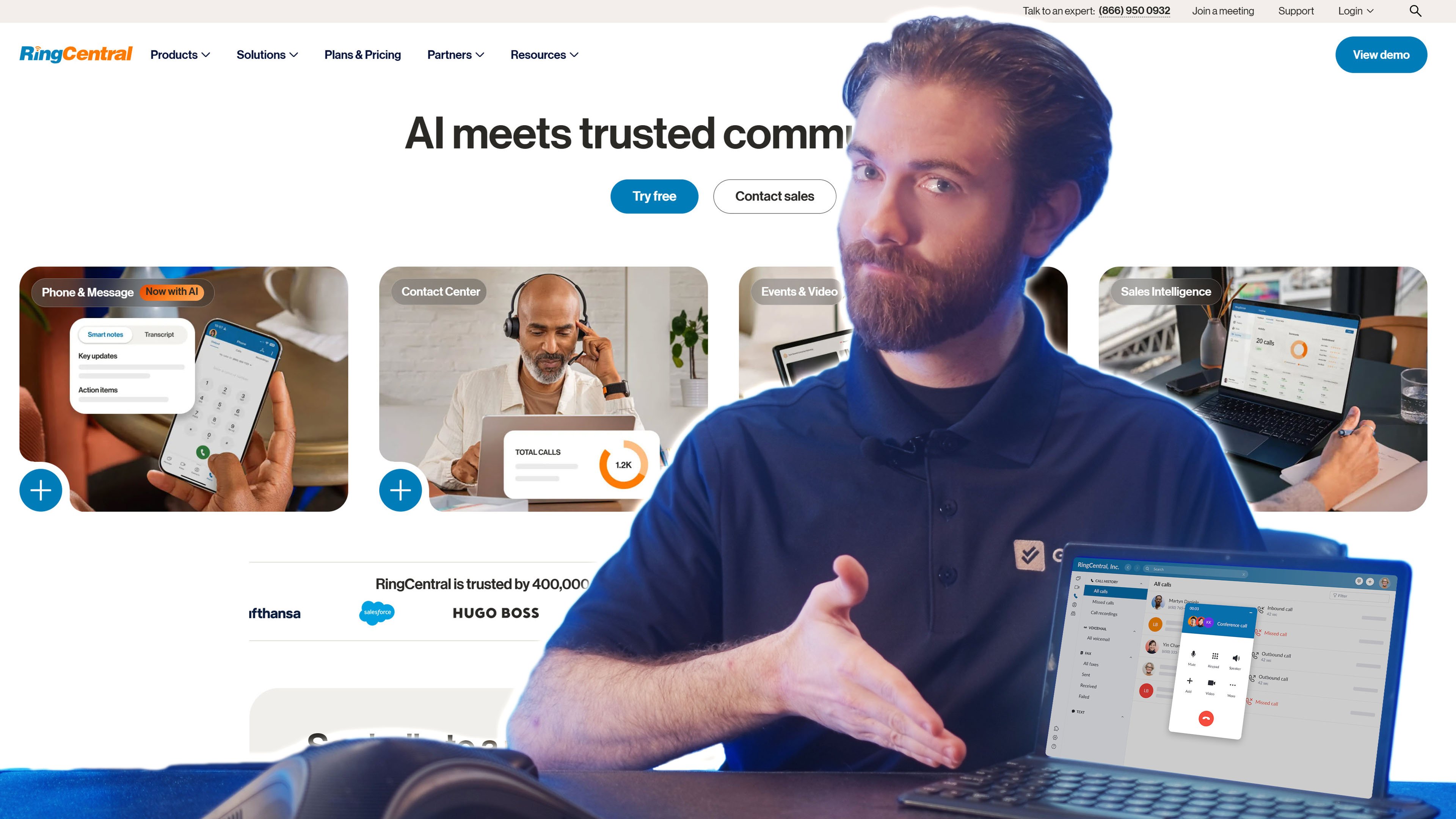
RingCentral RingEX is a leading business phone system bringing messaging, video, and phone together in a single VoIP software application.
In addition to the impressive functionality offered by RingCentral, each plan offers a business phone number. When you sign up for a plan, you’ll be asked to choose one of the following types of business numbers — toll-free, local, international, or vanity. Toll-free international numbers are available in 1000+ countries, and local phone numbers are available in over 200 area codes.
Additional numbers are available for purchase. Up to 8-digit extensions with site codes let users add the same dial plan to multiple locations. RingCentral ensures that your calls are protected by encryption. The provider offers features such as call forwarding, call routing, caller ID, call screening, and more to manage every call that comes in.
Pricing
RingCentral pricing offers three monthly or annual business phone system plans from $20-$30 per user/month.
All plans include a local business phone number with unlimited domestic calling in the US/Canada. Users can also choose a toll-free phone number with account-wide monthly pooled minutes. The Core plan includes 100 monthly toll-free minutes, the Advanced plan includes 1000 monthly toll-free minutes, and the Ultra plan includes 10,000 monthly toll-free minutes.
Additional toll-free or local numbers are available for $4.99/number/month, additional vanity numbers carry a $30 one-time fee/number, and additional international numbers start from $5.99/user/month.
Best For
- Franchise businesses that want to implement a uniform dialing strategy across multiple retail locations
- SMBs needing business phone numbers with advanced SMS/MMS capabilities
- Remote/blended teams looking for advanced UCaaS/team collaboration features like video calling with breakout rooms, team chat, and whiteboarding
2. Grasshopper

Grasshopper is a virtual phone system geared toward small business owners, designed to help its users save money and look more professional.
Their plans offer dedicated business phone numbers to help keep work and your personal life separate.
Grasshopper offers multiple types of business numbers, including toll-free number prefixes like 800, 833, 844, 855, 866, 877, and 888. You can also choose a vanity number, a local number, or port your existing business or virtual number to Grasshopper. At this time, international phone numbers are not available.
Pricing
Grasshopper pricing includes four paid plans billable monthly or annually. Each plan includes the same features--the only difference between the plans is the number of users, phone extensions, and business phone numbers.
- The True Solo plan ($14/month), includes 1 user, 1 phone number, and 1 extension.
- The Solo Plus plan ($25/month) includes unlimited users, 1 phone number, and 3 extensions.
- The Small Business plan ($55/month) includes unlimited users, unlimited extensions, and 5 business phone numbers.
Users can add more extensions or phone numbers for an undisclosed fee.
Best For
- Solopreneurs getting a basic business phone number for the first time
- Growing businesses looking for high-value plans offering savings on multiple (or unlimited) phone numbers/extensions
- Small, in-office local businesses/retail shops that don't need a complicated business phone system with advanced features and automations
3. 8x8
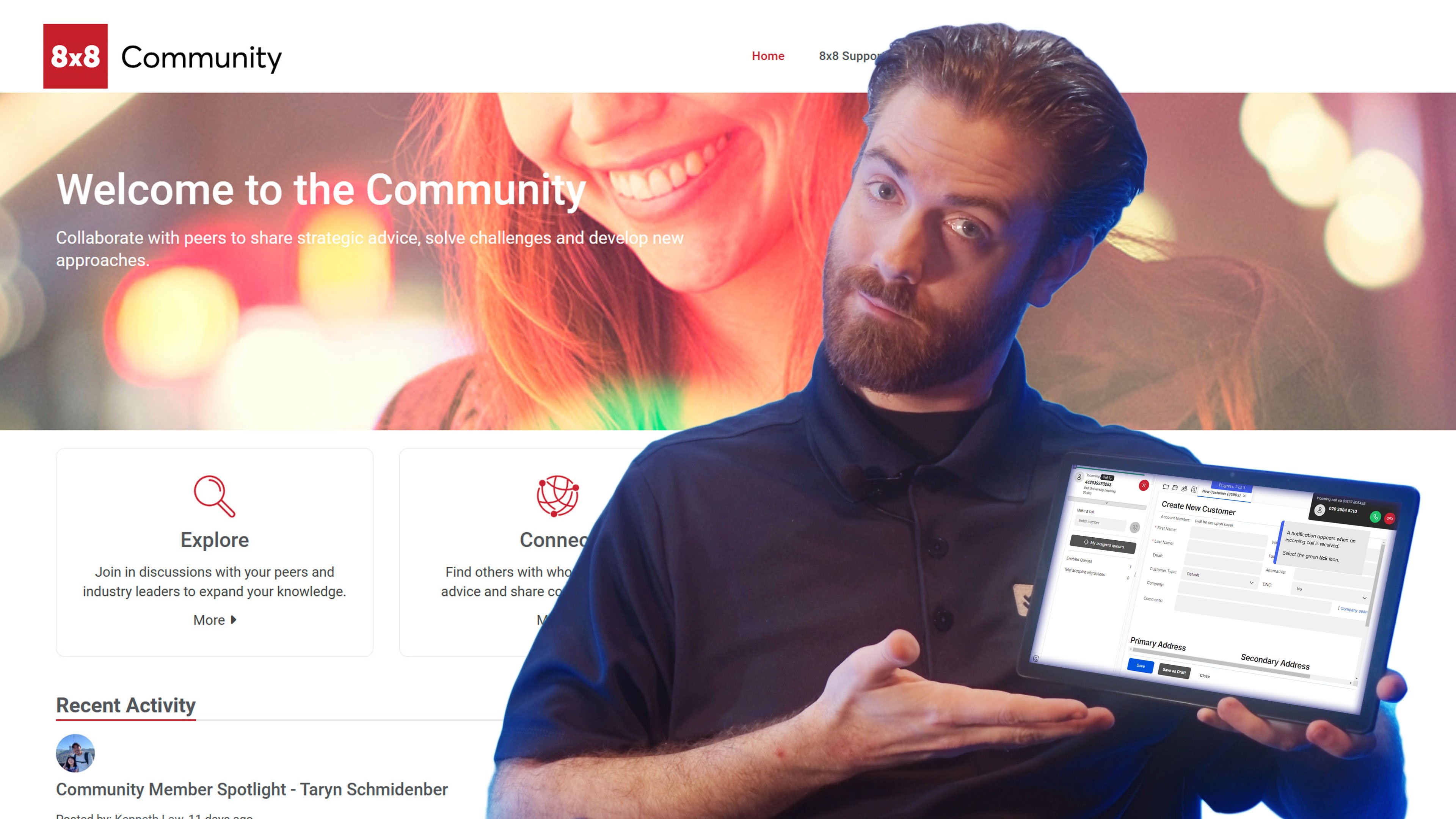
8x8 is designed to help you work from anywhere. It includes features like call forwarding, voicemail, and call recording that let you stay connected with customers from anywhere.
They have flexible plans to ensure businesses of every kind can meet their needs in the most cost-effective way possible.
Pricing
8x8 offers toll-free, local, vanity, and international phone numbers. Pricing is currently quote-based, you will need to contact their sales team to get specific details. They offer pay-as-you-go pricing without commitments or contracts for some of their calling and texting services, but are mostly subscription-based with customized rates based on your size.
For more detailed pricing, you'll need to talk to their sales team.
Best For
- Medium-sized businesses that want the option to scale from a standard business phone system to an omnichannel AI-powered contact center over time
- SMBs that need unlimited international voice calling on a budget
- Teams that want the option of choosing between metered or unmetered call pricing
4. Nextiva
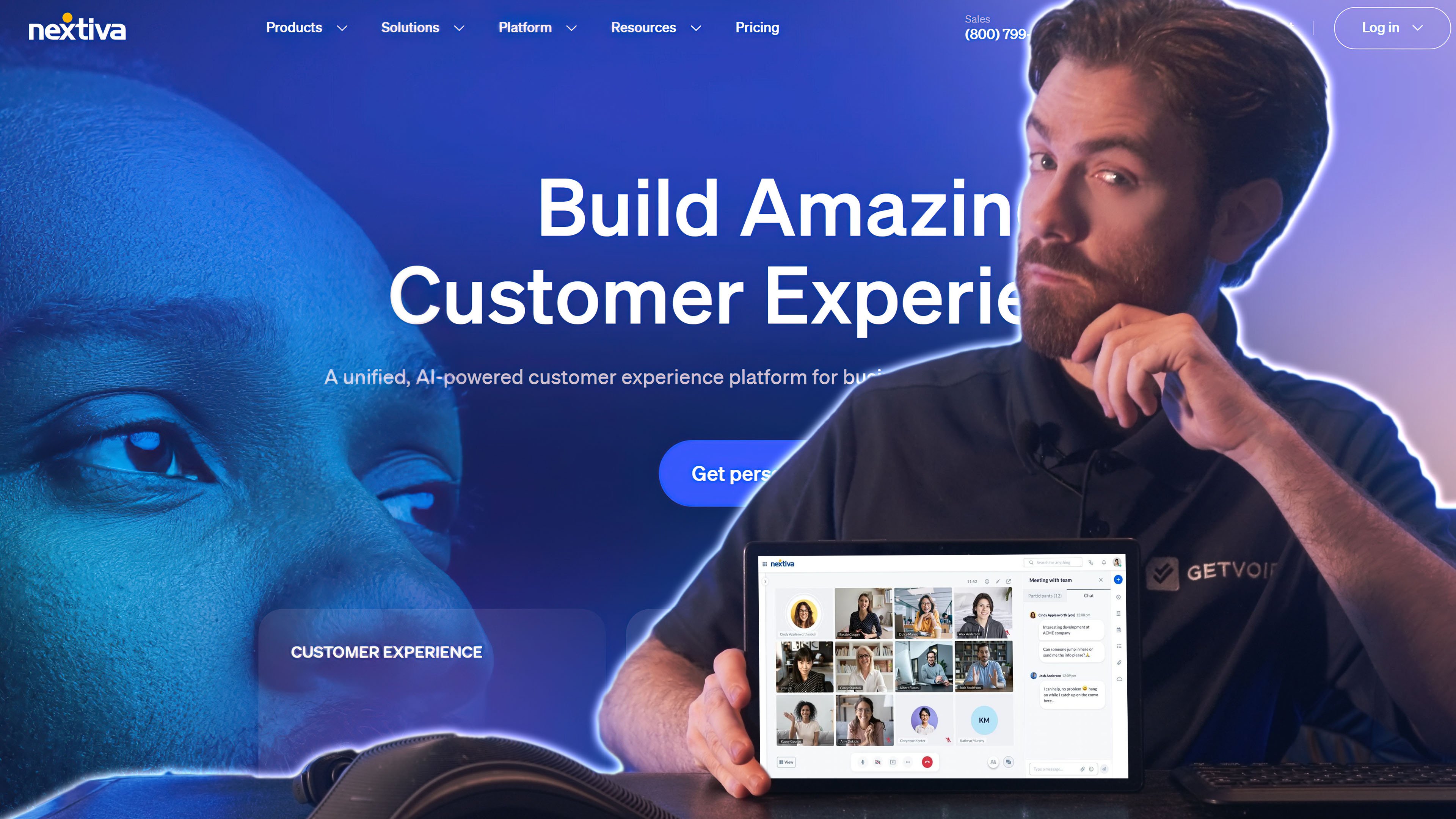
Nextiva allows you to connect your phone system with business apps, AI, and automation all on one platform. With its cloud-based VoIP service, 99.999% uptime, and features like voicemail and call forwarding, Nextiva makes a great choice as a business phone number provider.
They offer local VoIP numbers in many major cities in most states and area codes in every state across the US.
Pricing
Nextiva pricing options include 3 monthly and annual paid plans from $15-$75 per user/month.
All plans include one local phone number, and the Engage and Power Suite plans include a toll-free number with toll-free minutes.
Best For
- Teams needing business phone numbers that come with unlimited audio conferencing
- Remote/blended teams looking for a phone number provider offering both voice and video calling
- In-office businesses with existing equipment requiring BYOD compatibility
5. Vonage
Vonage makes communications more flexible, intelligent, and personal due to its APIs and a number of integrations. They boast an uptime of 99.999%, advanced call management features and AI features, and flexible pricing options.
Major businesses, such as DHL, Domino's, and Glassdoor, are among their customers.
Pricing
Vonage Business pricing includes 3 paid plans from $19.99-$39.99 per user/month.
All plans include a local phone number with unlimited domestic calling with SMS/MMS, but no plans include a free toll-free number.
Add-ons include secondary line appearance ($14.99/month), mobile unlimited extensions ($24.99/extension/month), additional local phone numbers ($4.99/month), toll-free numbers ($39.99/month), virtual phone extensions ($24.99/month), and international phone numbers.
Best For
- Teams that want to build a custom phone system via add-ons instead of opting for a monthly bundled plan
- In-house teams needing a secondary line appearance feature to avoid the expense of additional hardware
- On-the-go teams needing a business phone application tailored to mobile devices
6. Ooma
Ooma has features specifically curated for small businesses and those who are running their businesses from home.
The phone service provider is designed to cut its customers’ phone bills in half, as its website states that users save an average of 50% on each bill. Their cost-saving plans also include a free business phone number.
You can sign up for your business number right on the website. It will prompt you to select a country, state, city, and area code. You can choose if you want a default, repeating, or vanity number, and then pick the specific number you want.
Pricing
Ooma Office pricing includes three plans from $19.95-$29.95 per user/month.
All plans include a local phone number with 1 user extension plus unlimited calling to the US, Mexico, and Canada. Additional local numbers and toll-free numbers with 500 minutes/month are both available for $9.95/number/month.
Users can upgrade their toll-free calling plans to include 1,500 minutes/month ($15/month) or 3,000 minutes/month ($30/month.)
Best For
- Healthcare/medical professionals needing a business phone system with industry-specific integrations
- Teams looking for a flexible number plan offering custom extensions
- Businesses needing only basic phone system features, like conferencing calling, Caller ID, and call recording