TL;DR: RingCentral RingEX is best for voice-first teams needing AI-powered analytics to optimize and scale call center operations. Think sales teams closing deals via phone, support centers handling 100+ calls/day, and remote teams needing built-in collaboration tools.
Nextiva Business Phone Service is best for digital-first teams that engage customers across social media, chat, reviews, and email more than traditional phone calls. Think e-commerce brands managing Instagram DMs, local businesses responding to Yelp reviews, and service companies juggling WhatsApp and website chat.
Nextiva is also cheaper at the entry level and easier to set up, while RingCentral has a steeper learning curve but more powerful capabilities once configured.
Choose RingCentral if voice calling, AI, and integrations are your priority.
Choose Nextiva if digital-first customer engagement, reviews, and social media matter more than advanced telephony.
How We Compared RingCentral and Nextiva
We used the following criteria to compare Nextiva and RingCentral:
- Pricing and Plans: We reviewed each provider’s available pricing, plans, and add-ons to evaluate overall affordability, scalability, and value
- Voice Calling: We compared essential voice calling features like IVR, call routing, call queuing, call recording/transcription, and AI call summaries
- Digital Communication Channels: We evaluated each provider’s available digital communication channels, including website chat messaging, automated chatbots, virtual faxing, email, and social media messaging
- Business Text Messaging: We compared the providers’ SMS/MMS features, pricing, and availability
- Video Meetings: We evaluated in-meeting collaboration tools, video meeting participant and time limits, post-meeting summary tools, recording capabilities, and more
- Team Collaboration: We reviewed team chat messaging features and collaboration tools like screen and file sharing, co-editing, and task management
- Reputation Management: We looked at available reputation management features across social media, e-commerce websites, and online review platforms
- Analytics: We reviewed real-time and historical reports, AI analytics, and available add-ons
- Third-Party Integrations: We compared available third-party integrations and APIs
- Security+Network Reliability: We evaluated provider uptimes, compliance certifications, and security standards
- Customer Support: We compared customer support channels, availability, and quality
- Setup and Ease of Use: We reviewed admin setup time, UI intuitiveness, mobile app capability, and the learning curve for both end users and administrators
- AI Receptionist Capabilities: We compared XBert (Nextiva) and RingCentral AIR head-to-head on pricing, features, deployment time, and use cases
We scored each provider across these 13 categories using vendor documentation, hands-on testing where possible, current pricing, and verified user feedback.
Categories were weighted by impact on a typical buyer's decision: Pricing, Voice Calling, Digital Channels, and Integrations carry the most weight, while Team Collaboration and Reputation Management carry less. Scores reflect the standard small business and mid-market plans, not enterprise contact center tiers.
RingCentral vs Nextiva: At A Glance
Note that, while RingCentral and Nextiva both offer enterprise-level CCaaS platforms, this article compares RingCentral RingEX and Nextiva’s CX solution.
| RingCentral RingEX | Nextiva Business Phone Service | |
| Best For | Remote call centers that need to leverage AI to manage high inbound call volumes, automate business processes, improve CX, and optimize internal communications | Small digital-first contact centers needing extensive social media and reputation management tools, basic voice calling capabilities, and built-in unified communications |
| Pricing+Plans | 3 plans from $20-$35/user/month with annual pricing and $30-$45/user/month with monthly pricing | 3 Business Phone Service plans from $15-$75/user/month with annual pricing and from $23/user/month with monthly pricing (Core $15/$23, Engage $25/$50, Scale $75 annual) |
| Voice Calling |
|
|
| Digital Communication Channels |
|
|
| Business Text Messaging |
|
|
| Video Meetings |
|
|
| Team Collaboration |
|
|
| Reputation Management | Not available on RingEX |
|
| Analytics |
|
|
| Third-Party Integrations |
|
|
| AI Receptionist |
|
|
| Mobile App | Full-featured mobile app with admin hub, calling, SMS, video meetings, team chat, and AI features. iOS and Android. Mobile admin capability is a differentiator | NextivaONE mobile app covers calling, texting, team chat, and video meetings. Admin functions are limited on mobile and typically require desktop access |
| Ease of Use | Steeper learning curve for admins and end users. More features means more to configure. Once set up, users adapt within a week or two | Simpler interface, faster onboarding for non-technical teams. Most small businesses are running calls within a few hours |
| Security+Network Reliability |
|
|
| Customer Support |
|
|
RingCentral vs Nextiva Pricing and Plans
RingCentral starts at $20/user/month and Nextiva starts at $15/user/month, but the pricing structures and what each plan includes are quite different.
The most affordable RingCentral plan includes multi-level IVR and on-demand call recording, team chat and AI-powered video conferencing, SMS, cloud recording storage, and basic third-party integrations. Nextiva's $15 Core plan covers business phone system essentials including calling, SMS, video meetings, and team chat with advanced calling features like call recording available as add-ons or on higher tiers. The trade-off: Nextiva's entry tier is cheaper, while RingCentral's entry tier includes a more advanced calling stack up front.
RingEX plans offer better value for money on advanced calling features and AI-powered video conferencing to streamline internal communications. Nextiva, however, provides far better digital contact center features than RingEX, including multi-account social media messaging, online review and reputation management capabilities, and shared email inboxes.
Total cost of ownership: Both providers add costs beyond the headline price. RingCentral charges extra for RingSense AI, RingCentral Webinar/Rooms, and additional phone numbers. Nextiva charges add-on fees for CRM integrations, API access, AI call transcription on the lower tiers, and the XBert AI receptionist (starting at $99/month). On both platforms, expect 20-25% more than advertised pricing once taxes, regulatory recovery fees, and E911 surcharges are added, which is standard for business phone providers.
RingCentral Pricing
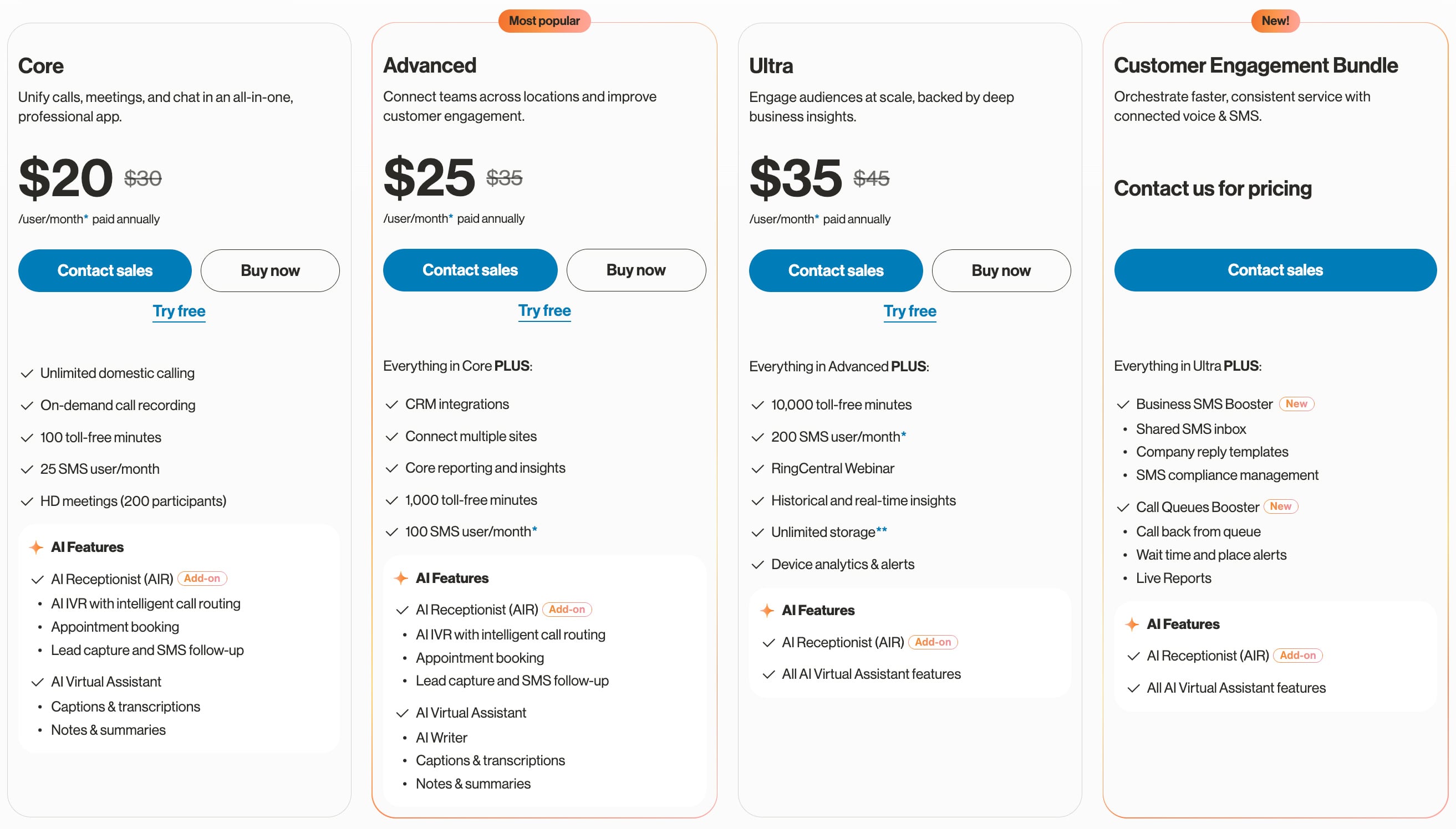
RingCentral pricing for RingEX offers 3 paid plans from $20-$35/user/month with annual pricing and $30-$45/user/month with monthly pricing. A 14-day free trial and volume discounts for 50+ users are available. All RingCentral EX plans include voice and video calling, SMS/MMS texting, and AI-powered workflow automation. Extensive add-on features are also available, including real-time reporting, RingSense Conversational intelligence for Sales, RingCentral Webinar/Rooms, and additional business phone numbers.
Nextiva Pricing
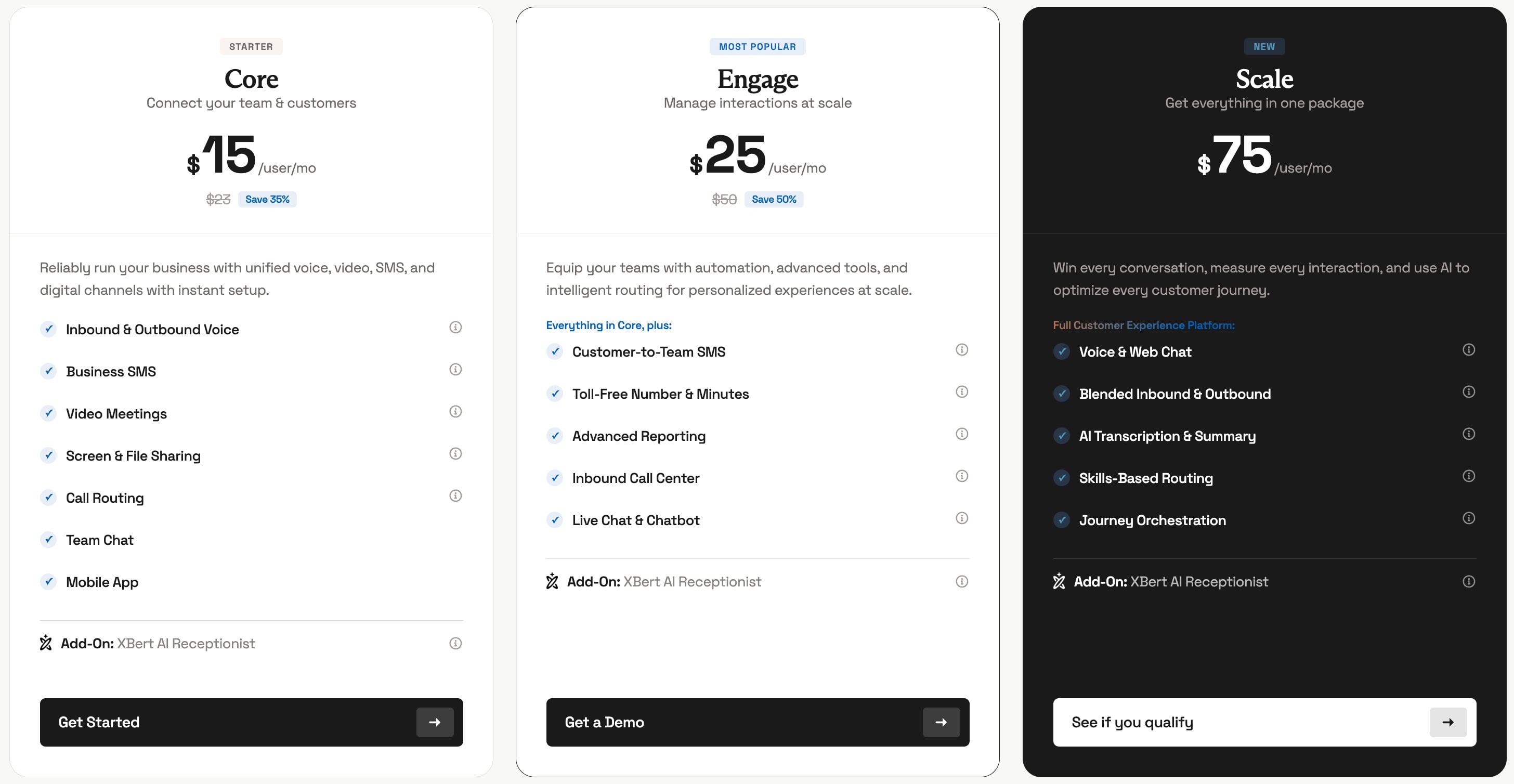
Nextiva pricing offers 3 Small Business plans: Core at $15/user/month annual ($23 monthly), Engage at $25/user/month annual ($50 monthly), and Scale at $75/user/month annual. The $15 Core price requires a 12-month commitment and applies to new customers with 1-100 employees. Nextiva offers a 30-day Money-back Guarantee for new accounts.
Call summaries and call transcription are included on Scale and available as paid add-ons on lower plans, as is intelligent routing. CRM integrations and APIs are available as add-ons across the tiers. The number of included group email inboxes, reporting dashboards, monthly SMS messages, and social media/review site accounts varies by plan.
Nextiva's AI capabilities, including XBert, are sold as a separate AI add-on starting at $99/month rather than bundled with phone plans.
RingCentral vs Nextiva: Setup and Ease of Use
Summary: Nextiva is consistently rated easier to set up and easier to use than RingCentral, especially for small businesses without dedicated IT support. RingCentral has more features and more configuration options, which gives it more power but a steeper learning curve.
Nextiva's strength is simplicity. The admin console is built around a small set of clear workflows, most small businesses can port numbers and start making calls within a few hours, and the NextivaONE app keeps calls, texts, video meetings, and team chat in one place without overwhelming users. G2 reviewers tend to highlight the same point: the platform is approachable for office managers, owner-operators, and front-desk staff who do not want to spend a week learning a phone system.
RingCentral takes a different approach. The platform packs more into every plan, including multi-level IVR, advanced call routing, and AI-powered video meetings, but configuring these features properly takes time. Admins typically need a half-day to a full day to set up routing rules, voicemail trees, integrations, and user permissions. Once set up, end users adapt within a week or two, and the depth pays off for teams that actually use the advanced features. For solopreneurs and 5-person teams, that depth often turns into unused complexity.
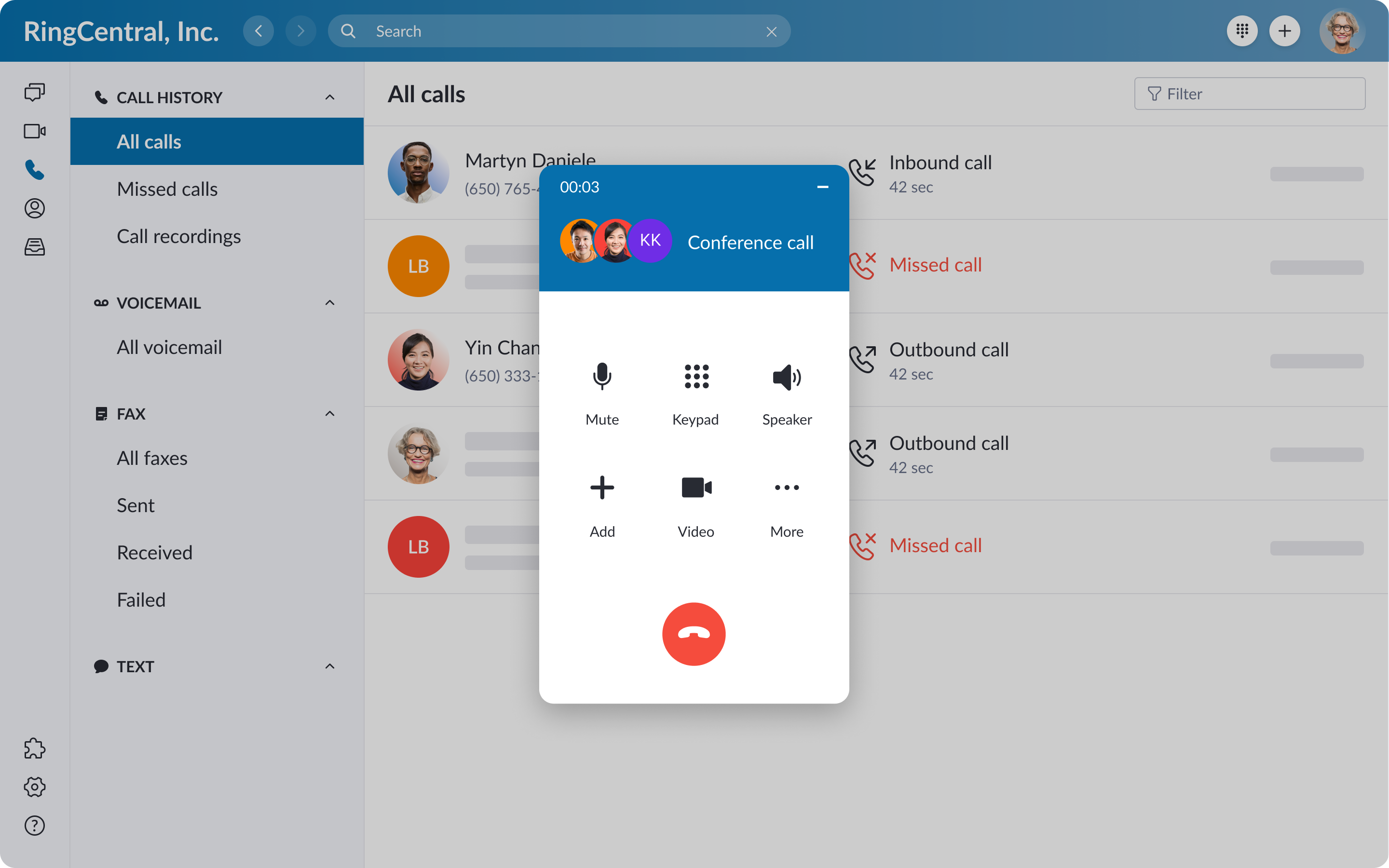
Mobile app comparison: RingCentral's mobile app is closer to a full desktop experience, with admin controls, call analytics, team messaging, video meetings, SMS, and AI features all available on iOS and Android. RingCentral has invested heavily in mobile admin capabilities, which matters for distributed teams and managers who travel. Nextiva's NextivaONE app handles calls, texts, video meetings, and team chat well, but admin functions are limited on mobile and typically require switching to desktop. For day-to-day use the difference is small, but admins running multi-location businesses tend to prefer RingCentral's mobile experience.
RingCentral vs Nextiva: Voice Calling and SMS
Summary: RingCentral RingEX offers far superior voice calling capabilities than Nextiva Business Phone Service, and is easily the better option for blended call centers. All RingEX plans include unlimited domestic calling, multi-level IVR, on-demand recording, and toll-free calling–while Nextiva includes these capabilities on its Engage and Scale plans.
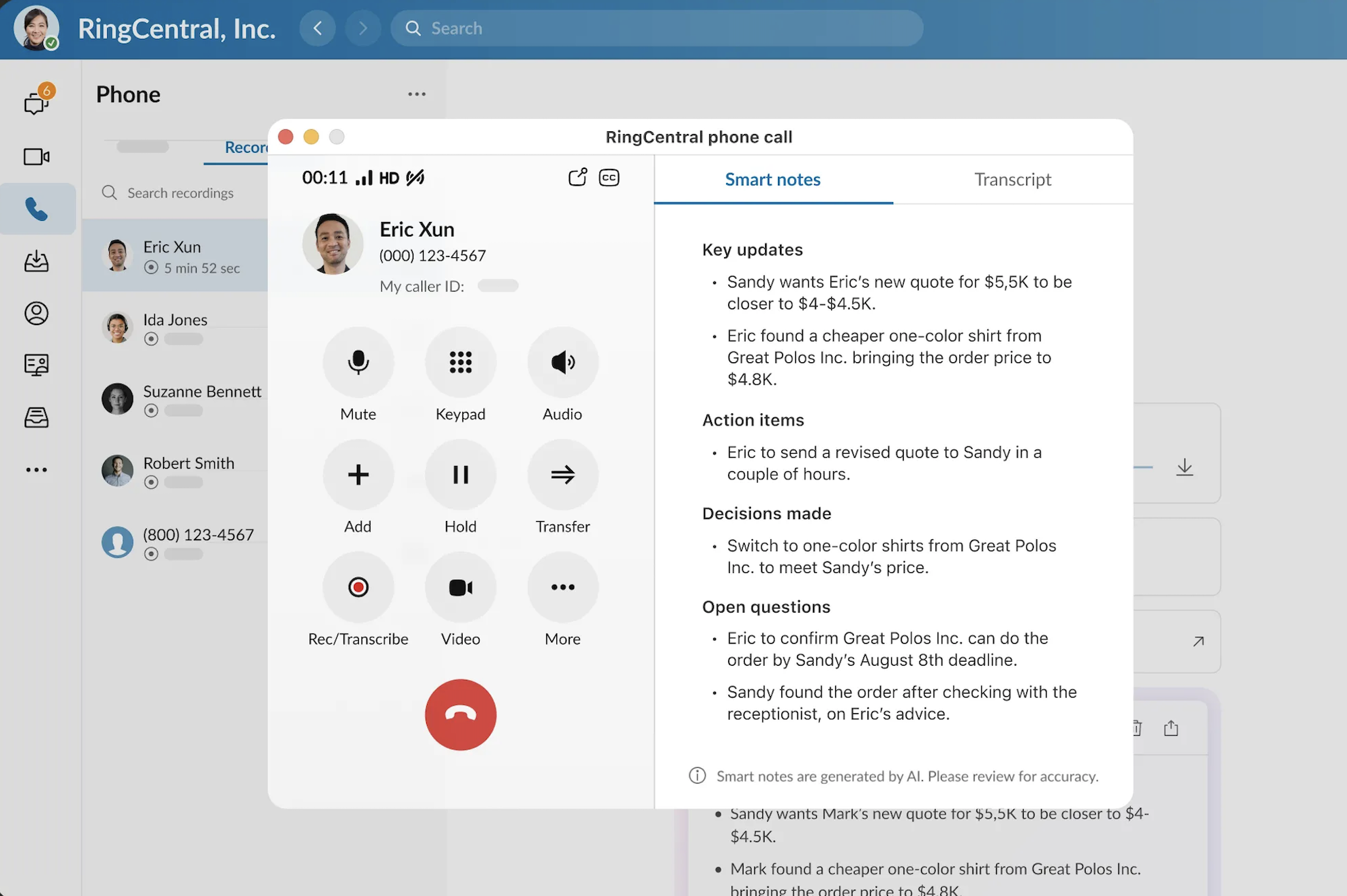
RingCentral RingEX includes unlimited domestic voice calling, SMS/MMS, multi-level IVR, visual voicemail, on-demand call recording, and basic call queues in all plans. All RingEX plans also include RingSense AI for voice calling, meaning users can review automatically generated call summaries, suggested action items, decisions, and automated call notes for all calls. All RingCentral plans also include essential voice calling features like call routing and forwarding, auto attendants with a drag-and-drop call flow editor, custom answering rules, and toll-free calling.
Nextiva includes unlimited domestic voice calling, visual voicemail, and business SMS on Core plans and above, with a different emphasis than RingEX. Skills-based routing and AI-powered call transcripts and summaries are available as add-ons on Core and Engage, and AI transcription with call summaries is included on Scale. Call queues, toll-free calling, and call recording come with the Engage and Scale plans. Nextiva also includes built-in contact management, with a mini-CRM in its contact center. Compared with RingCentral, Nextiva places more of its focus on reputation and customer experience management for digital-first customer service and sales teams.
SMS and MMS Comparison
Both providers handle business texting, but the included message volume and feature depth differ. RingCentral includes SMS/MMS on every RingEX plan with monthly message bundles that scale from 25 messages/user/month to 200 messages/user/month.
High-volume SMS and group SMS are available, and RingCentral promotes bulk messaging as a differentiator for sales and support teams that text at scale. SMS marketing functionality is sold as a paid add-on. Nextiva includes 100 SMS per user per month on the Core plan, 500 per user on Engage plans, and unlimited SMS texting on Scale plans.
For teams that text customers heavily (appointment reminders, support follow-ups, sales outreach), Nextiva’s higher included volume of messages is more cost-effective.
Screen Pops
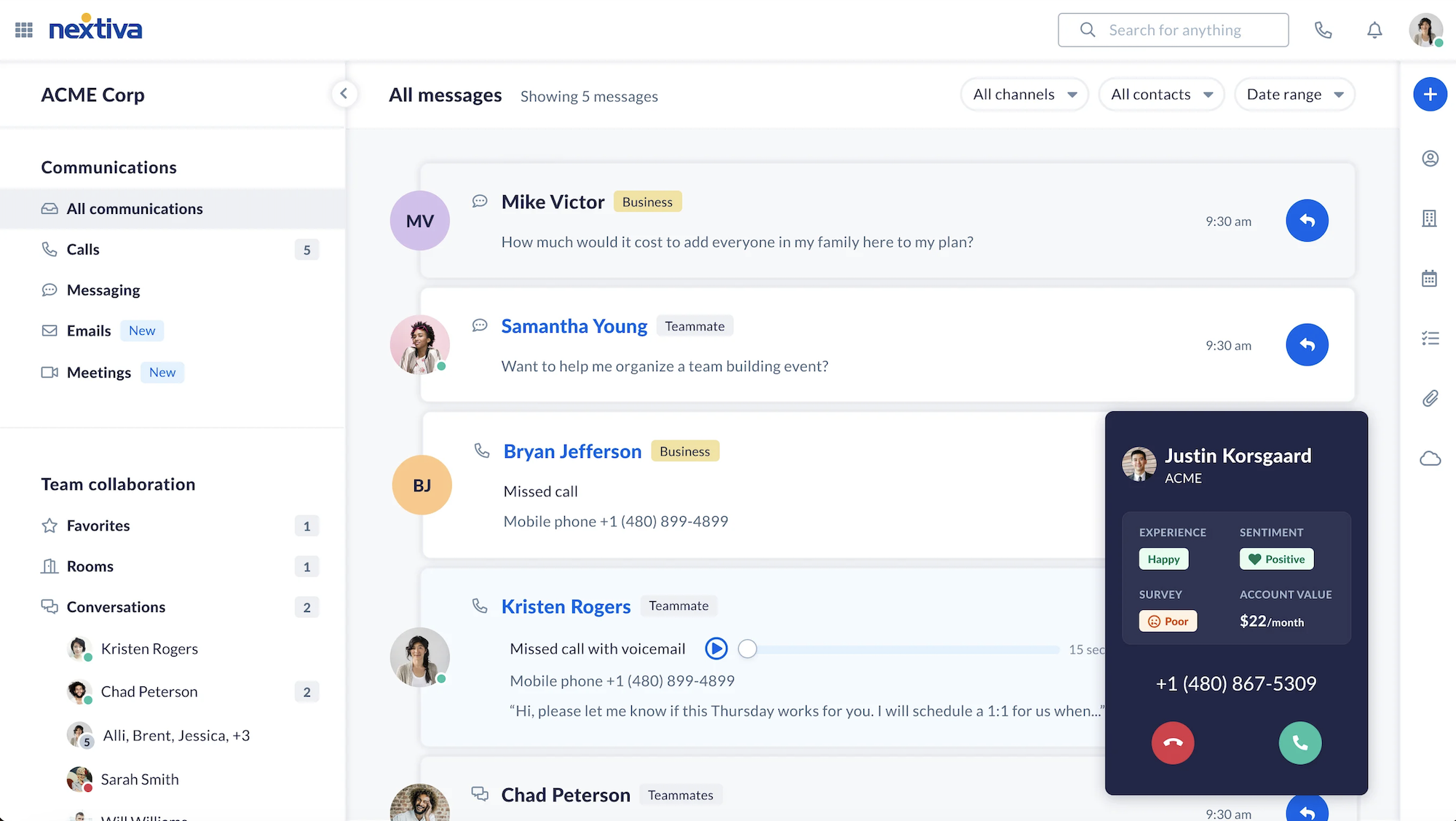
Nextiva offers more advanced screen pops than RingCentral, surfacing not just caller ID but multiple CRM fields (recent interactions, account value, support history) when a call comes in. RingCentral's screen pops are functional but lean toward basic caller ID and CRM record links. For high-volume support and sales teams that need full customer context on the first ring, Nextiva has the edge here.
RingCentral vs Nextiva: Digital Channels and Reputation Management
Summary: All Nextiva plans include social media messaging, a group email inbox, social media management, and reputation management across multiple online review sites. Live website chat is included with Engage and Scale, while Core customers can try it at no additional cost for the first month before adding it. Nextiva Engage and Scale also include automated website chatbots and digital faxing. RingEX doesn't include any social media messaging, website chat, or reputation management capabilities, although unlimited internet faxing is included with Advanced and Ultra plans.
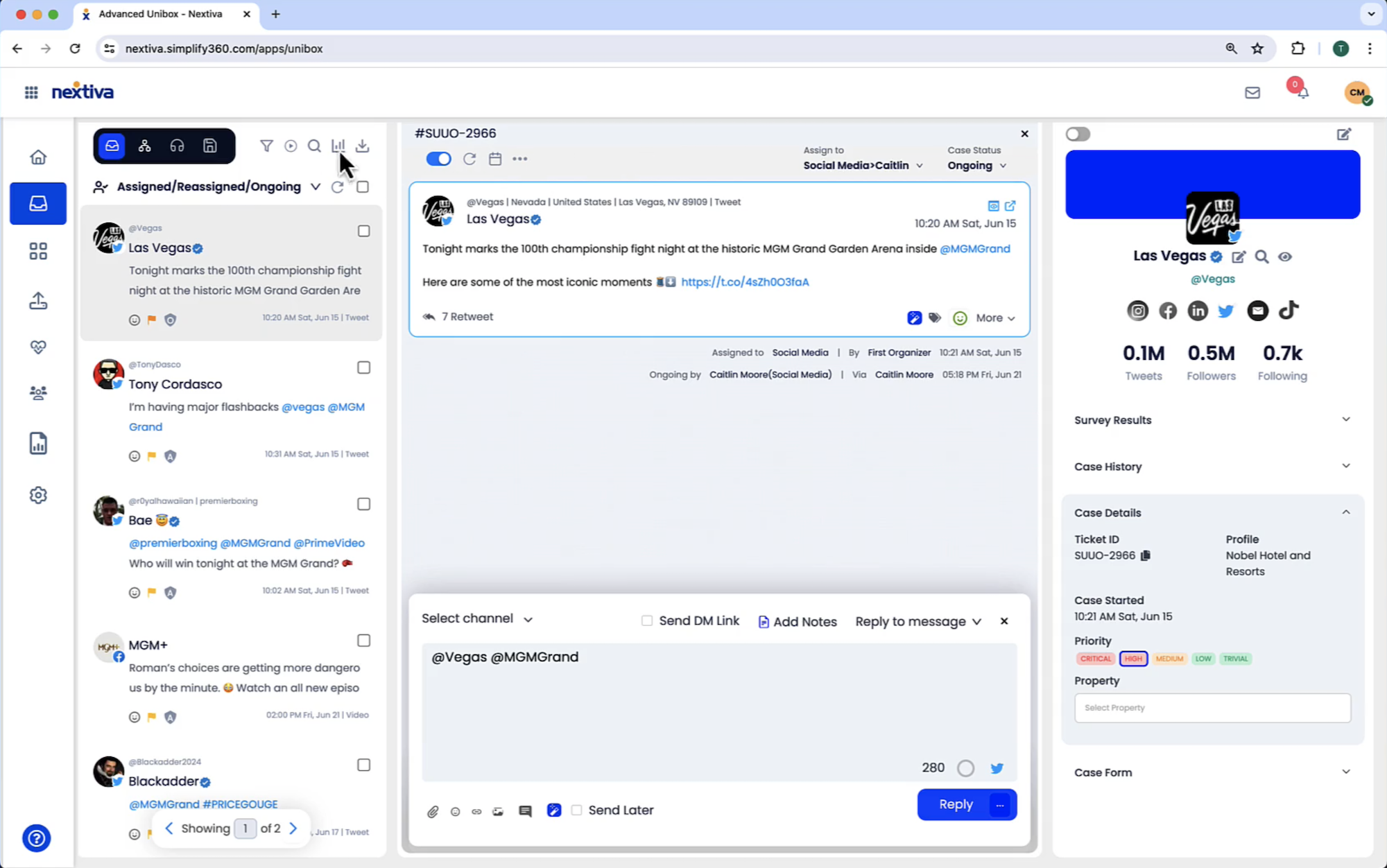
Nextiva offers numerous digital communication channels and capabilities unavailable on any RingEX plan, although the RingCentral Contact Center includes digital channels and social messaging.
Nextiva Engage and Scale include live website chat with basic automated prompts that collect essential customer data and connect site visitors to the best available live agent. Core customers can try live chat at no additional cost for the first month before adding it. Engage and Scale also include 24/7 automated chatbots powered by Nextiva AI. The AI chatbot automates appointment scheduling, lead capture and qualification processes, customer service requests, and product recommendations, leveraging NLP to evaluate customer sentiment and intent.
All Nextiva plans also come with a group email inbox with custom routing rules, automatic ticket creation and assignment, and the ability to prioritize emails. The Nextiva Messenger feature (also included in all plans) streamlines all social media, WhatsApp, and in-app messages into a single unified inbox for efficient customer communication across popular social platforms.
In addition to social messaging, all Nextiva users can access advanced social media management features. Users can schedule and publish posts across multiple social media platforms from a single interface, monitor social media engagements, receive real-time alerts for new comments/replies, and review trends, competitor benchmarks, and brand mentions via social listening tools. Social media interactions can be filtered by channel, date, or custom rules, turned into support tickets, and assigned to the best available agent via intelligent routing. Users can create custom social tags, monitor specific keywords, and directly reply to social media comments from the Nextiva messaging inbox.
Finally, all Nextiva Business Phone Service plans include reputation and review management tools that let users monitor and respond to reviews across app stores, online marketplaces, eCommerce sites, review websites, and more within a unified inbox–no app switching required. Users can respond to reviews manually or leverage Nextiva AI to reply automatically.
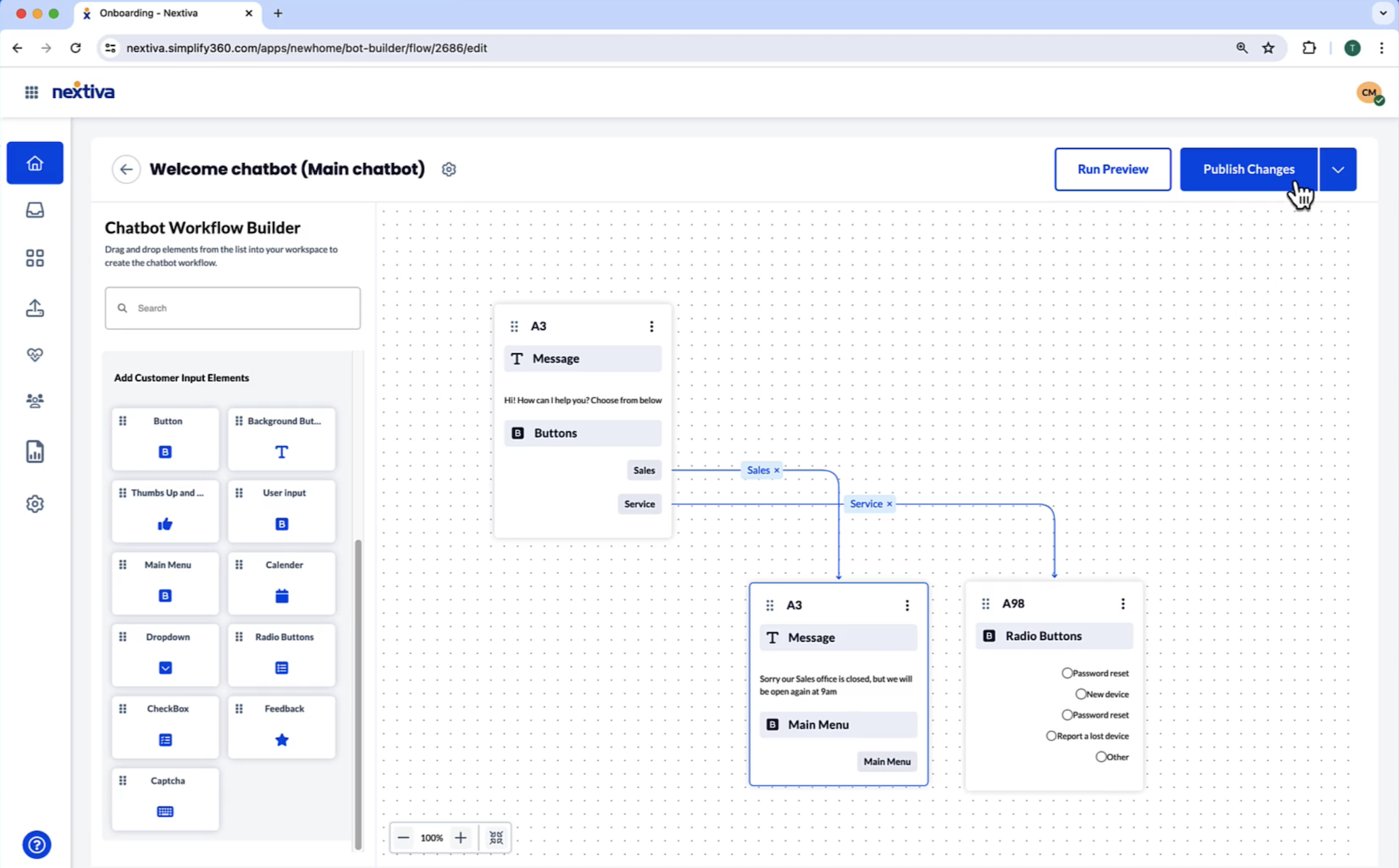
Nextiva offers numerous digital communication channels and capabilities unavailable on any RingEX plan, although the RingCentral Contact Center includes digital channels and social messaging.
All Nextiva plans include live website chat with basic automated prompts that collect essential customer data and ensure site visitors are connected to the best available live agent. Nextiva Engage and Scale plans include 24/7 automated chatbots powered by Nextiva AI. The AI chatbot automates appointment scheduling, lead capture and qualification processes, customer service requests, and product recommendations, leveraging NLP to evaluate customer sentiment and intent.
All Nextiva plans also come with a group email inbox with custom routing rules, automatic ticket creation and assignment, and the ability to prioritize emails. The Nextiva Messenger feature (also included in all plans) streamlines all social media, WhatsApp, and in-app messages into a single unified inbox for efficient customer communication across popular social platforms.
In addition to social messaging, all Nextiva users can access advanced social media management features. Users can schedule and publish posts across multiple social media platforms from a single interface, monitor social media engagements, receive real-time alerts for new comments/replies, and review trends, competitor benchmarks, and brand mentions via social listening tools. Social media interactions can be filtered by channel, date, or custom rules, turned into support tickets, and assigned to the best available agent via intelligent routing. Users can create custom social tags, monitor specific keywords, and directly reply to social media comments from the Nextiva messaging inbox.
Finally, all Nextiva plans include reputation and review management tools that let users monitor and respond to reviews across app stores, online marketplaces, eCommerce sites, review websites, and more within a unified inbox–no app switching required. Users can respond to reviews manually or leverage Nextiva AI to reply automatically.
RingCentral vs Nextiva: Video Meetings and Team Collaboration
Summary: RingCentral has lower video meeting participant capacities than Nextiva and does not provide customer-agent video calling and screen sharing. That said, RingCentral has more feature-rich video conferencing and team collaboration tools than Nextiva, including automated video call summaries and highlights, real-time meeting transcription, and GenAI-powered team chat summaries.
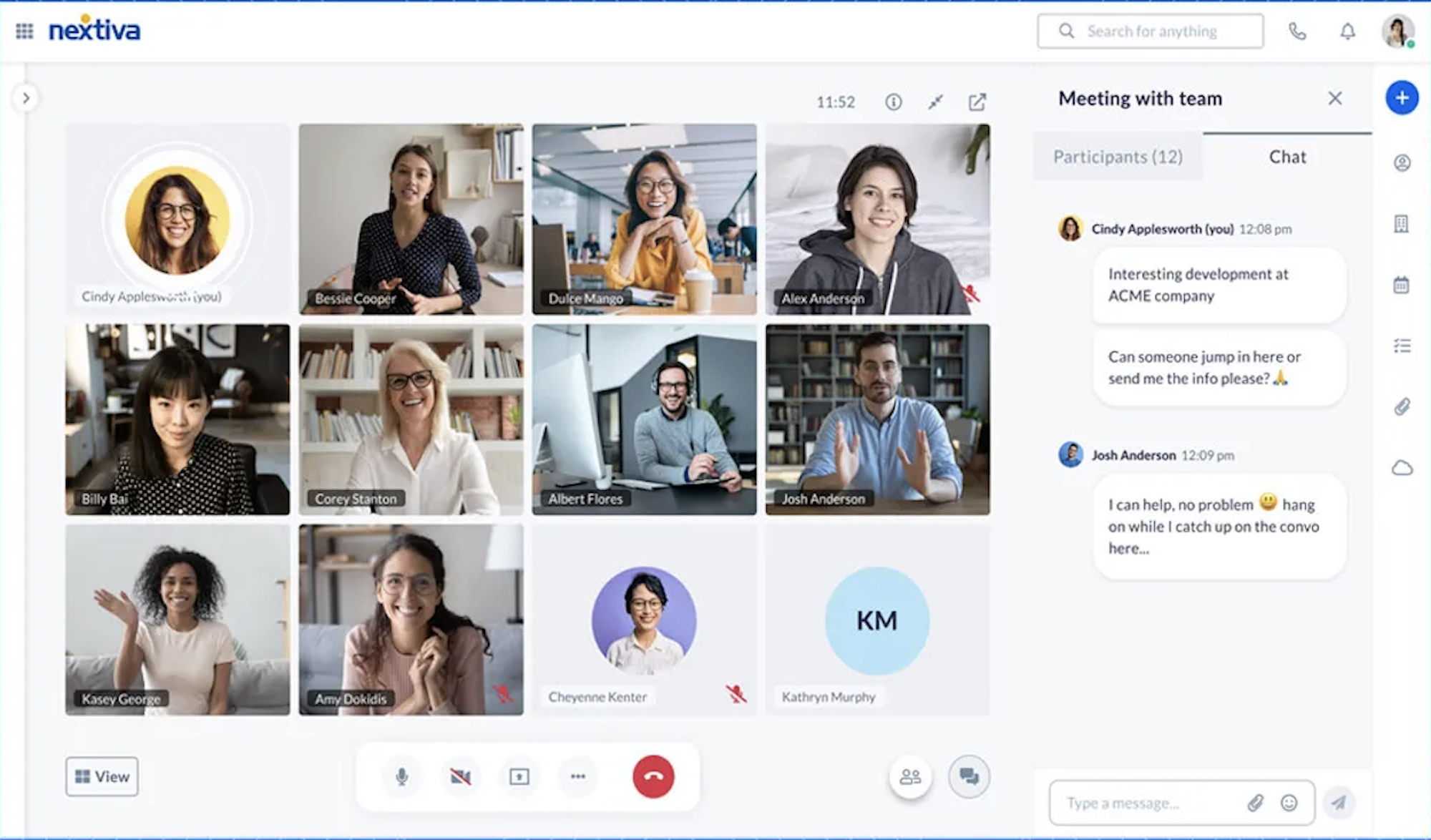
Nextiva offers unlimited video conferencing for up to 250 users with in-meeting chat, screen sharing, file sharing, and meeting recordings. Unlike RingCentral, Nextiva users can make video calls to customers and view/control customer screens to provide superior customer service.
That said, RingCentral's video stack goes further with breakout rooms, whiteboards, closed captioning, and automatically-generated meeting summaries with suggested action items. Nextiva's video calling covers the essentials well for teams that meet face-to-face regularly, while RingCentral Video is built for heavier in-meeting collaboration.
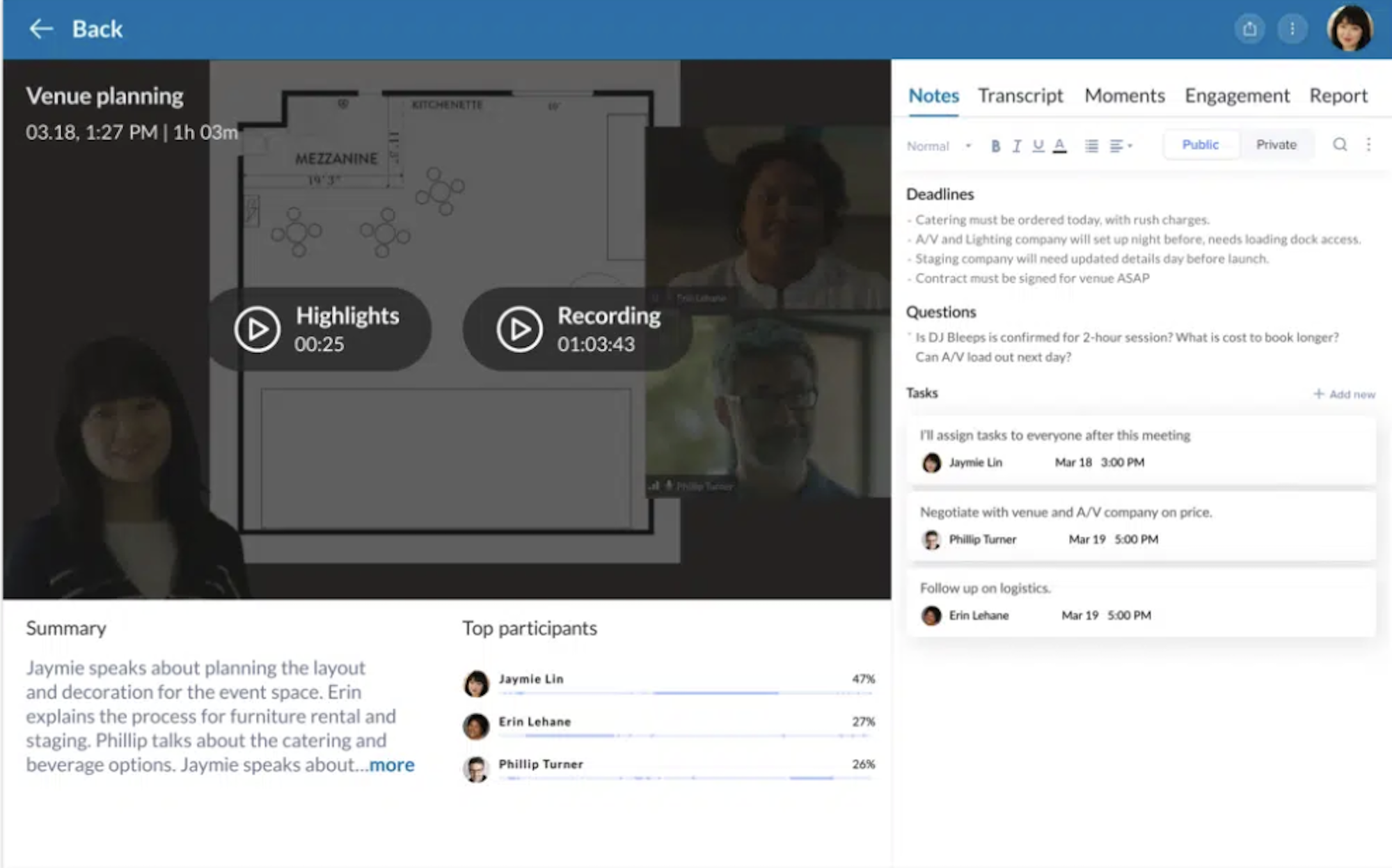
RingCentral also offers paid add-ons that extend its video capabilities into virtual events and webinars. RingCentral Webinar (around $30 per organizer per month) supports up to 500 attendees with registration pages, Q&A, polling, and post-event analytics. RingCentral Events (from $99 organizer/month covers larger virtual conferences with multiple sessions and exhibitor booths.
Other features in the RingCentral video stack include team huddle (a persistent always-on video room for small teams), virtual backgrounds, remote desktop control, and AI-powered noise suppression. Nextiva takes a more streamlined approach to video and does not offer equivalent event add-ons.
Apart from this, RingCentral offers better team collaboration features than Nextiva Business Phone Service. While both providers include team chat messaging, file sharing and co-editing, and third-party calendar integration, RingCentral leverages AI to take team messaging to the next level. RingEX users can use the AI writer to create and respond to chat messages, adjust message length and tone, and check message grammar.
RingEX creates AI-powered messaging recaps/summaries, meaning users can avoid having to scroll through long conversations just to find their relevant messages. Message translation is also included. Most impressively, RingCentral provides a GenAI search feature that lets users type in a question and receive an automatically generated response based on existing phone, message, and video transcripts and recordings.
RingCentral vs Nextiva: Analytics
Summary: RingCentral offers far better voice calling analytics than Nextiva, and its Sales Intelligence add-on includes Conversational AI insights like sentiment analysis, trending topics, and agent performance monitoring. Nextiva provides standard voice calling analytics and advanced social media reporting tools, with the number of included reports scaling by plan.
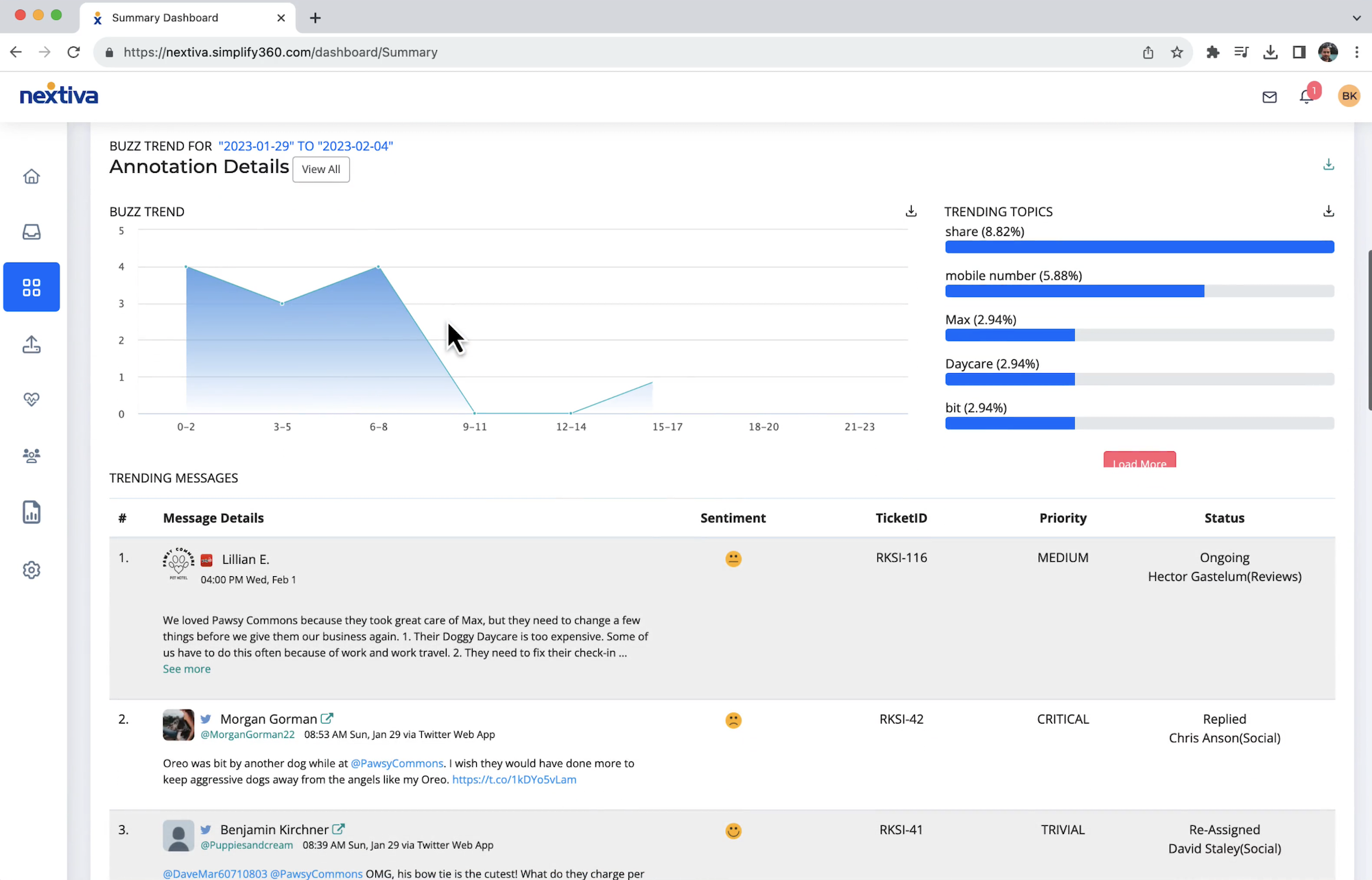
Nextiva and RingCentral both provide real-time and historical voice calling analytics that let call center managers monitor call volume changes, review call queue statistics, get real-time KPI alerts, and evaluate agent performance. Nextiva Voice Analytics are included in the Engage and Scale plans, and unlimited reporting comes with Scale. That said, Nextiva provides excellent social media analytics that include customer sentiment monitoring, competitor tracking, customer engagement monitoring across social media platforms, and trend analysis.
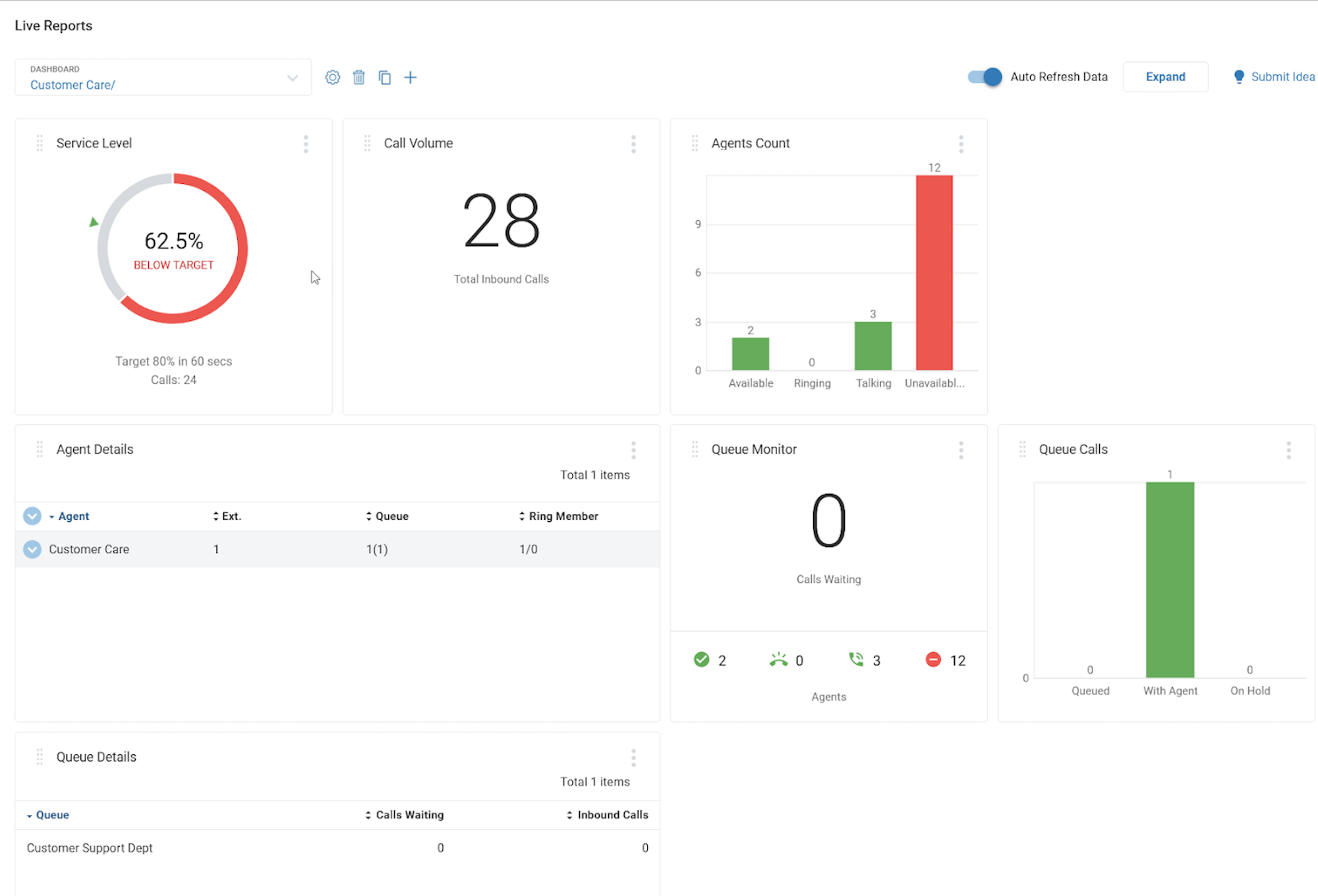
By contrast, RingCentral RingEX plans include basic call logs, real-time QoS monitoring/alerts, and custom call center reporting with 30+ KPIs. It also includes agent activity monitoring, multiple reporting dashboards, and the option to add on RingCentral Conversation Intelligence from $60/user/month.
RingCentral RingEX’s Conversation intelligence includes coaching and performance analytics, explainable deal/call scoring, identifies trending topics across conversations, and tracks competitor mentions. Sales managers get coaching scorecards with rep-level performance trends, and reps get automated call summaries with action items pushed to their CRM.
For sales teams that rely on conversational intelligence to forecast deals and improve performance, Conversation Intelligence is a meaningful differentiator. Nextiva offers AI call summaries through its separate AI add-on, delivering conversation intelligence through its broader AI suite rather than a separate sales-specific product.
RingCentral vs Nextiva: Third-Party Integrations
Summary: RingCentral RingEX integrates with far more third-party business software than Nextiva Business Phone Service, which delivers integrations through its higher tiers and paid add-ons. However, Nextiva integrates with more social media and online review platforms than RingEX.
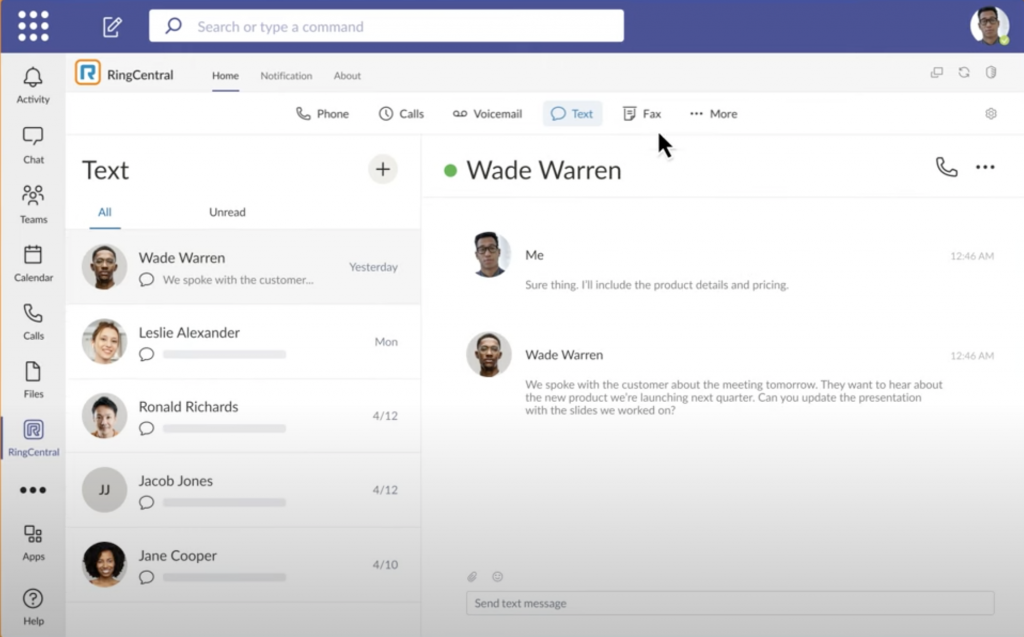
All RingEX plans include API access and integration with Slack, Microsoft 365, Google, and telephony for Microsoft Teams. Advanced and Ultra plans give users access to 330+ CRM and industry-specific integrations across 200+ companies, including Salesforce, HubSpot, Zendesk, Canvas, Smarsh, and the RingCentral Archiver App for cloud storage backup. RingCentral's Microsoft Teams integration is also notably deeper than Nextiva's: RingCentral offers a fully embedded app inside Teams that supports calling, SMS, and fax directly within the Teams interface, while Nextiva's Teams integration is more limited to basic phone connectivity.
Nextiva Business Phone Service's app ecosystem is more focused than RingCentral's, with integrations delivered through higher tiers and add-ons rather than bundled into every plan. The Nextiva Core plan includes Microsoft 365 and Google Workspace integrations, while CRM integrations and API access are available as paid add-ons across the tiers, including Scale. Core users can purchase Microsoft Teams integration as an add-on, and Teams integration is included in the Engage and Scale plans.
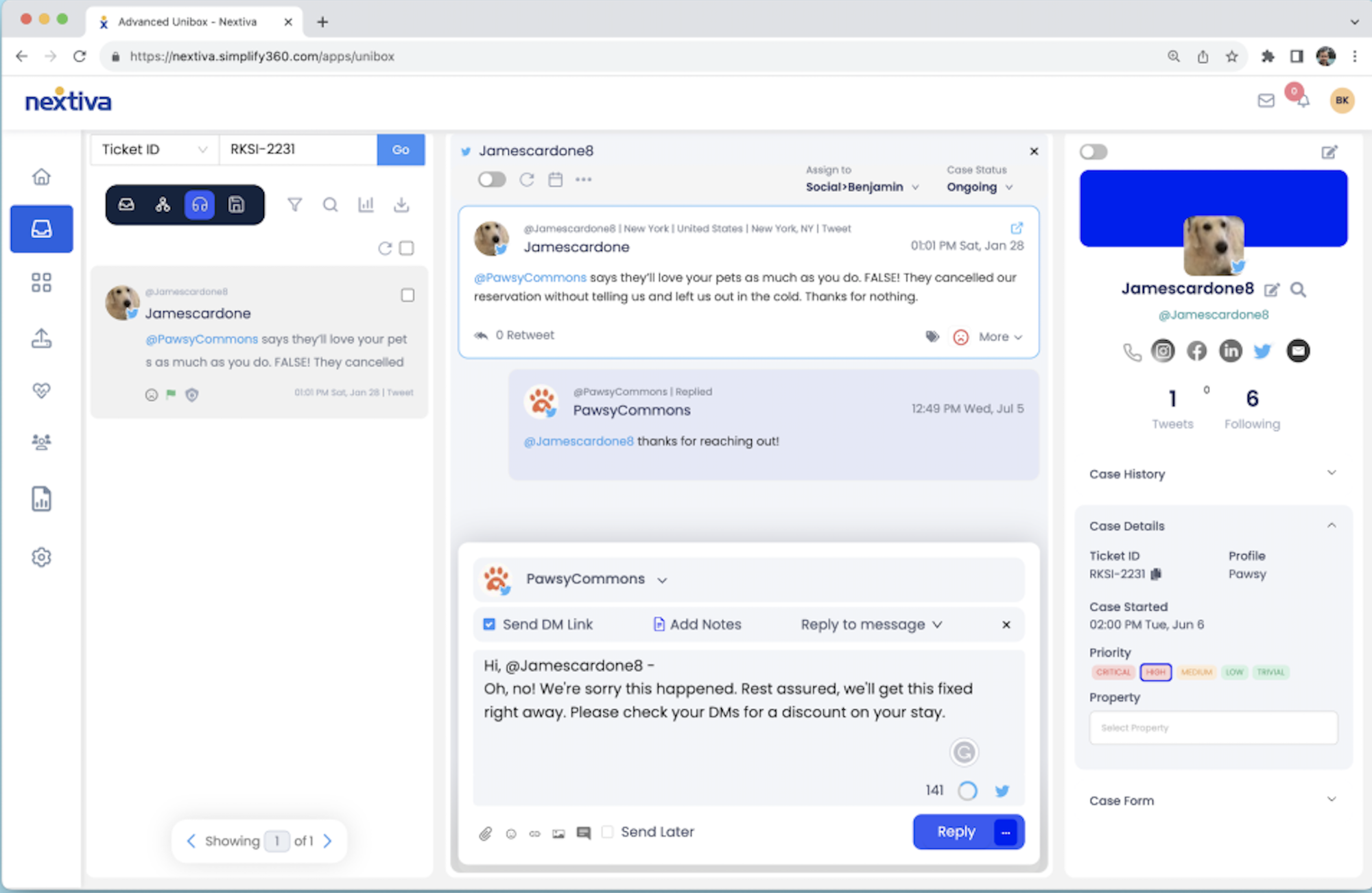
That said, unlike RingEX, all Nextiva Business Voice plans integrate with the Google Store, Amazon, Google Reviews, Yelp, TripAdvisor, and numerous social media platforms including Facebook, TikTok, Instagram, LinkedIn, X, and YouTube.
RingCentral vs Nextiva: AI Receptionist (RingCentral AIR vs XBert)
Summary: Both RingCentral and Nextiva offer AI-powered receptionists that handle inbound calls 24/7, book appointments, answer FAQs, and route complex requests to human agents. RingCentral AIR uses minute-based pricing starting at $39/license/month and works inside or outside the RingCentral phone system. Nextiva's XBert uses session-based pricing at $99/month for 100 sessions and is positioned as a broader AI employee that handles voice, text, and chat. The choice depends on call volume, channel mix, and pricing predictability.
RingCentral AIR. Available in two configurations: AIR with RingEX at $39/license/month for existing RingCentral customers (includes 100 minutes), or AIR Everywhere at $59/month as a standalone product that works with any phone system (also includes 100 minutes). Additional minutes are sold in 100-minute bundles, with overage running approximately $0.50 per minute.
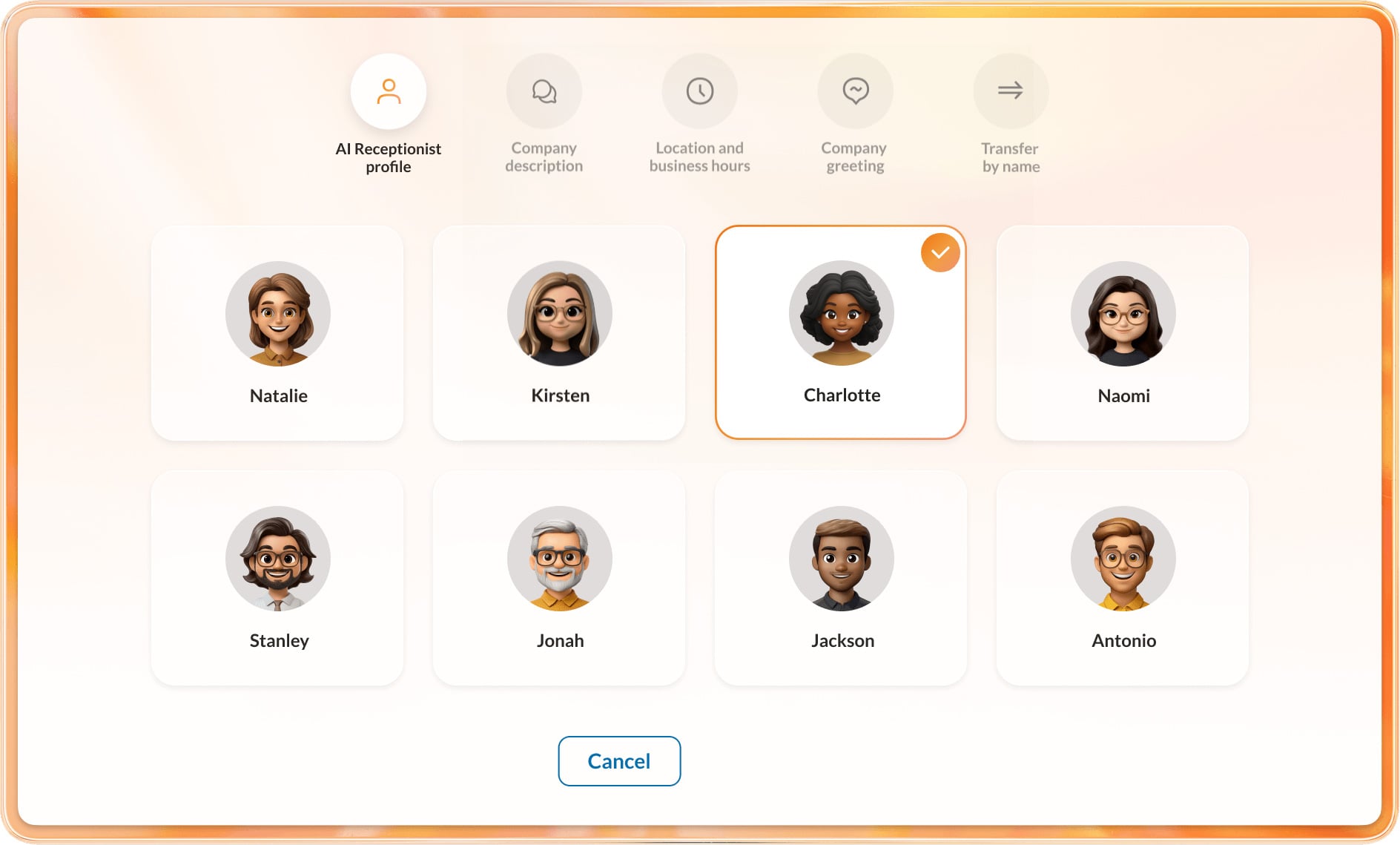
Setup takes about 5 minutes once you provide a website URL. AIR scrapes business hours, services, and FAQs to auto-build the receptionist. Features include conversational support in multiple languages, intelligent call routing with contextual handoffs (callers don't have to repeat themselves when transferred), Google Calendar and Outlook integration for appointment booking, SMS follow-up, spam filtering with STIR/SHAKEN authentication, customizable AI voice and persona, and HIPAA-compliant configurations.
RingCentral reports more than 3,000 active business customers using AIR, with case studies including Axis Integrated Mental Health (60% increase in new patient intakes, projected $1.7M additional revenue) and the Detroit Pistons (50% of calls expected to resolve via AIR).
Nextiva XBert. Priced at $99/month for 100 sessions, then $0.99 per additional session. A session is counted when XBert handles a meaningful conversation: a phone call lasting 30 seconds or longer, or a text/chat conversation where XBert responds at least three times. Missed calls and unanswered messages are not billed.
XBert handles voice, text, and chat in a single product (RingCentral AIR is voice-first with SMS follow-up, not full text or chat handling). It learns from your website automatically, supports assisted setup at no extra cost, and integrates with Salesforce, HubSpot, Zendesk, Microsoft Teams, Google Workspace, Zapier, Zoho, and ServiceNow.
XBert operates as an AI employee rather than a basic AI receptionist, with capabilities for appointment booking, FAQ handling, lead qualification, claim intake (insurance use cases), and follow-up outreach. Compliance covers PCI DSS, HIPAA, EU GDPR, and SOC 2. A 14-day free trial is available.
How they compare:
| RingCentral AIR | Nextiva XBert | |
| Starting price | $39/license/month (with RingEX) or $59/month (standalone) | $99/month |
| Pricing model | Minute-based, 100 minutes included, ~$0.50/min overage | Session-based, 100 sessions included, $0.99/session overage |
| Channels | Voice + SMS follow-up | Voice, text, chat |
| Works with non-native phone systems | Yes (AIR Everywhere, $59/month) | Yes, works independently or within Nextiva’s platform. |
| Setup time | ~5 minutes (auto-scrape from website) | ~3 minutes to set up using an existing website or Google Business Profile. Free assisted setup available |
| Calendar integration | Google Calendar, Outlook | Native calendar, CRM-based scheduling |
| Languages | Multiple languages including Spanish | Multiple languages |
| CRM integrations | RingCentral ecosystem integrations | Salesforce, HubSpot, Zendesk, Teams, Google Workspace, Zapier, Zoho, ServiceNow |
| Compliance | HIPAA-compliant configurations available | PCI DSS, HIPAA, EU GDPR, SOC 2 |
| Free trial | 14 days | 14-day XBert free trial; 30-day Nextiva money-back guarantee for eligible new accounts. |
Which one wins for your business?
- Choose RingCentral AIR if your call volume is under 100 minutes per month, you primarily need voice handling with SMS follow-up, you want the cheapest entry point ($39 with RingEX, $59 standalone), or you need an AI receptionist that works on top of your existing non-RingCentral phone system. AIR Everywhere is one of the few AI receptionists that's truly platform-agnostic.
- Choose Nextiva XBert if your customers contact you across voice, text, and chat (XBert handles all three under one budget), you have higher conversation volumes (the 100-session ceiling is more forgiving than 100 minutes for short calls), you need broader CRM integrations beyond a single ecosystem, or you want an AI employee that goes beyond receptionist duties into FAQ handling, lead qualification, and follow-up outreach.
For pure cost comparison: a business with 60 inbound calls per month at 2 minutes each (120 minutes total) would exceed AIR's 100-minute allowance and pay around $39 + $10 = $49/month. The same volume on XBert (60 sessions) stays under the 100-session limit at $99/month.
AIR is cheaper for low-volume voice-only use cases. XBert pulls ahead for businesses that need text and chat alongside voice, where AIR's voice-only model would require a separate chatbot solution.
RingCentral vs Nextiva: Customer Support and Security
Summary: All RingCentral and Nextiva plans include 24/7 customer support on multiple channels, and both providers deliver 99.999% uptime. User reviews consistently rate Nextiva higher on support quality, while RingCentral offers more depth in professional implementation services.
RingCentral and Nextiva offer comparable customer support, as both providers include 24/7 support via phone and chat on all plans. Nextiva and RingCentral also offer add-on premium support plans for customized product implementation, agent training, priority support responses, and more. Both platforms have an extensive online knowledge base with written and video product tutorials, FAQs, and an online ticketing portal.
Where the two providers differ is support reputation. Nextiva has a 4.8 rating on Trustpilot with 8,000+ reviews, and consistently scores higher on G2 for quality of support (around 9.0 vs RingCentral's 7.8 in recent comparisons). Reviewers point to fast response times, US-based support agents, and a less scripted feel.
RingCentral's support gets more mixed feedback at scale, partly because RingCentral serves a much larger and more complex customer base. Where RingCentral pulls ahead is professional implementation: their paid implementation services include dedicated project managers, custom call flow design, integration setup, and end-user training, which is more relevant for mid-market and enterprise deployments than for small businesses.
Both providers deliver 99.999% uptime, 24/7 network monitoring, and global points of presence to ensure consistent service. In addition to SSO, RingCentral and Nextiva provide GDPR and PCI compliance, and video meeting host controls, with Nextiva offering HIPAA-compliant configurations for eligible services with a signed BAA. Nextiva's HITRUST certification (included in Engage and Scale plans) is a meaningful differentiator for healthcare buyers and any business handling sensitive health data, since HITRUST goes beyond standard HIPAA compliance with a more rigorous certification framework. RingCentral offers HITRUST certification on all RingEX and RingCX plans.
RingCentral vs Nextiva: Which Provider Should You Choose?
When choosing between RingCentral and Nextiva, the best option for your business depends on where you communicate with your customers, the number of available third-party integrations you need, and how you plan to leverage automation and AI to streamline business processes. Below, we’ve highlighted each platform’s ideal user base and biggest drawbacks. If neither platform seems like a good fit, consider other unified communications providers like GoTo Connect, Vonage Business Communications, and Zoom Workplace.
RingCentral Is Best For
- Voice-First Contact Centers: RingCentral RingEX is best for customer service and sales teams that primarily communicate with customers via voice calling. All RingEX plans include advanced VoIP calling features that RingCentral competitors usually reserve for top-tier plans, such as multi-level IVR, call recording, call queues, and visual voicemail. Best fit: teams of 25-500 with dedicated phone-based workflows.
- AI-Powered Automation: RingCentral RingEX comes with built-in AI capabilities that optimize internal communications, automate routine business processes, and identify areas for improvement throughout the customer journey. Automatic video meeting and call summaries, GenAI-enhanced messaging, and AI-powered coaching tools make RingEX an ideal fit for smaller teams that need to leverage artificial intelligence to increase conversions, improve customer self-service, and cut down on miscommunications. Best fit: teams of 10-100 with sales or support workflows that benefit from conversation intelligence.
- Analytics: RingCentral offers some of the best analytics and reporting tools in the UCaaS space, including real-time KPI monitoring for 30+ metrics, agent activity monitoring with wallboards, and drag-and-drop custom reporting templates. The RingSense Sales Intelligence add-on evaluates customer sentiment, identifies trending topics in customer conversations, and monitors competitor mentions. This makes RingEX an excellent platform for businesses looking to improve agent performance, CSAT scores, and the overall customer experience. Best fit: data-driven teams of 50+ with managers who actively review performance dashboards.
RingCentral Is Not Right For
- Small In-House Teams: In addition to advanced voice calling features and AI analytics, RingCentral RingEX is known for its superior Unified Communications tools. While RingCentral's advanced team chat messaging and video calling capabilities are perfect for remote or hybrid teams, these features aren't necessary for smaller in-house teams, and their accompanying learning curve may overwhelm end users. If your team is under 10 people and primarily operates in one office, RingCentral is overkill.
- Digital Customer Communication: Unlike Nextiva, RingCentral RingEX does not provide website chat, social media messaging, and online reputation management, automatically ruling out digital-first businesses. While these capabilities are included in RingCX, RingCentral's contact center platform, RingEX is primarily a business phone system with built-in UC tools.
Nextiva Is Best For
- Digital-First Contact Centers: Nextiva Business Phone Service is best for digital-first contact centers that connect with customers via website chat, social media messaging, email, and messaging applications like WhatsApp. Nextiva differentiates itself from competitors by including multiple digital channels in its most affordable plans, including the ability to communicate with customers via video chat. Best fit: e-commerce, retail, and service businesses of 5-50 employees.
- Scalability: With plans specifically designed for digital-only, voice-first, and omnichannel contact centers, Nextiva offers a high level of scalability rarely seen in the Unified Communications space. It's an excellent choice for teams looking for a customer experience solution that evolves alongside their business and lets them add communication channels and advanced features as needed instead of in bulk.
- Reputation Management: All Nextiva Business Voice plans include robust reputation management capabilities across key online review platforms and social media, making Nextiva an excellent choice for e-commerce businesses and in-store retailers looking to expand their customer base via digital engagement. Best fit: solopreneurs, micro-businesses, and SMBs of 1-50 employees that depend on reviews and social presence.
- Healthcare and Regulated Industries: Nextiva's HITRUST certification on Engage and Scale plans makes it a strong fit for medical practices, dental offices, and other businesses handling sensitive health data. XBert's HIPAA, PCI DSS, GDPR, and SOC 2 compliance extends this to AI-handled patient calls. Best fit: healthcare practices and regulated SMBs of 5-100 employees.
Nextiva Is Not Right For
- Extensive Third-Party Integrations: While Nextiva integrates with many social media platforms and online review sites, its catalog of third-party business software integrations is more focused. Microsoft Teams integration is included in the two top plans, and CRM platform integrations and API access are available as paid add-ons across the tiers, including Scale. Businesses that want a large catalog of prebuilt integrations out of the box may prefer RingCentral.
- Advanced Voice Calling Features: Nextiva is an excellent option for digital-first customer service and support teams, and phone-heavy teams will want to look at the Engage and Scale plans rather than the entry tier. Toll-free calling, call recording, call queuing, and voice analytics come with Engage and Scale. Call transcription and automated call summaries are included on Scale, while skills-based routing and multi-level IVR are available as add-ons on the lower tiers.
RingCentral and Nextiva Alternatives
Although RingCentral and Nextiva offer competitive UCaaS and Customer Experience platforms, they may not be the best fit for your business. Below are the strongest alternatives, with a quick note on when each makes sense:
- Zoom Phone: Best for teams already using Zoom Workplace for video meetings. Tight Zoom-native integration, competitive per-user pricing, and a familiar interface for users who live in Zoom every day.
- Dialpad: Best for AI-first calling. Dialpad's real-time transcription, sentiment analysis, and AI agent assist are baked into every plan rather than sold as add-ons.
- 8x8: Best for international calling and global teams. 8x8 includes unlimited calling to dozens of countries on its top plans, where RingCentral charges per-country add-ons.
- Vonage Business Communications: Best for businesses that need flexibility in phone-only deployments and a strong app marketplace.
- Ooma Office: Best for very small businesses (1-10 employees) that want simple, affordable VoIP without the complexity of RingCentral or Nextiva. Pricing starts around $20/user/month.
- Grasshopper: Best for solopreneurs and micro-businesses that want a flat monthly rate ($14-$55/month total, not per user) and a professional phone presence without team collaboration features.
- GoTo Connect: Best for businesses that want unified communications with a strong meeting and webinar platform built in, at a price point between Ooma and RingCentral.
- Avaya: Best for established enterprises with existing Avaya hardware investments who want a smoother cloud migration path.
FAQs
Yes, Nextiva is cheaper at the entry level.
Nextiva's Core plan starts at $15/user/month with annual billing, while RingCentral's entry-level plan starts at $20/user/month. However, RingCentral's $20 plan includes more features out of the box (multi-level IVR, on-demand call recording, AI workflow automation), while Nextiva's $15 Core plan is a more basic phone, SMS, video, and team chat tier.
For matching feature sets, the two are roughly comparable on price. Nextiva's AI features cost extra (XBert at $99/month), and RingCentral's RingSense AI is also a paid add-on, so AI usage can shift the total cost in either direction.
Nextiva is generally better for small businesses (under 25 employees) that prioritize simplicity, social media presence, and online reviews.
RingCentral is generally better for small businesses that depend heavily on phone calls, need integrations with CRM and business software, or want AI-powered analytics.
If you do most of your customer interaction over voice and need scalable analytics, RingCentral wins.
If you do most of your customer interaction across digital channels (social, chat, email, reviews), Nextiva wins.
Both are full contact center platforms separate from the UCaaS plans compared in this article.
RingCX starts at $65/agent/month and includes voice, digital channels, AI-powered routing, and RingSense conversation intelligence. Nextiva Contact Center pricing starts at $129/agent/month and includes more advanced workforce management and CX-focused tooling.
RingCX is generally more affordable and AI-first, while Nextiva Contact Center leans into omnichannel CX management. Both are aimed at organizations of 50+ contact center agents.
Yes. Both providers support free number porting from competing services. Plan for 2-4 weeks for the porting process to complete and avoid canceling your old service until the port is confirmed.
RingCentral and Nextiva both walk new customers through the process and handle the carrier-side coordination.
Note that canceling RingCentral specifically requires a 30-day written notice and cannot be done online, so factor that into your timing.
It depends on your use case. RingCentral AIR is cheaper at the entry level ($39-$59/month vs $99/month for XBert) and works as a standalone product on any phone system. XBert costs more but handles voice, text, and chat in a single product, while AIR is voice-first with SMS follow-up.
For low-volume voice-only deployments, AIR wins on price. For multichannel coverage and broader CRM integrations, XBert wins on capability.
RingCentral offers a 14-day free trial of RingEX, which includes most platform features and supports up to 20 phone lines.
Nextiva offers a 7-day free trial that requires signing up for a paid plan. Both AI receptionist products (AIR and XBert) include their own 14-day free trials.