
Summary: OnSIP is a no-frills VoIP solution with clear pricing and a core feature set made for small businesses wanting simplicity. Nextiva is the choice for mid-size and large businesses needing all the features, rich analytics, and 24/7 customer support.
OnSIP and Nextiva are proven VoIP providers serving up cloud-based business phone systems, but they’re not one-size-fits-all.
OnSIP is known for transparency and simplicity, there are no complex bundles or hidden fees which appeals to tech-savvy smaller businesses. Nextiva is a well-rounded unified communications platform with premium features, 24/7 customer support, and enterprise-grade reliability.
Not sure which of these business VoIP providers will deliver for your business? Our complete OnSIP vs Nextiva comparison touches plans, features, pricing, user experience and far more.
OnSIP vs Nextiva: At a Glance
Nextiva is aimed towards businesses with sights for a full unified communications system and scalability in mind.
OnSIP works well for those wanting something affordable and simpler with pay-as-you-go flexibility and no contracts. Smaller teams who just want straightforward value and basic VoIP functionality will appreciate it.
Here’s a quick summary table to help you set these two side-by-side:
| OnSIP | Nextiva | |
| Pricing | Pay-per-user from $18.95/month, plus metered calling | 3 Paid Plans for $15-$75/month |
| Video Conferencing | Basic video meetings included | All plans, up to 250 participants |
| Uptime | 99.99% SLA | 99.999% SLA |
| Support | Email and chat support (business hours) | 24/7 phone, chat, and email support |
| Security | TLS and SRTP encryption | TLS, SRTP, AES-256 encryption, SSO, HIPAA compliant |
| Compatible Hardware | Yealink, Poly, Cisco, Grandstream, Snom | Yealink, Poly, Cisco, Grandstream, Panasonic |
| Best For | Small tech-savvy teams wanting simple, transparent pricing | Growing businesses that need comprehensive features, CRM integration, and premium support |
How We Compared OnSIP vs Nextiva
We used the below criteria to compare OnSIP vs. Nextiva:
- Calling Features: We determined which provider offers the most robust set of voice call management features like call transfer, call forwarding, and call recording
- Auto-Attendant: We tested auto attendants and IVR systems from both providers to see which was more intuitive and provided customers a higher level of self-service
- Analytics: We looked at the analytics capabilities of each platform to see which solution had superior real-time and historical reporting, customizable and pre-made templates, and which KPIs are monitored
- Integrations: We compared available third-party integrations for the two solutions to see which app gallery had a wider selection and a more active developer community
- Scalability: We evaluated the costs and available plans from each provider to see which one can better evolve with your business needs
- Call Quality: We looked at Service Level Agreements (SLAs) and current user reviews to determine which provider offers the best call quality and network reliability
- Security: We analyzed the security of both providers, examining available protocol and feature standpoint to see which provider offers greater data protection, access controls, and third-party security certifications
- Hardware: We reviewed the catalogs of both providers to see which offered more variety in terms of analog desk phones, speakers, headsets, and other VoIP hardware and equipment
- Cross-Platform Compatibility: We downloaded then tested the two platforms' mobile apps to see which one offered a more complete experience on smartphones and other mobile devices
- Ease of Use: We looked at the account creation, installation, and intuitiveness of both providers to see which platform was easier to use
- Customer Support: We evaluated available support channels and hours, resolution times, and overall user satisfaction with the ticketing process.
- Pricing: We compared plans from both providers, evaluating cost, overall value, and available bundles/packages
OnSIP vs Nextiva: Direct Comparison
To assist you as you navigate through both platforms, we compared the platforms against 12 different points like:
Calling Features
Summary: Nextiva has a richer suite of calling features like team messaging and video conferencing on all plans. OnSIP does core calling functionality but lacks major unified communications features.
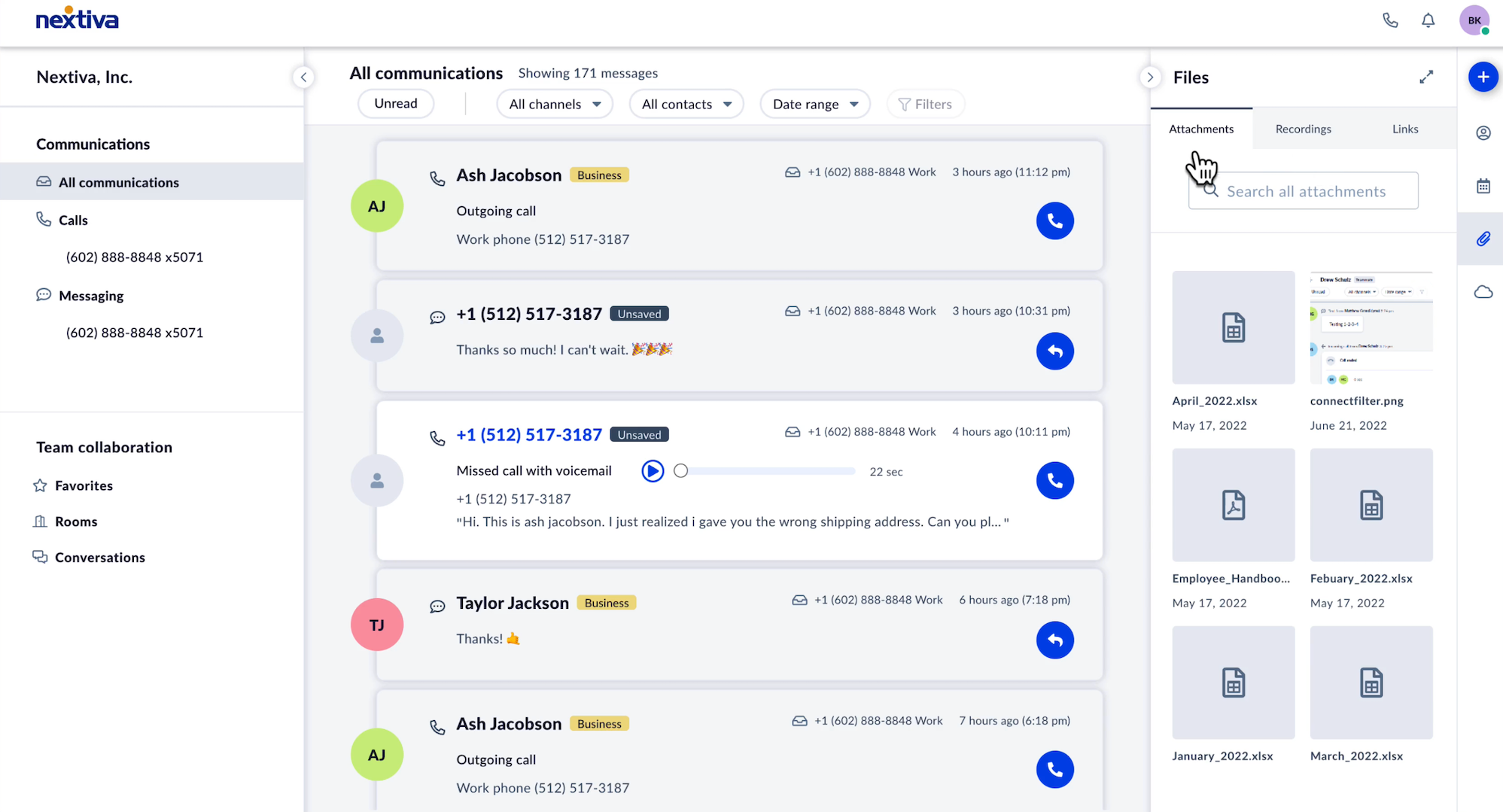
Nextiva provides unlimited calling, call recording, call forwarding, call flip, multi-level auto attendant, voicemail-to-text, and video conferencing on every pricing tiers. The platform also includes team chat, SMS/MMS messaging, and screen sharing capabilities. The voicemail transcription uses advanced speech recognition technology for high accuracy. Transcripts are available after call via email or accessible through the portal.
OnSIP offers essential calling features including call forwarding, call transfer, three-way calling, call recording, and voicemail-to-email. The platform does the basics very well rather than bundling features. However, video conferencing is limited. There are no built-in team messaging or SMS capabilities. OnSIP does offer unique features like call queueing and hunt groups which deliver for small call centers or sales teams who want intelligent call distribution without enterprise-level complexity.
Winner: Nextiva wins with a more comprehensive feature set that includes unified communications capabilities OnSIP doesn't offer.
Auto-Attendant
Summary: Both providers offer auto-attendants but Nextiva's system is stronger thanks to advanced scheduling and a very intuitive configuration interface.
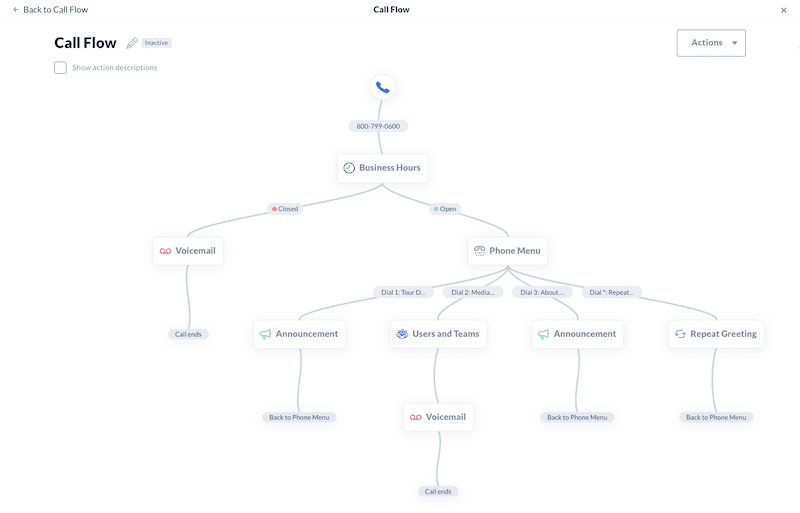
Nextiva includes a rich and thoughtful auto-attendant system on all plans. The setup wizard guides you through creating custom greetings, configuring menu options, and establishing call routing rules. You can set up different routing behaviors and configure holiday schedules while creating department-specific menus with multiple levels. The drag-and-drop interface makes configuration straightforward allowing you to preview your call flow before publishing.
OnSIP provides basic auto-attendant capabilities that allow you to create custom greetings and route calls to extensions or departments. The configuration is done through the web portal and supports time-based routing. While functional, OnSIP's auto-attendant has far fewer customization options. You won't find the advanced scheduling features or multi-level menu capabilities that Nextiva offers.
Winner: Nextiva wins with more advanced features, better customization options, and a user-friendly interface that's welcoming.
Analytics
Summary: Nextiva offers enterprise-grade analytics with dozens of metrics and real-time dashboards. OnSIP provides basic call detail records and that's about it.
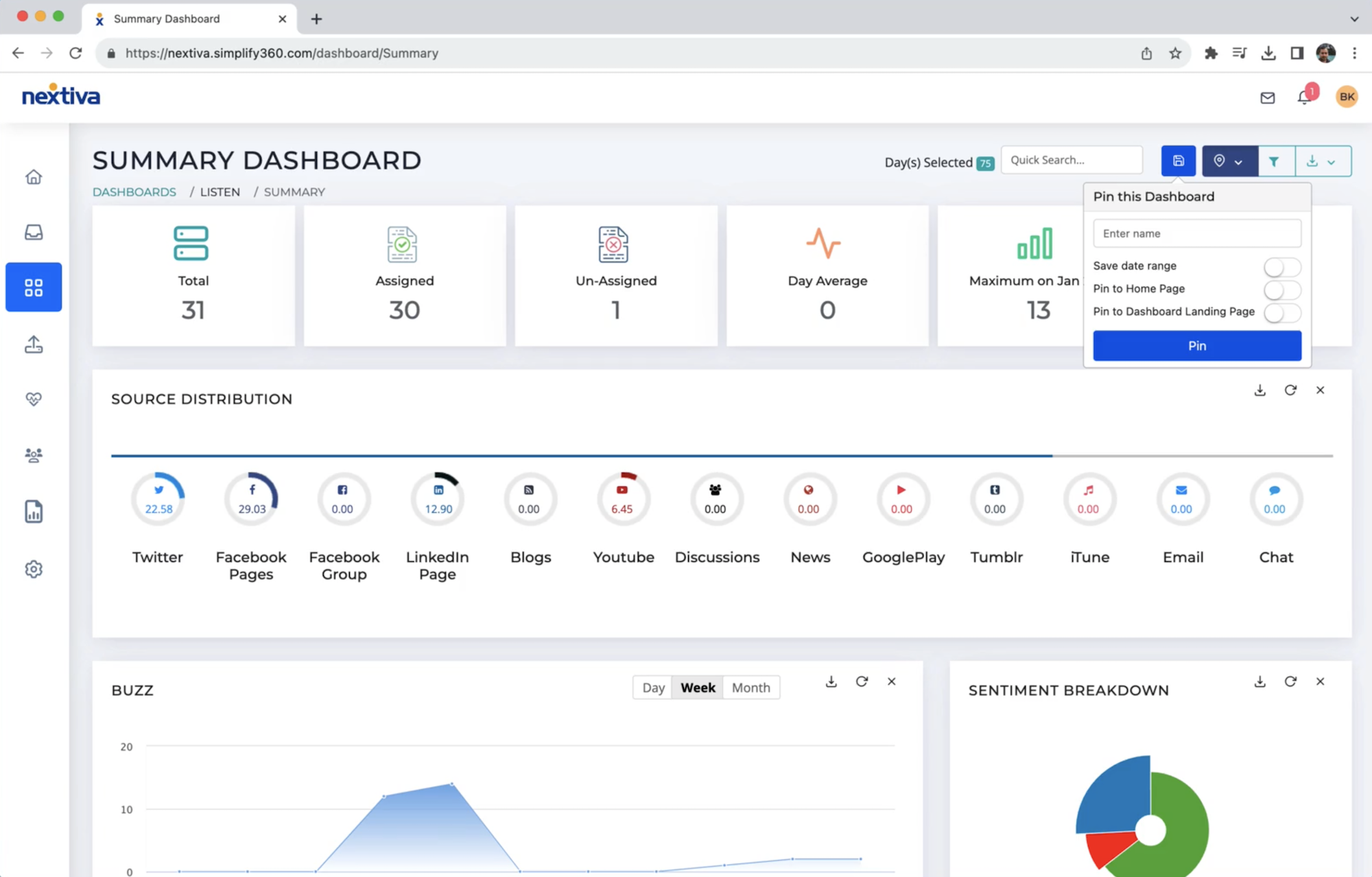
Nextiva's analytics suite is one of the best available in the market. The platform provides over 40 pre-built reports covering call volume, average handle time, first call resolution, abandoned call rates, and agent performance metrics. Real-time dashboards keep managers informed on things like queue status, active calls, and service levels at all times. Nextiva even includes AI-driven conversation analytics to parse through sentiment, identify keywords, and uncover coaching opportunities for all your teams.
OnSIP provides call detail records for the most basic information like call duration, time stamps, caller ID, and destination numbers. You can download these records for analysis for your external tools. It's basic. No built-in analytics dashboard or reporting interface at all. Overall, OnSIP's analytics capabilities feel inadequate. No real-time monitoring, performance metrics, or even visual dashboards means you'll have to invest in more tools.
Winner: Nextiva wins decisively with comprehensive analytics that OnSIP simply doesn't offer.
Scalability
Summary: Nextiva is just more scalable with volume discounts, enterprise features, and better support for growing organizations. OnSIP works well for small teams but is not suited for enterprise needs.
Nextiva covers all scales from small businesses to enterprise organizations with thousands of users. The platform even does volume discounts for larger deployments. Each pricing tier includes progressively growing features to match your growing communication needs. Adding users is quick via the admin portal. In minutes you can provision phone numbers, assign extensions, and manage permissions. The platform can handle complex organizational structures with multiple locations, departments, and call flows without performance dropping.
OnSIP works well for small teams and can technically support larger environments, but it lacks features that growing businesses want. There is no built-in CRM, limited analytics, and no dedicated support options. Its pricing model also becomes less competitive as you add users since there are no volume discounts. OnSIP's metered calling approach means costs are unpredictable for high-volume users, whereas Nextiva's unlimited calling is straightforward.
Winner: Nextiva is far more scalable with better pricing at scale, enterprise features, and support infrastructure for growing businesses.
Call Quality
Summary: Both providers deliver solid call quality, but Nextiva offers a higher uptime guarantee and more adaptive audio processing technology.
Nextiva's network infrastructure delivers crystal-clear HD voice quality with minimal latency. The platform uses adaptive jitter buffering to smooth out inconsistencies and packet loss concealment for quality calling on unideal network conditions. Users consistently report clear, reliable calls across various network conditions. Even better is that it guarantees 99.999% uptime, "five nines" carrier-grade reliability is industry-leading and backed by geographically distributed data centers with redundant systems.
OnSIP provides good call quality and performs well on stable internet connections with users generally reporting clear audio for voice calls. However, OnSIP's uptime SLA is 99.99%, which is one "nine" less than Nextiva and allows for roughly 52 minutes of downtime annually. In typical usage, both providers will deliver clear calls. The difference in uptime guarantees becomes more relevant for businesses where phone availability is mission-critical.
Winner: Nextiva wins with a higher uptime guarantee and more advanced audio processing capabilities.
Security
Summary: Nextiva offers enterprise-grade security with HIPAA compliance and granular controls, while OnSIP cover basic security features for general usage.
Nextiva implements comprehensive security measures including TLS encryption, SRTP, and AES-256 encryption. Even better is HIPAA compliance, making it ideal for healthcare organizations protecting patient data. Nextiva supports single sign-on (SSO), multi-factor authentication (MFA), and granular role-based access controls. The platform maintains SOC 2 Type II certification and does regular third-party security audits.
OnSIP implements TLS and SRTP encryption which is standard. The platform offers basic password protection and user authentication. OnSIP lacks HIPAA compliance, doesn't offer SSO or MFA, and has limited access control features which doesn't serve enterprise well. For small businesses without regulatory compliance requirements, OnSIP's secure enough. However, organizations in healthcare, finance, or other regulated industries should look at Nextiva first.
Winner: Nextiva wins thanks to HIPAA compliance, more certifications, and comprehensive enterprise security features.
Hardware
Summary: Both providers support major VoIP phone manufacturers, but Nextiva offers rental programs and pre-provisioned devices. OnSIP can save you more if your team can tinker.
Nextiva is compatible with desk phones from Yealink, Poly, Cisco, Grandstream, and Panasonic. The platform offers both phone rental programs and purchases, giving businesses flexibility in managing initial buy-in costs. Nextiva provides plug-and-play provisioning, meaning phones arrive pre-configured and ready to connect without any fiddling from your teams needed.
OnSIP supports popular brands like Nextiva does. Phones must be purchased outright but OnSIP provides detailed provisioning guides to help you configure devices yourself. OnSIP has a "bring your own device" approach, allowing you to use any existing SIP-compatible phones. OnSIP's developer-friendly approach extends to hardware with the flexibility to use virtually any SIP device. To avail this, your team needs to have technical knowledge to set it up properly compared to Nextiva's plug-and-play approach.
Winner: Nextiva takes the win with a wider selection, rental options, and pre-provisioned devices that reduce setup complexity.
Cross-Platform Compatibility
Summary: Nextiva offers polished mobile apps with consistent functionality across platforms, while OnSIP's mobile experience is more basic but functional.
Nextiva's mobile app gets consistent and relatively strong scores on both the App Store (4.1 stars) and Google Play Store (4.1 stars). The app provides full access to your business phone system including making and receiving calls, checking voicemail, accessing team chat, and joining video meetings. Users called the intuitive interface visually appealing and say there is consistent functionality across both iOS and Android.
OnSIP offers iOS and Android apps but with much worse ratings (3.5 on the App Store and 2.5 on Google Play). The apps will do the core functions like making and receiving calls on your business number, checking voicemail, and managing basic settings. However, the interface lacks the polish of Nextiva's apps. Some users report occasional connectivity issues and even call the user experience ugly. The apps get the job done for basic mobile calling but don't offer the comprehensive unified communications experience that Nextiva provides.
Winner: Nextiva wins with better-rated apps, more features, and a more pleasing experience overall.
Ease of Use
Summary: Nextiva offers a user-friendly experience with extensive onboarding handholding while OnSIP requires more technical knowledge but appeals to users who want total control.
Nextiva provides a welcoming onboarding experience with proactive support from account managers. The admin portal is clean with intuitive navigation so managing users, configuring settings, and accessing reports is quick. Most businesses report being fully online in just hours. The interface maintains consistent design across all applications, so learning one platform means learning all of them. Nextiva also provides extensive documentation, video tutorials, and a searchable knowledge base for self-service.
OnSIP offers a more DIY approach which appeals to technical users who want granular control. The web portal is key to all settings, but the interface feels dated compared to modern platforms. Setting up features like call forwarding or hunt groups had us digging through menus.
For tech-savvy users, OnSIP's approach provides better control. However, users who just want plug-and-play may find the learning curve steeper and will miss the guided onboarding that Nextiva provides.
Winner: Nextiva wins with a more intuitive interface and overall better onboarding for non-technical users.
Customer Service
Summary: Nextiva is loved for its 24/7 customer support across all channels, while OnSIP offers limited support during business hours.
| Support Channels | OnSIP | Nextiva |
| Live Chat | Yes (business hours) | Yes (24/7) |
| Yes | Yes (24/7) | |
| Phone | No | Yes (24/7) |
| Knowledge Base | Yes | Yes |
Nextiva has a reputation for excellent support that is available at all times via phone, chat, and email. It has industry-leading response times. There's a good reason why its customer satisfaction ratings consistently place it at the top of VoIP providers for support quality.
OnSIP offers email and chat support during business hours. Some will find the lack phone support option frustrating, a big dealbreaker for those dealing with urgent issues. The support team is competent but the limited availability makes it look bad compared to 24/7 options. The knowledge base provides documentation on setup and configuration, but it assumes you have some technical proficiency. For after-hours issues, you're essentially on your own.
Winner: Nextiva wins with 24/7 support across all channels, faster response times, and higher customer satisfaction.
OnSIP vs Nextiva: Pricing and Plans
Nextiva provides three pricing tiers from $15 to $75 monthly per user with annual billing. Month-to-month pricing is also available from $23 to $75 monthly, per user. Add-ons include additional call recording storage, advanced call center features, and conversation intelligence tools for sales teams.
For more information, see our Nextiva pricing guide.
OnSIP uses a different pricing model with a base rate of $18.95 per user per month for the unlimited tier. Their basic tier for lower volumes starts at $49.95 per month per account with standard calls starting at $0.032 per minute. There are no contracts required, and you can add or remove users at any time.
For more information, see our OnSIP pricing guide.
Pros and Cons of OnSIP and Nextiva
Here are some of the things that users liked and disliked about OnSIP and Nextiva.
OnSIP Pros
- Transparent, pay-as-you-go pricing with no long-term contracts
- Developer-friendly platform with robust API and WebRTC support
- Straightforward setup for technically proficient users
- Bring-your-own-device flexibility for hardware
OnSIP Cons
- Limited support availability (business hours only, no phone support)
- Metered calling can make costs unpredictable for high-volume users
- Minimal analytics and reporting capabilities
- Few pre-built integrations compared to competitors
Nextiva Pros
- Exceptional 24/7 customer support with high satisfaction ratings
- Built-in CRM eliminates need for third-party tools
- Comprehensive analytics with more than 40 metrics and real-time dashboards
- HIPAA compliant with enterprise-grade security features
Nextiva Cons
- Higher pricing than budget-focused alternatives
- Annual contracts required for best pricing
- May be more features than very small teams need
- Less flexibility for technical users wanting granular control
Which Provider is Right for Your Business?
The below sections offer insight into who should or shouldn't consider each platform.
OnSIP Is Best For
- Small, tech-savvy teams comfortable with self-service setup
- Businesses wanting transparent, pay-as-you-go pricing
- Companies with low call volumes that benefit from metered billing
- Developers needing API access and WebRTC capabilities
OnSIP Is Not Right For
- Businesses requiring 24/7 phone support
- Organizations needing HIPAA compliance or advanced security
- Teams that need comprehensive analytics and reporting
- Companies wanting extensive pre-built integrations
Nextiva Is Best For
- Growing businesses that need a scalable, full-featured platform
- Organizations that prioritize exceptional customer support
- Companies requiring CRM integration or built-in CRM functionality
- Businesses in regulated industries needing HIPAA compliance
Nextiva Is Not Right For
- Very small teams on extremely tight budgets
- Businesses preferring month-to-month flexibility without contracts
- Technical users who want maximum control and customization
- Companies that only need basic calling without unified communications
OnSIP vs Nextiva: Which Should You Choose?
Though OnSIP and Nextiva both provide VoIP services, the winner will depend on what you value most in a business phone system. Consider your daily usage then see which offers you exactly what you need.
If you want transparent pricing, no long-term contracts, and a no-frills VoIP solution with API flexibility, OnSIP is truly a solid value for small, technically capable teams.
Though if your company needs comprehensive unified communications, superior customer support, advanced analytics, extensive integrations, and enterprise-grade security, it will find Nextiva worth the investment.
To learn how additional business phone systems like RingCentral, Vonage, Ooma, Grasshopper, and more compare, review our comparisons of all the top VoIP platforms.