
Genesys Cloud and NiCE CXone are two of the most popular omnichannel contact center and customer experience platforms on the market today, but which one best meets your business needs?
In this post, we outline the key differences between Genesys Cloud and NiCE CXone, comparing available pricing and plans, WFM features, communication channels, integrations, analytics, overall user experience, and more.
NiCE CXOne vs Genesys Cloud: Our Take
NiCE CXone is best for:
- Teams needing advanced, AI-powered WFM solutions to improve CSAT and agent performance
- Enterprise digital-first contact centers that communicate with a high volume of daily customer interactions across multiple social media platforms
- Global contact centers that need to identify opportunities for fully automated customer service without sacrificing personalization, especially via predictive routing
Genesys is best for:
- Teams needing built-in UCaaS features like video calling, chat messaging, and file sharing
- Enterprise sales teams focused on automating outbound customer engagement across voice and digital channels to increase conversions, upselling, and cross-selling opportunities
- Contact centers with advanced third-party integration needs
NiCE CXOne vs Genesys Cloud: Quick Comparison
NiCE CXone is an enterprise cloud contact center and customer experience platform powered by Enlighten AI. A 9-time Gartner Magic Quadrant CCaaS leader, NiCE leverages purpose-built AI to support and engage customers across voice and digital channels, empower agents in real-time, and optimize contact center operations.
Genesys Cloud is an all-in-one customer engagement, workforce management, and omnichannel contact center platform using AI to orchestrate personalized customer and agent experiences. Named as a Forrester Wave Leader in the contact center space, Genesys Cloud is trusted by 8,000 organizations in over 100 countries.
| NiCE CXOne | Genesys | |
| Best For |
|
|
| Pricing+Plans |
|
|
| Key Voice Calling Features |
|
|
| Digital Communication Channels |
|
|
| Key QM+WFM Features |
|
|
| Analytics+Reporting |
|
|
| Integrations |
|
|
| Reliability+Security |
|
|
| Customer Support |
|
|
NiCE CXone vs Genesys: Pricing and Plans
Key Takeaway: While NiCE CXone is more expensive than Genesys, it has a longer free trial period. Although NiCE and Genesys market their AI-powered features as the foundation of all contact center operations, both providers hide the fact that many of these features are accessible only via paid add-ons–even on the most expensive plans.
NiCE CXone Pricing
NiCE CXone includes 6 paid plans from $71-$209/agent/month, plus 6 optional quote-based add-on packages, and a 60-day free trial. Lower-tier “Interaction Orchestration” plans support either digital or voice channels with basic reporting, while the higher-tier plans add advanced WFM, analytics, and quality management tools. Add-ons include AI tools like Enlighten Autopilot and Copilot, Proactive Dialer, and the CXone Guide.
For more details, check out our complete guide to NiCE CXone pricing and plans.
Genesys Cloud Pricing
Genesys Cloud offers 5 plans from $75-$155/agent/month, with 3 main add-ons, and a 14-day free trial. Lower-tier plans support either voice or digital channels, while the mid-tier options add in omnichannel routing and analytics. Moving to the higher tier will unlock advanced Workforce Engagement Management tools like AI forecasting, gamification, and agent coaching.
For more details, see our complete Genesys pricing guide.
NiCE CXone vs Genesys Cloud: Feature Comparison
Below, we compare Genesys Cloud vs NiCE CXone customer engagement, WFM, Agent Assist, and analytics features.
Customer Engagement
Key Takeaway: NiCE and Genesys customer engagement features facilitate inbound/outbound omnichannel communication between customers and live agents, customers and intelligent virtual agents, and a mixture of the two. Both platforms offer omnichannel proactive customer engagement via outbound auto dialers, predictive website chat messaging, and outbound email/SMS marketing to free up live agents and increase productivity.
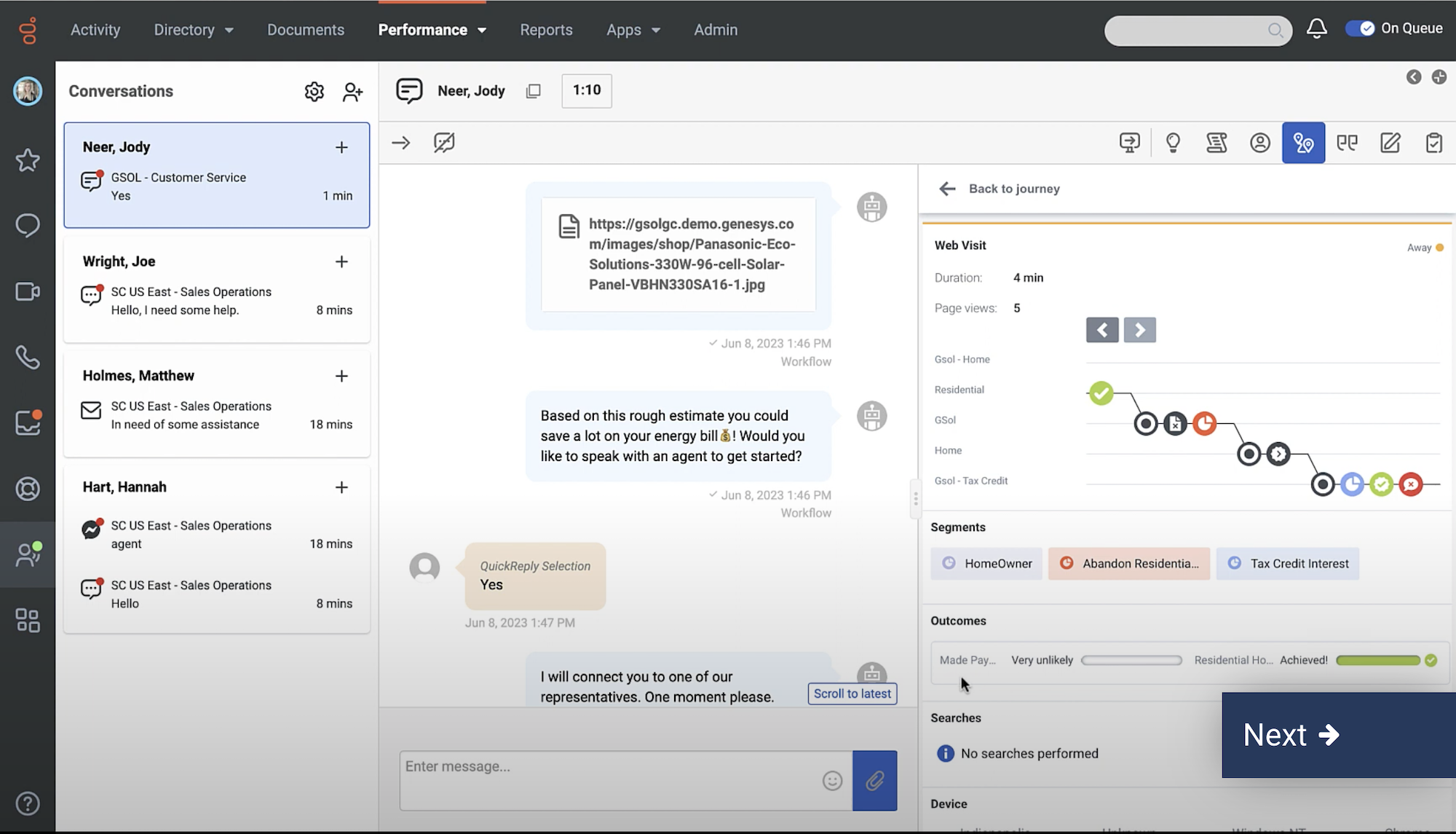
Genesys Cloud
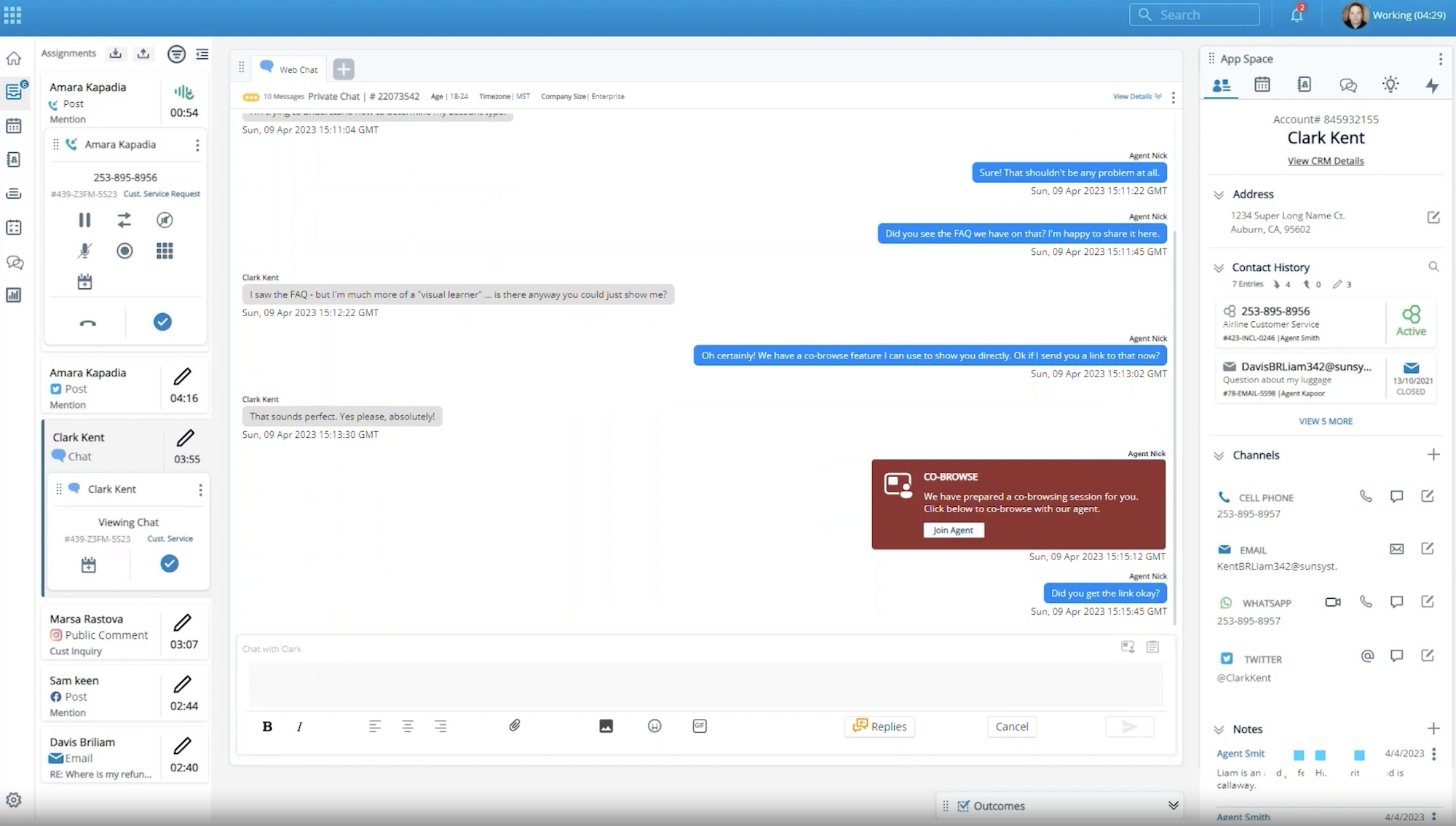
NiCE CXone
Genesys and NiCE CXone both offer a complete suite of customer engagement tools designed for omnichannel contact centers. Both support unlimited VoIP calling and come with IVR, voicebots, smart routing, and outbound dialers (progressive, preview, and predictive) along with call recording and SMS messaging. On the digital side, both platforms support real-time agent and bot-based interactions across social media, WhatsApp, email, live chat, and other messaging apps. Co-browsing features allow agents to guide customers through your websites, while chatbots proactively take on site visitors using historical data and predictive behavior analysis. They both excel at campaign management, both offering automated SMS and email campaigns, TCPA compliance, segmentation, and follow-up automation.
Each provider offers unique advantages over the other with NiCE standing out for its voicemail drop for auto dialers and a more personalized chatbox experience that offer dynamic promos and relevant knowledge base info to guide your customers in real-time. Genesys, however, offers a more sophisticated email handling experience, providing agentless email campaigns, smart routing, and better response management. If you prioritize email as a primary marketing or support channel, it is the better pick.
Agent Assist
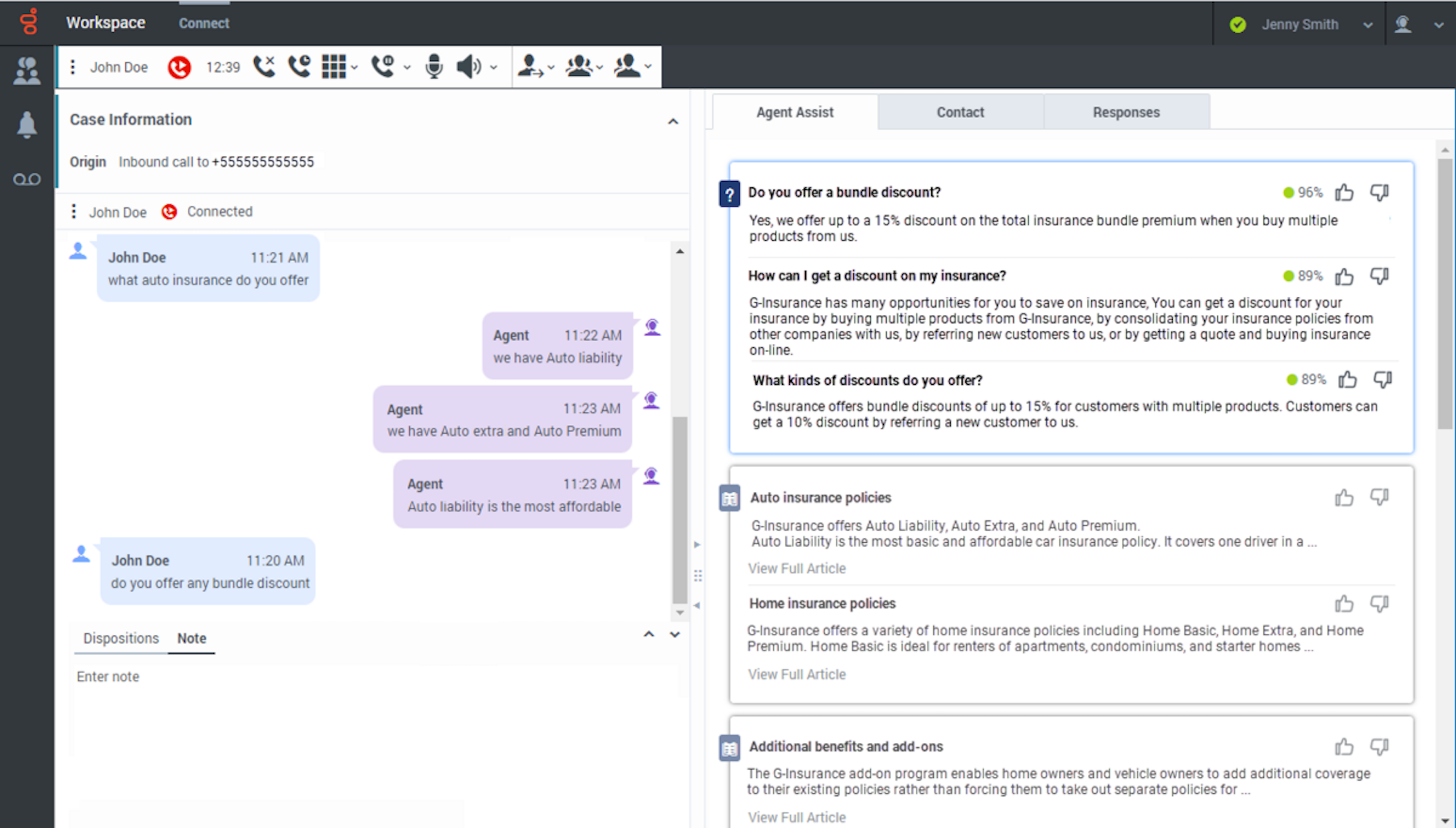
Key Takeaway: NiCE’s Agent Assist feature notifies agents of potential compliance risks and automatically guides customers through complex, multi-step support processes. Genesys’s Agent Assist feature collects and acts on agent feedback regarding AI-generated responses and provides wrap-up code predictions.
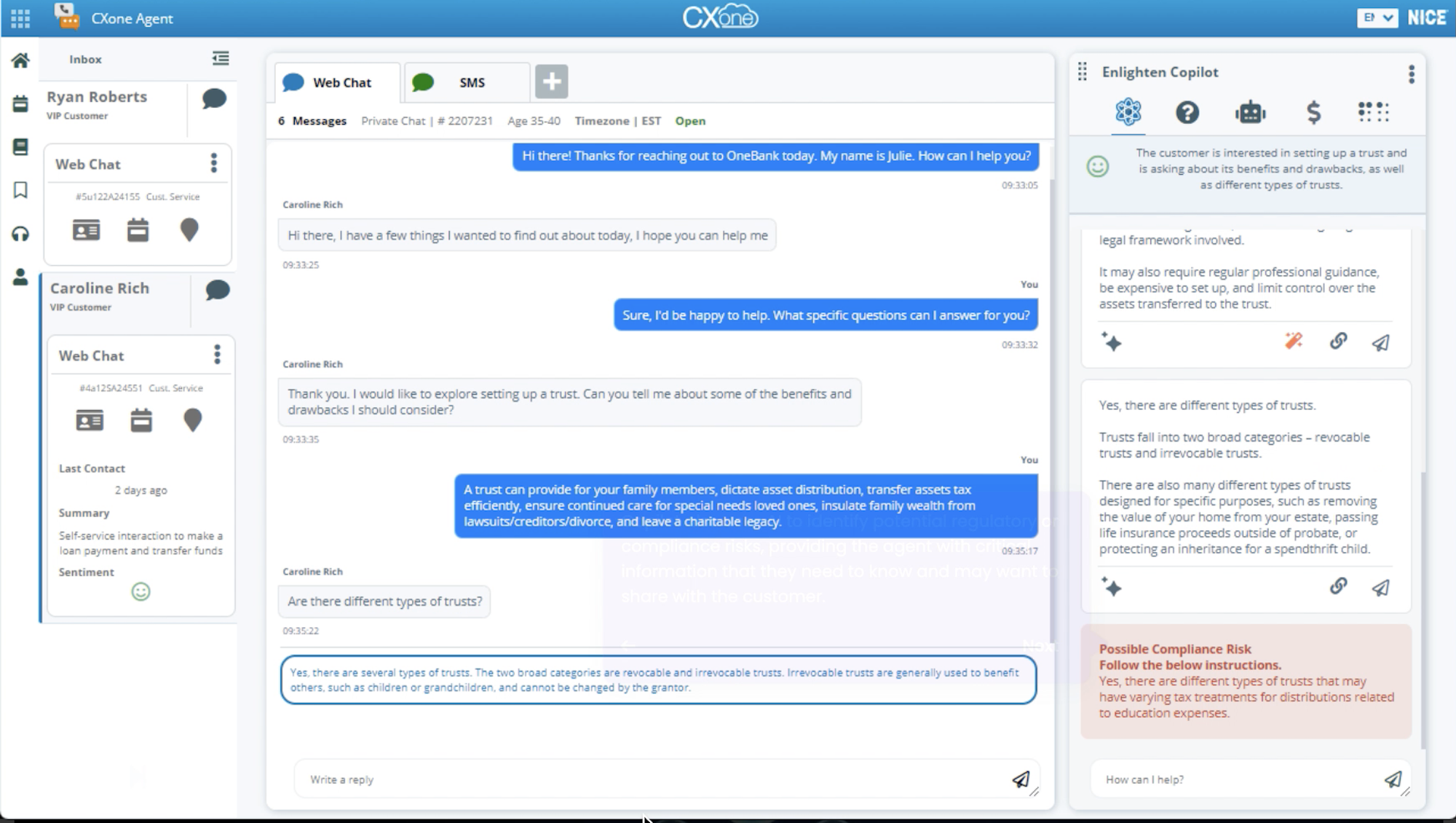
NiCE CXone
Genesys Cloud
Genesys and NiCE CXone equip agents with strong real-time assist tools across both voice and digital channels. Features like generative AI-powered next best action suggestions, automated conversation summaries, speech-to-text transcription, sentiment tracking, and internal knowledge base access keep agents locked-in and informed during every interaction. Both platforms also support canned responses and full scripting to keep messaging consistent with company tone and efficient.
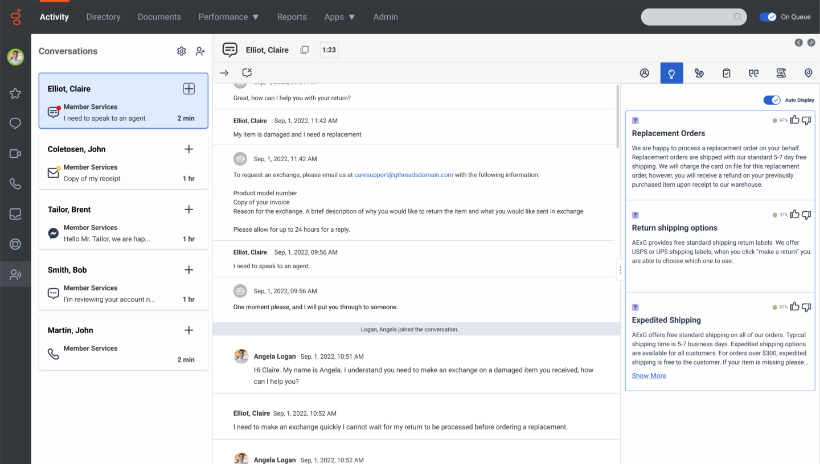
Where they differ is in the finer details. Genesys gives agents more control over summaries by letting them edit AI-generated notes, and its multilingual support makes it a solid pick for global teams. NiCE, in contrast, offers smart visibility into customer behavior to show agents what articles a customer has already read to avoid repetition and frustration. With automated compliance alerts that flag risky conversations in real time, it aids teams in staying ahead of regulatory issues.
Workforce Management Tools
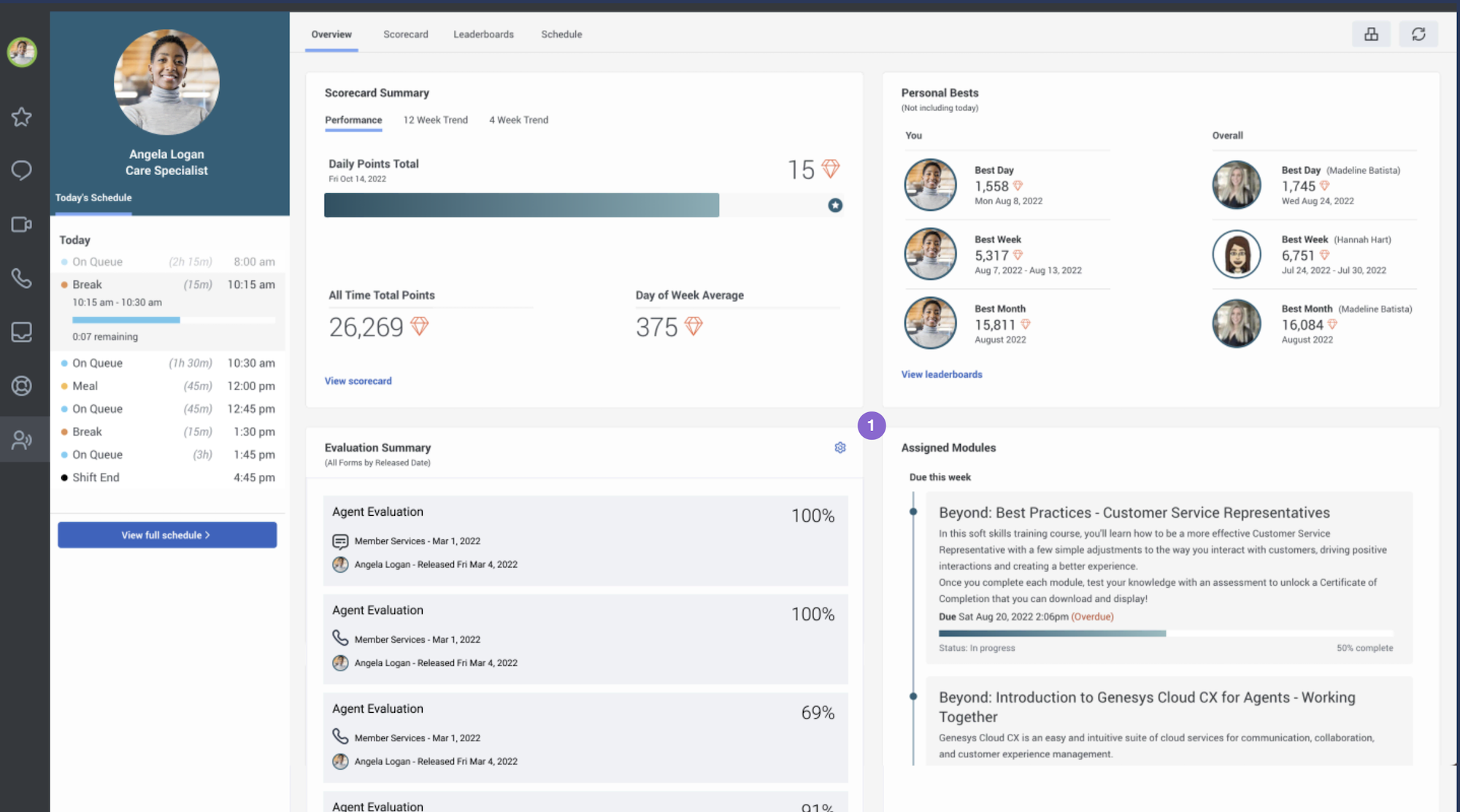
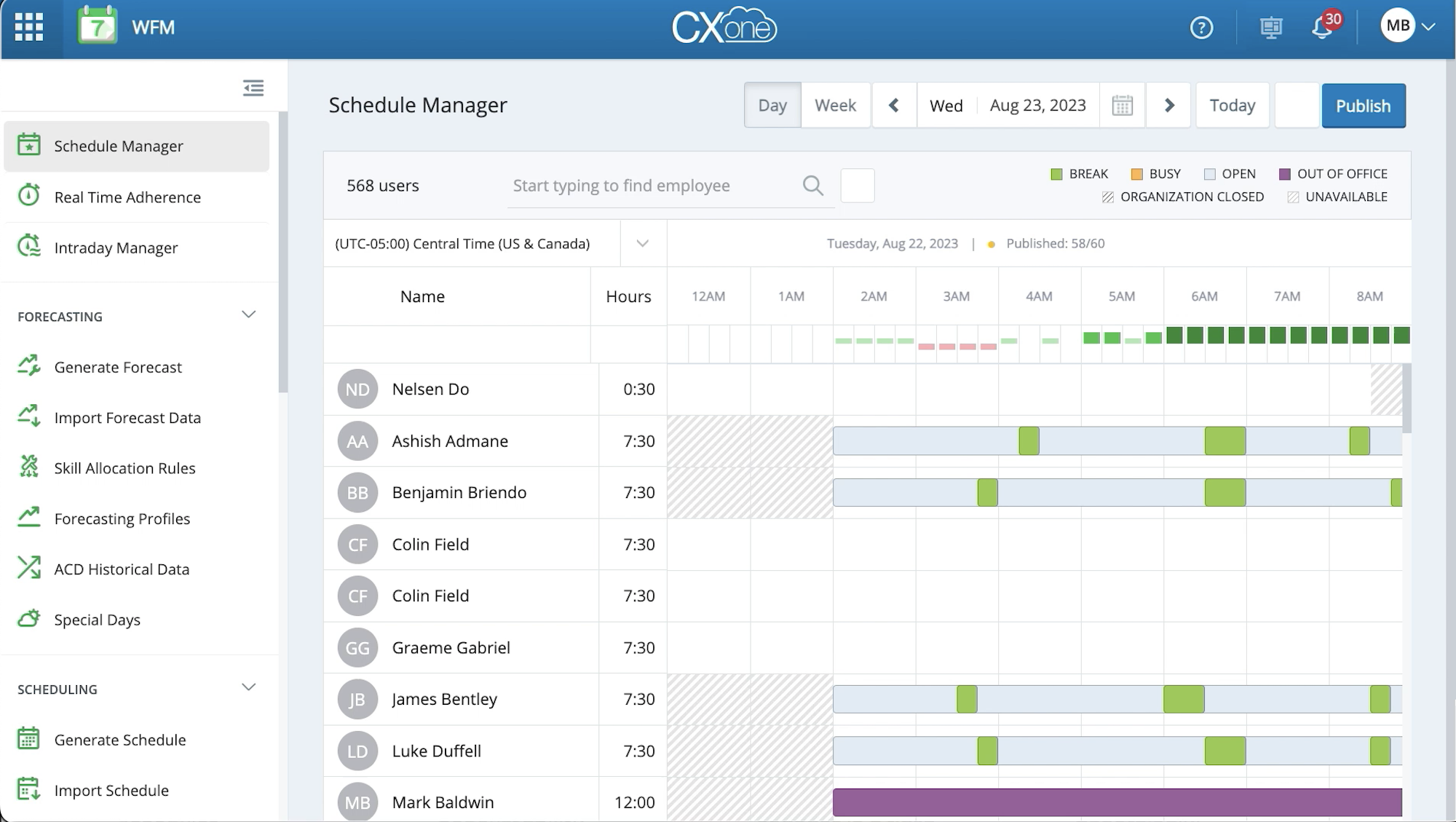
Key Takeaway: While NiCE CXone WFM features provide more advanced forecasting and scheduling tools, Genesys excels at agent coaching and performance gamification.
Genesys Cloud
NiCE CXone
Genesys and NiCE CXone both deliver a full suite of workforce management (WFM) tools that help contact centers stay efficient and performance-driven. Shared features include real-time KPI tracking, customizable agent scorecards, gamified leaderboards, and built-in coaching tools. Both platforms support omnichannel quality management which includes screen and interaction recording, live monitoring with call whispering or chat coaching, and sentiment-based Voice of the Customer feedback. Forecasting and scheduling tools are no slouch on both providers, giving agents mobile-friendly access to shift swaps, PTO requests, and adherence updates. This allows supervisors to rely on forecasts to play effectively and accommodate worker requests.
That said, each platform takes a different approach in key areas. Genesys adds a motivational edge with its “personal best” tracker, highlighting agents’ top-performing metrics and comparing them with peers in real time. NiCE, meanwhile, offers more depth in forecasting, with over 40 algorithms and “what-if” modeling options for highly customized scheduling. It also stands out with agent self-assessments and a built-in appeals process, giving staff a formal way to dispute quality scores and contribute context, something Genesys doesn’t currently support.
Analytics+Reporting
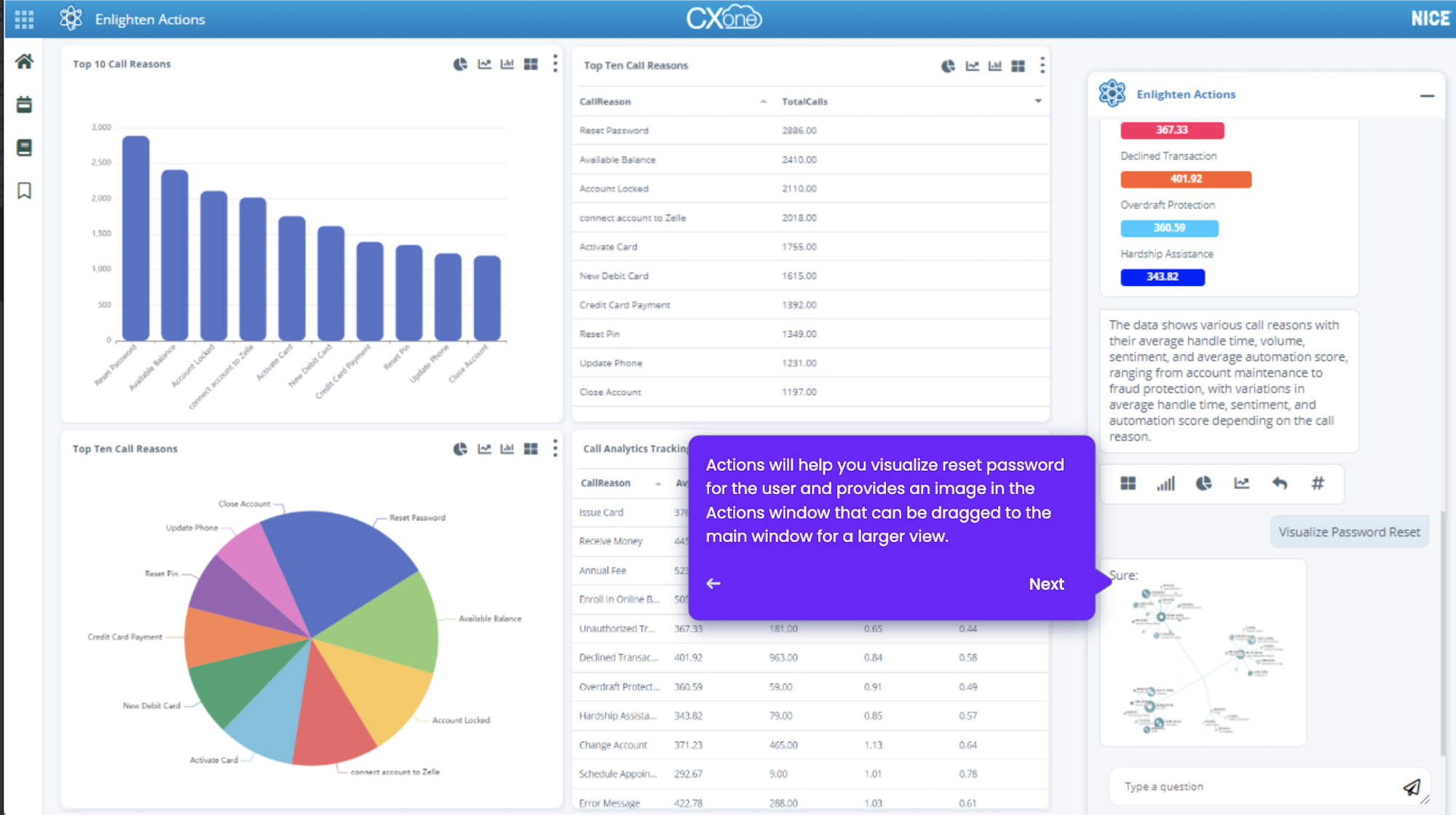
Key Takeaway: Genesys and NiCE have AI-powered reporting tools offering high-level insights into real-time and historical agent activity and customer behavior, but NiCE provides more detailed contact center analytics overall. Genesys includes customer interaction, call center activity, and customer experience analytics designed to streamline customer journeys and improve agent performance. NiCE CXone includes interaction analytics, Enlighten Actions, contact center reporting, omnichannel feedback management, and business process analytics designed to identify more opportunities for automation and improve CX.
NiCE CXone
Genesys Cloud
Genesys and NiCE CXone both provide powerful analytics suites that give contact centers deep insight into performance, customer behavior, and agent effectiveness. Both platforms offer full speech and text analytics across all channels, sentiment tracking, discovery of common support issues, and scoring agent soft skills like empathy. They also include customizable, omnichannel survey tools for collecting Voice of the Customer feedback with real-time reporting on CSAT, NPS, and agent-specific performance. Operationally, both NiCE and Genesys support real-time and historical analytics like first contact resolution (FCR), average handle time (AHT), call transfers, abandonment rates, adherence, and task tracking with built-in tools for journey mapping, KPI alerts, and full interaction/screen recording.
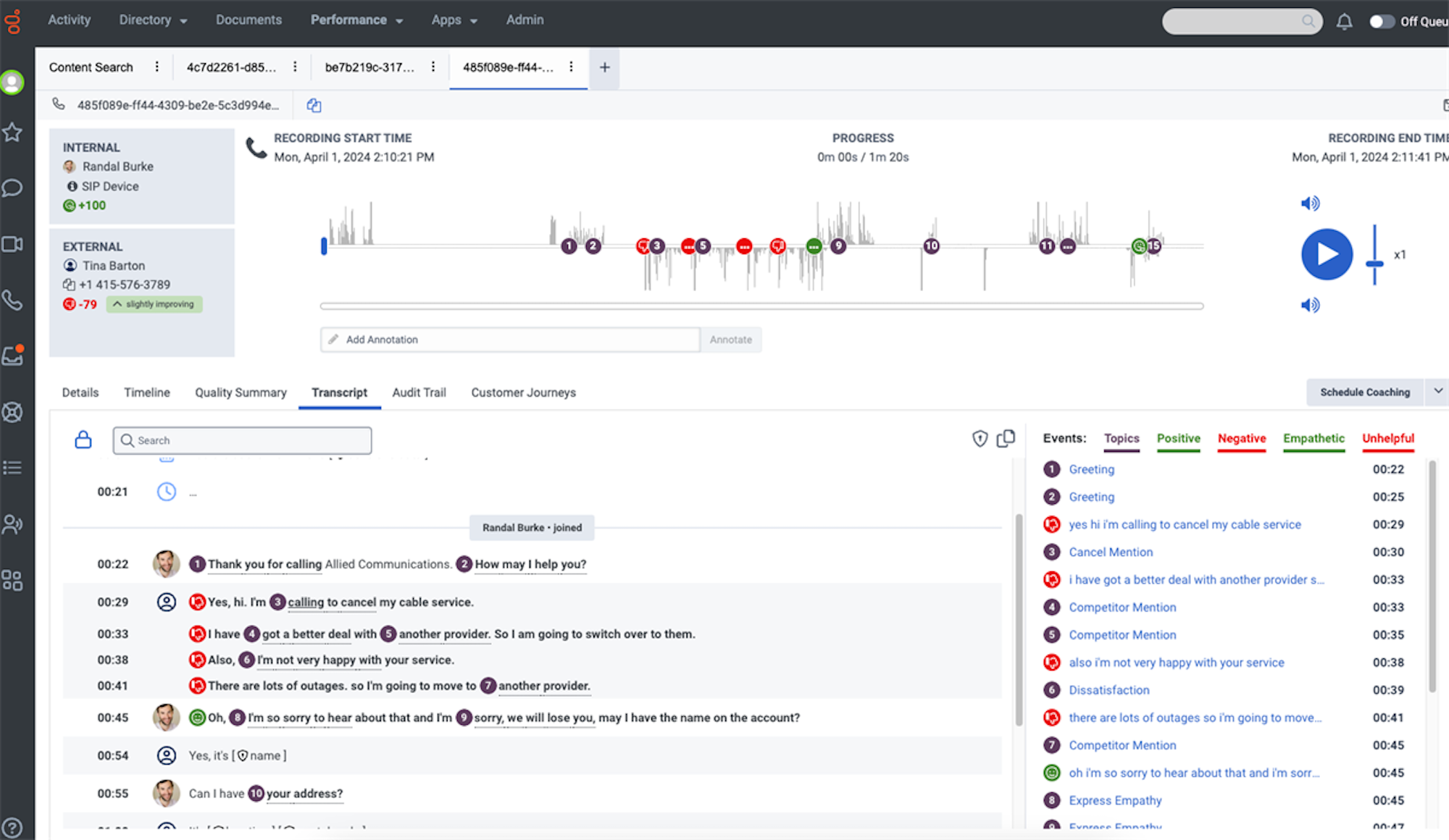
Where they diverge is in flexibility and AI depth. NiCE CXone offers a broader range of ready-made reports, 90+ compared to Genesys’s 30+, and even includes advanced tools like Enlighten Actions, which lets managers ask plain-language questions and receive AI-generated insights, visualizations, and training recommendations. Genesys, while more limited in reporting templates, stands out with its Agent Empathy scoring system. This feature pinpoints emotional tone in conversations, assigns sentiment labels like “helpful” or “negative,” timestamps key moments, and provides agents with an overall empathy score, making it especially valuable for teams focused on soft skills and relationship-building.
AI Features and Automation
Key Takeaway: Genesys and NiCE CXone take advantage of AI innovation to boost agent performance, automate customer interactions, and uncover insights from data. But NiCE’s Enlighten AI suite offers far more granular control, predictive modeling, and practical applications for CX automation. Genesys, instead, focuses on AI that improves agent empathy and optimizes customer journeys in real time.
Genesys AI
NiCE CXone AI
Genesys and NiCE CXone use generative and predictive AI to maximize and optimize contact center operations. Both NiCE and Genesys provide AI-enhanced next best action suggestions even during live conversations, automate post-call summaries, and utilize advanced speech and text analytics to uncover and point out customer sentiment, intent, and recurring service issues. Their AI engines also power intelligent routing, automated workflows, bot building, and Voice of the Customer (VoC) analysis.
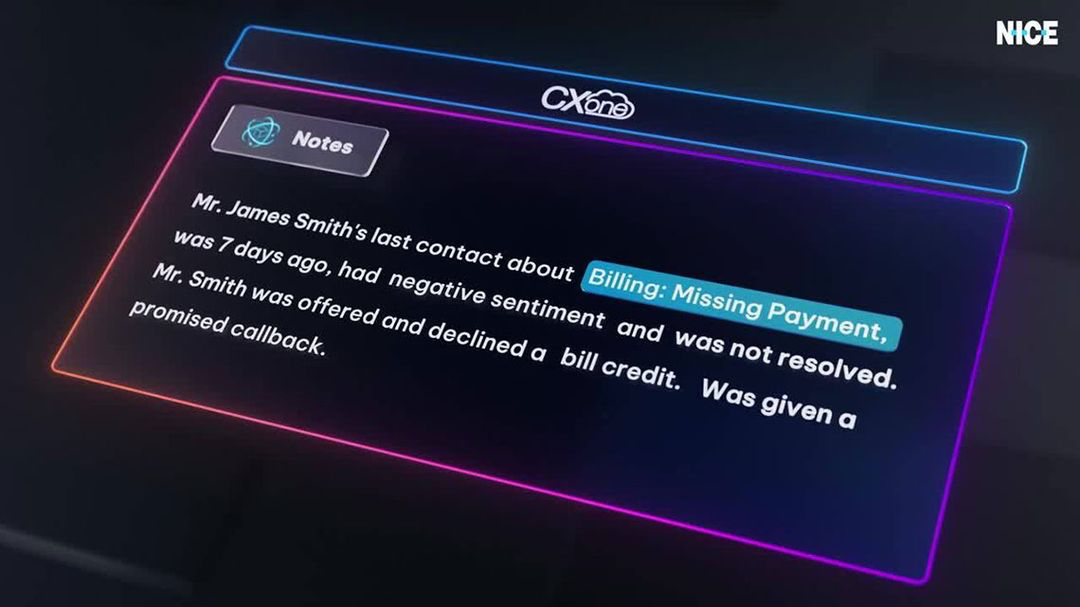
NiCE CXone pulls ahead with its Enlighten AI platform, which includes Enlighten Actions, Autopilot, and Copilot. Enlighten Actions allows managers to interact with their analytics platform using plain-language prompts like “Why are my average handle times increasing?” and receive instant, AI-generated answers complete with visualizations, root cause breakdowns, and even custom training recommendations. Enlighten Copilot gives live agents real-time coaching suggestions and compliance alerts, while Autopilot powers conversational bots that self-learn from interactions and integrate with back-end systems to resolve more inquiries autonomously. NiCE also uses predictive AI for customer behavior modeling and forecasting, giving teams more proactive control over CX outcomes.
Genesys, on the other hand, really targets soft skill development and customer empathy using its AI. Its AI-driven Agent Assist not only recommends on the fly actions but also evaluates conversations for emotional tone. It can label exchanges as helpful, unhelpful, positive, negative, or empathetic. These sentiment markers are timestamped and compiled into individual empathy scores, allowing supervisors to coach agents on emotional intelligence as well as efficiency. Genesys AI also powers customer recognition via IP address, bot personalization, and real-time workflow adjustments based on evolving sentiment and context.
To keep things short and sweet, Genesys uses AI to humanize automation and improve live-agent quality. In contrast, NiCE CXone uses AI more broadly for automation, insights, compliance, and strategic CX planning.
Genesys Cloud vs NiCE CXone: User Experience
Genesys shines due its more intuitive agent workspace, deeper collaborative tools, and a powerful low-code bot builder that’s AI-friendly. Still, we found its reporting tools clunky, its knowledge base outdated, and its employee scheduling tools frustrating. NiCE CXone thrives in workforce management and AI-powered analytics, great for scaling up and optimizing remote teams, but the lack of native collaboration tools, occasional call quality issues, and steep learning curves prevent it from being a best-fit for all organizations.
Genesys Pros
- Agent Workspace: Intuitive agent workspace gives reps instant, in-conversation access to essential CRM data, agent notes, omnichannel interaction history, canned responses, scripts, Agent Assist next-best-action suggestions, and customer journey maps. Agents can share their screens directly with customers, access “quick actions” like one-click ticket management/transfer, and review personal KPIs, performance scorecards, and assigned coaching modules in-dashboard.
- Team Collaboration: Genesys unified communications/collaboration tools like public/private chat, HD video calling, file sharing, agent status updates, and a unified company directory eliminate communication silos and increase productivity.
- Bot Flow Builder: Create an unlimited number of low-code voicebots and chatbots with the drag-and-drop bot flow builder, add rich communication services (image carousels, etc.) to bots, import existing bots, set custom bot rules, and access bot templates. Enhance bots further with real-time customer sentiment analysis, customer recognition via IP address, and utterance predictions.
Genesys Cons
- Limited Reporting: Genesys Cloud offers limited analytics and reporting features compared to competitors–especially when it comes to customizable reports. The reporting tools they do include are difficult to navigate, making finding actionable insights challenging and time-consuming.
- Online Knowledge Base: Genesys’ online knowledge base and product documents do not contain sufficient information about specific features and platform capabilities, meaning it’s difficult to get a straightforward answer about what Genesys can and cannot actually do. Much of the information in the knowledge base is outdated, leads to broken links, or has been removed altogether–making self-service almost impossible even for tech-savvy users.
- Employee Scheduling: Employee forecasting and scheduling tools are buggy and not intuitive, leading to an increase in agent absenteeism or over-scheduling during the onboarding process
NiCE CXone Pros
- WFM Tools: NiCE easily has some of the best workforce management, scheduling/forecasting, and performance monitoring tools in the CCaaS space–especially ideal for remote/blended teams needing assistance with agent optimization
- AI Analytics: Users can access conversation-based insights about real-time and historical contact center trends, making it easy to identify the root causes of customer journey bottlenecks and improve CX as a whole
- Scalability: NiCE has flexible pricing tiers and a variety of individual add-ons that help users avoid paying for excessive features they won’t use. NiCE’s pricing tiers provide support for contact centers during every phase of business, including via digital-only or voice-only solutions.
NiCE CXone Cons
- Collaboration Tools: NiCE CXone does not include native collaboration tools (team chat, video calls, etc.) and requires users to integrate with Microsoft Teams to access unified communications functionality–a glaring omission in an otherwise feature-rich platform.
- Call Quality: Despite its 99.99% uptime, NiCE users experience frequent dropped calls and latency, degrading the customer experience and increasing call times.
- Lengthy Onboarding: While NiCE provides excellent online resources like webinars and tutorials, it’s still a complex platform with advanced functionalities that lead to a longer onboarding process than competitors.
Use NiCE CXone If You Need:
- An enterprise-grade CCaaS platform that leverages AI to lower operating costs, optimize available agents, and provide 24/7 omnichannel customer service
- AI-enhanced workforce management and performance monitoring tools to help improve CSAT levels, increase FCR, and decrease agent attrition
- A digital-first contact center that seamlessly streamlines communication across at least 5 digital channels and engages customers across multiple social media platforms
- Advanced AI-powered analytics that identify opportunities for automation and provide long-term strategic planning advice
Use Genesys Cloud If You Need:
- Omnichannel outbound marketing and campaign management tools to increase conversions, segment consumer markets, and proactively engage/re-engage customers at the ideal time
- High-level, pre-built integrations and APIs that allow you to continue using existing third-party tools directly in the Genesys interface
- An enterprise contact center solution with built-in team collaboration tools, like video conferencing and team chat messaging
- A WFM+CCaaS tool that helps improve agent soft skills like empathy and active listening, while providing detailed customer interaction analytics