
Summary: Intercom is a conversational AI-first platform that provides proactive customer support engagement tools for product-led SaaS teams. The platform excels at providing chat experiences that feel rich and engaging. Zendesk is better suited for enterprises and high-volume support situations driven on omnichannel features, strict SLA management, structured ticketing and granular operational controls.
Intercom and Zendesk are leaders as customer support platforms, but their approaches are fundamentally different and driven by different philosophies.
Intercom has staked its reputation on conversational support; it offers in-app messaging and AI-powered chat through its Fin AI agent. These elements allow it to create a proactive yet frictionless experience for customers.
Zendesk conversely positions itself as an enterprise-grade ticketing powerhouse. It has omnichannel support (plus native phone service), a more structured workflow, and better analytics for high-volume scenarios.
Which of these two customer support platforms works best for your business? Our Intercom vs Zendesk guide will talk pricing models, features, use cases, AI features, and more.
Intercom vs Zendesk: At A Glance
Both platforms serve distinct needs. Zendesk is the clear choice for enterprises who need a more rigid ticketing structure, high-volume support, native phone, and a more predictable per-seat pricing model.
Still, Intercom offers up a snappy conversational model with AI-powered chat, proactive engagement, and in-app messaging suited for product-led growth strategies or SaaS businesses.
Here’s a quick summary table for a general overview:
| Intercom | Zendesk | |
| Pricing Model | Per-seat + per-resolution AI fees | Per-seat with predictable scaling |
| Support Philosophy | Conversational, chat-first, proactive | Ticket-based, structured, reactive |
| AI Capabilities | Fin AI (native, holistic chatbot) | Classification and workflow automation |
| Native Phone Support | No (requires third-party integration) | Yes (Zendesk Talk included) |
| Best For | Product-led SaaS, proactive engagement, modern chat experiences | High-volume support, complex workflows, enterprise operations |
How We Compared Intercom vs Zendesk
We used the below criteria to compare Intercom vs. Zendesk:
- Support Philosophy and Workflow: We evaluated whether each platform's approach (conversational vs. ticketing) aligned with the business models major leaders and small businesses have
- AI Capabilities: We tested both Fin AI and Zendesk AI to compare autonomous resolution versus workflow automation
- Ticketing and Case Management: We analyzed ticket creation, routing, SLA management, and workflow customization
- Messaging and Proactive Engagement: We examined in-app messaging, behavioral triggers, and proactive outreach capabilities
- Omnichannel Support: We compared channel coverage including phone support and how well each platform unifies channels
- Analytics and Reporting: We looked at reporting depth, customization options, and operational insights
- Integrations: We compared available third-party integrations and API capabilities to see which platform offered the most flexibility with preexisting workflows or popular nonnegotiable tools
- Pricing and Total Cost of Ownership: We analyzed pricing structures and calculated total cost of ownership scenarios at different volumes
- Ease of Use: We assessed setup complexity and learning curves for agents and administrators
- Automation Capabilities: We evaluated workflow automation, chatbots, and time-saving features
- Scalability: We examined how each platform performs as organizations grow to enterprise scale
- Customer Support: We reviewed available support channels and overall satisfaction with each vendor's level of support when issues arose
Key Differences Between Intercom and Zendesk
Before we dive into comparison with detail, it’s key that you understand Intercom and Zendesk mark two different paradigms in customer support: conversational versus structured.
Support Philosophy: Conversational vs. Ticket-Based
Intercom takes a chat-first, conversational AI approach where customer interactions happen through an in-app messenger, live chat, and automated conversations. The platform is designed for proactive engagement which entails reaching out to users based on behavior, triggering pre-made workflows during tasks like onboarding, and resolving issues ahead of them becoming tickets.
Zendesk follows a conventional, structured ticketing model where customer issues are taken in as tickets. These are then assigned to agents, tracked through workflows, and closed per the requirements of preset SLAs. The platform is great for managing vast amounts of support requests across all channels with clear markers for accountability. Compared to Intercom's conversational approach, it's less about the future and more about what's happening with customers now.
AI Capabilities: Fin AI vs Zendesk AI
Intercom's Fin AI is integrated throughout as a holistic chatbot made to take in conversations end-to-end, answer questions from your knowledge base, and autonomously wipe out customer issues. Because of the integrations, Fin AI (and Intercom’s take on AI itself) feel more like a natural extension of the conversational experience.
Zendesk's AI is more about classification, routing, or workflow automation. Their applications for the tech mean intelligently categorizing tickets, suggesting responses to agents, and automating away any repetitive tasks. AI for Zendesk is centered around agent efficiency rather than replacing human interaction like how Fin AI and Intercom's big goal is. They offer AI agents, like Fin, but their agents lack the comprehensiveness and compatibility Intercom’s model does.
Pricing Models: Per-Resolution vs Per-Seat
Zendesk uses predictable per-agent pricing where you pay a monthly fee per support seat, making costs easy to forecast as you scale. Intercom uses a hybrid model with per-seat fees plus per-resolution charges for AI-handled conversations. While this can be cost-effective at lower volumes, the per-resolution fees can spike significantly as your AI resolves more customer issues at scale.
Channel Coverage and Native Phone Support
Zendesk offers native omnichannel support which means email, chat, social media, and phone support (via Zendesk Talk). For Zendesk's purposes, all is usually managed from its single interface. Meanwhile, Intercom excels at in-app messaging and chat but does demand third-party integrations for voice support, making it less suitable for businesses needing native phone capabilities.
Intercom vs Zendesk: Direct Comparison
To steer you towards your best-fit solution for customer support, we put these two vendors head to head against each other in various major categories. Here’s what we discovered:
Support Philosophy and Workflow
Summary: Intercom is known for its conversational, chatty approach where proactive engagement is the end goal while Zendesk follows a ticket-based model with granular SLA management.
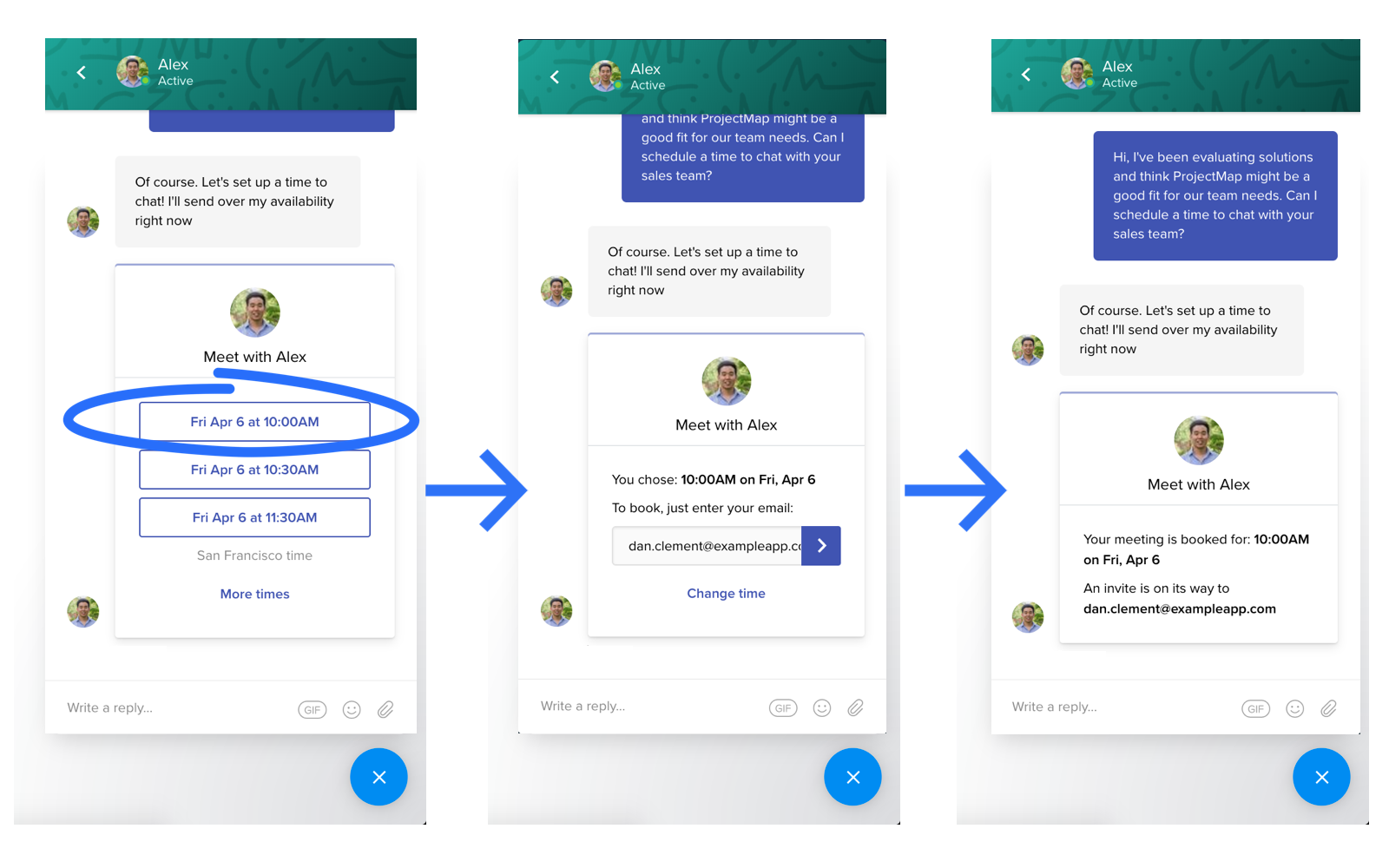
Intercom is designed to start conversations rather than collect tickets. Interactions are conducted via an in-app messenger or automated prompts from behavioral patterns. The platform is about reaching out during onboarding and offering contextual help by reading into how users interact with your product.
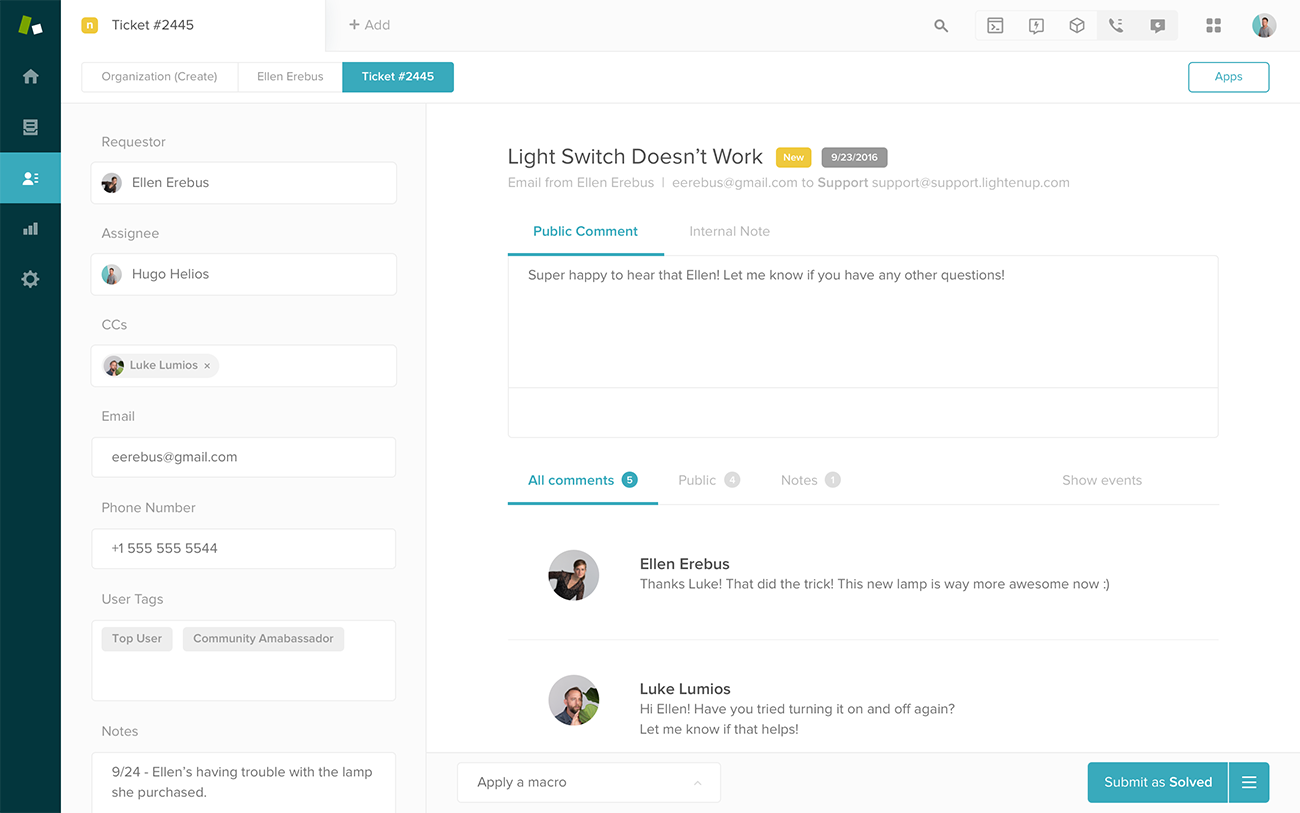
Zendesk uses a standard ticketing model where all issues are traceable tickets with SLA targets, an assignee, priority level, and status. These markers are what allows it to offer crystal clear accountability and track metrics on a systematic basis.
Winner: This depends on specific needs. Those who want a more proactive and talkative process will like Intercom while those dealing with more rote, high-volume inquiries will like Zendesk.
AI Capabilities
Summary: Intercom’s Fin AI provides native conversational AI in such a way that it can autonomously resolve issues. Zendesk’s AI is more about classifying issues and boosting human agent efficiency than solving things outright.
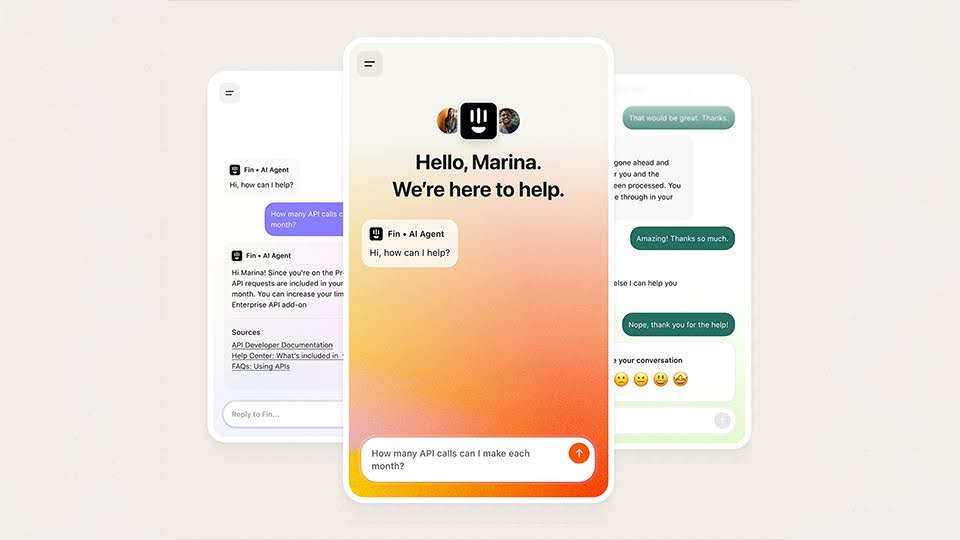
Intercom’s Fin AI takes care of conversations from the start to the end without any human voices or intervention at all stages. It pulls answers directly from your knowledge base and even performs actions within your product. The AI is good at “sounding human” and can frictionlessly send off any inquiries to human agents when the time comes. But it does run at a per-resolution pricing model so each AI-aided resolution adds to your costs.
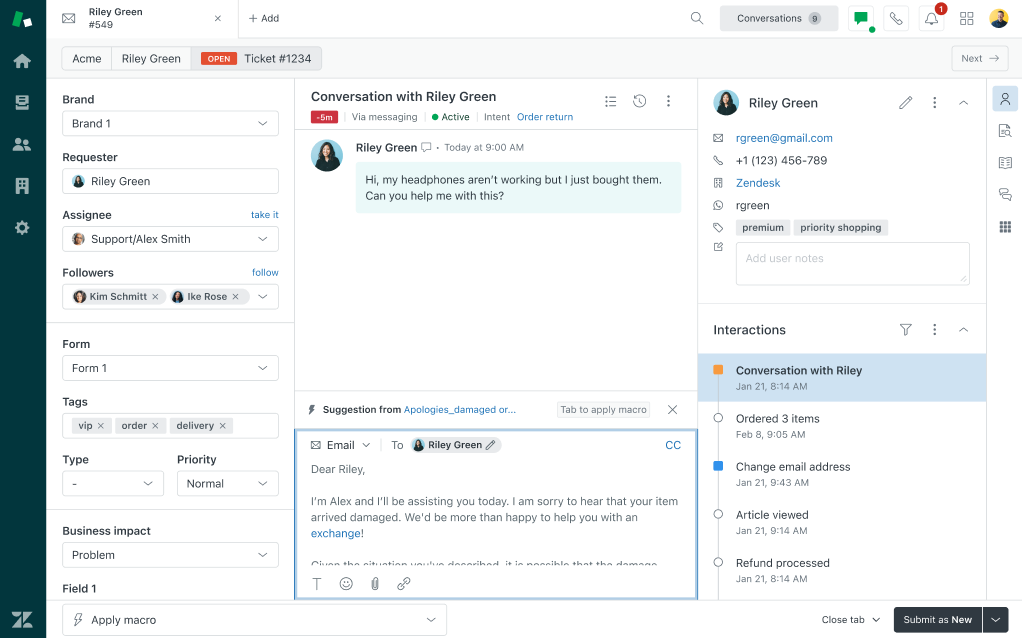
Zendesk’s AI notes and cleanly sorts away tickets to route them to the right agent at the right moment. It will suggest responses and even identify sentiment and automate away some basic workflows. Still, it’s all about helping existing agents work better than outright replacing anyone. They have introduced AI agents and copilots with basic personas but those aren’t as intuitive or interconnected as Intercom’s Fin AI agent.
Zendesk also charges a premium for these AI features that come standard on Intercom. Teams interested will have to reach out to sales for the Advanced AI Agents add-on and tack on $50/user/month for the Copilot.
Winner: Intercom wins on the autonomous AI resolution front, but Zendesk wins for any classification-based automation.
Ticketing and Case Management
Summary: Zendesk offers better ticketing due to more constructive handling of SLA management and custom workflows than Intercom’s secondary-feeling ticket system. Intercom is more chat-focused, hence less ticket-oriented.
Zendesk provides custom ticket fields, priority levels, SLA policies (with escalatory features), automated routing,and cleaner views of tickets. Complex workflows can be whittled down thanks to triggers and it handles high volumes smarter with the ability to merge tickets or detect collisions. Collisions occur when agents are viewing the same ticket thus wasting time.
Intercom is much less sophisticated. Yes, it can convert any conversation into a ticket but the ways it manages workflows or even enforces SLAs are severely more limited. It’s a conversational tool first and it shows.
Winner: Zendesk wins thanks to enterprise-grade ticketing and SLA management.
Messaging and Proactive Engagement
Summary: Intercom excels in the in-app messaging and behavioral trigger space, while Zendesk has a more basic approach to messaging.
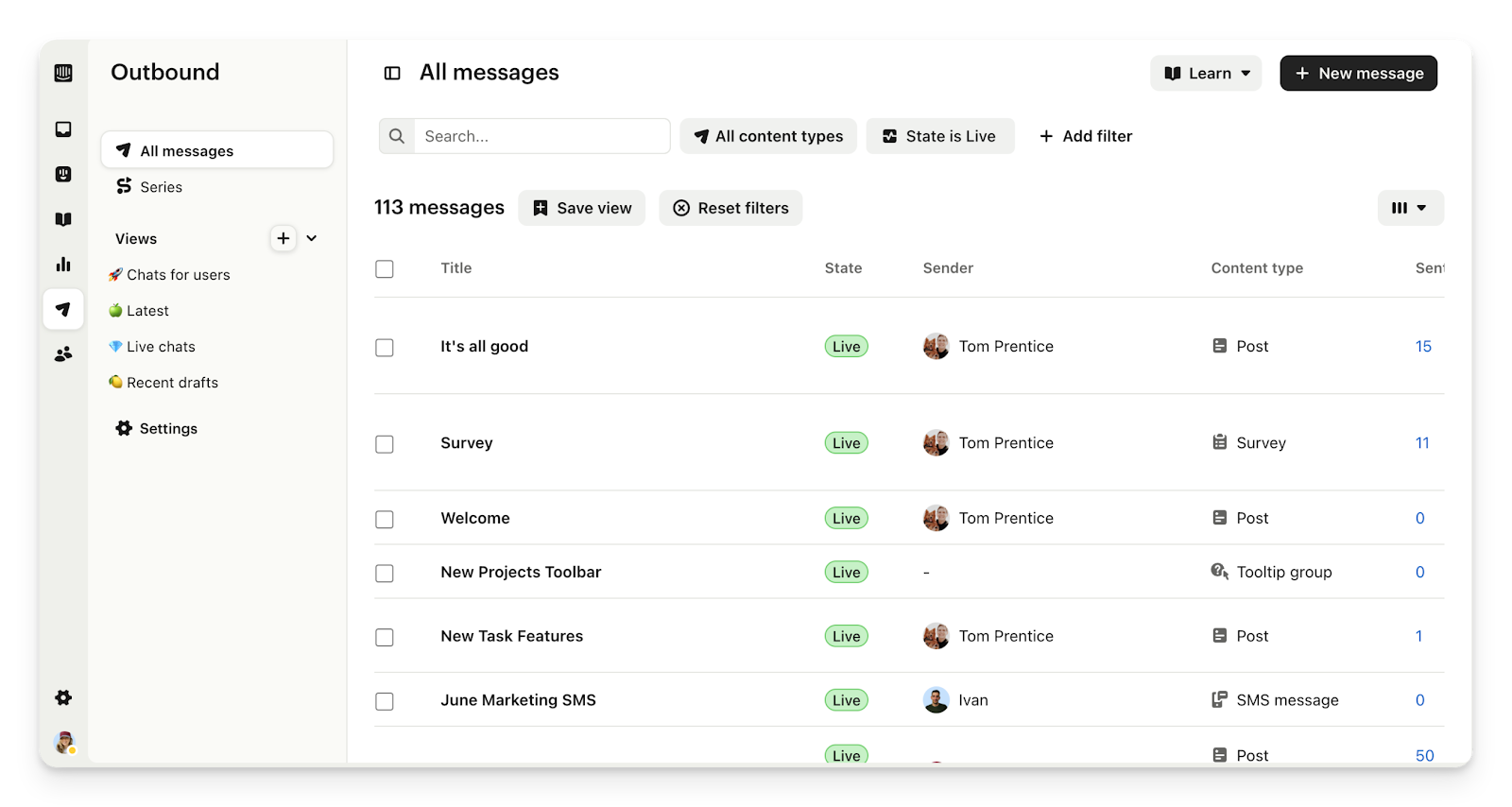
Intercom was made for proactive messaging, taking it handily thanks to targeted messages that analyze user behavior and its automated onboarding sequences. The in-app messenger will live within the product making it seamless without any app handoffs to access user information and what it said.
Zendesk offers basic live chat through Zendesk Messaging but lacks the sophisticated behavioral triggers or in-product messaging. Those that do use their add-on for AI Agents will get notably better messaging capabilities but this runs at premium on top of the platform’s base costs and is not included.
Winner: Intercom wins decisively thanks to its base level sophistication in in-app messaging and proactive engagement tools.
Omnichannel Support
Summary: Zendesk provides a more comprehensive omnichannel support situation. Intercom focuses on chat but does offer usage-based voice Phone support along with SMS/WhatsApp and email campaigns.
Zendesk unifies chat, email, phone, social media (X/Facebook/etc.), SMS, and other apps into one singular agent interface. Zendesk provides voice via talk with IVR, call routing, and recording starting on Suite Team tiers.
Intercom is an in-app chat and messaging driven platform with some omnichannel capabilities that are charged on usage-based basis for WhatsApp/SMS, phone support, and email campaigns. It does provide third-party integrations which many use to bridge it to existing tools.
Winner: Zendesk wins thanks to its more robust omnichannel support natively; Intercom works for those who are fine with third-party tools.
Analytics and Reporting
Summary: Zendesk offers deeper operational analytics with a better range of customization when it comes to dashboards. Intercom provides solid conversation analytics but less depth for any enterprise serious about reporting.
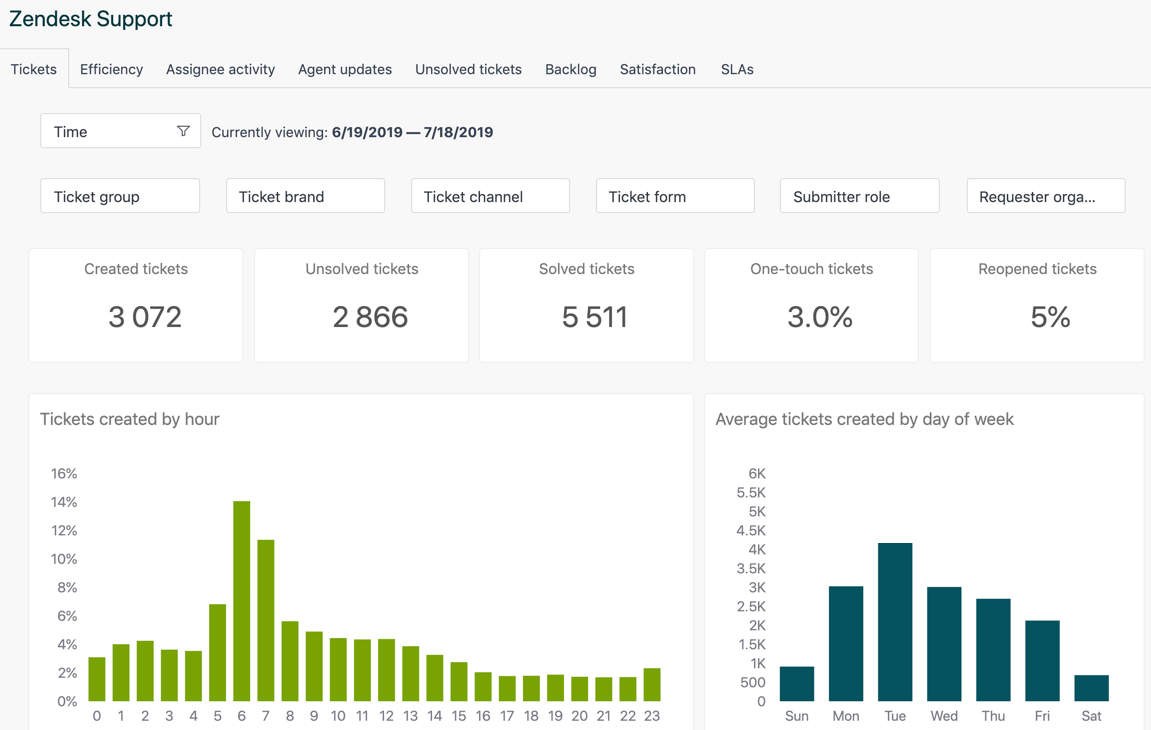
Zendesk provides extensive analytics thanks to an array of pre-built dashboards for ticket volume, CSAT scores, agent performance tracking, and response times. Zendesk Explore adds more powerful reporting thanks to custom metrics and better filtering.
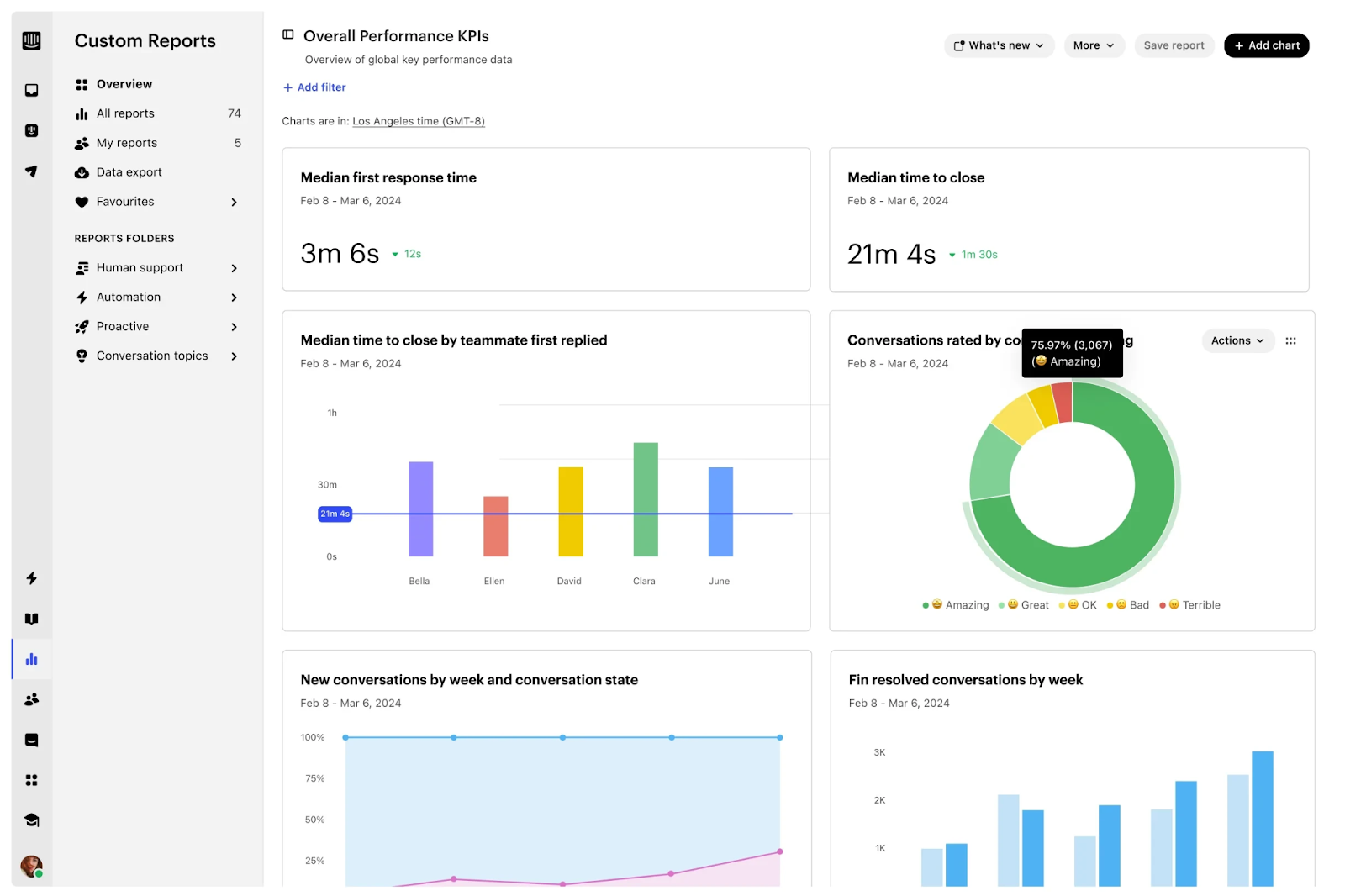
Intercom offers analytics more so on the conversational and engagement side, it will track response times and resolution rates. It also does customer satisfaction, we found the reporting to be visually appealing but more rigid than Zendesk’s.
Winner: Zendesk wins with more comprehensive reporting and better customization overall for analytics.
Integrations
Summary: Zendesk offers over a thousand integrations thanks to a more mature marketplace, but Intercom does focus deeply on better integration with major SaaS tools.
Zendesk's over 1,000 integrations include the major CRMs businesses use daily, a ton of e-commerce platforms, productivity tools, and a few specialized support applications. It’s well-established thanks to the time advantage Zendesk has had in the market.
Intercom offers hundreds of integrations, but pales in comparison when it comes to sheer volume. Its advantages are focused on working with modern SaaS stacks particularly those that align best with marketing tools, product management, or analytics.
Winner: Zendesk wins as it has a larger total number integration, whereas Intercom suffices with excellent depth with modern SaaS tools.
Pricing and Total Cost of Ownership
Summary: Zendesk offers predictable per-seat pricing, while Intercom's hybrid model with per-resolution AI fees can become expensive at higher volumes.
Below we’ve put each of the provider’s plans in a respective table since each offers a different pricing model.
Intercom Pricing
| Plan | Price per User/Month | Key Features |
| Essential | Starts at $29 | Basic inbox, help center, reporting |
| Advanced | Starts at $85 | Custom bots, multiple inboxes, advanced reports |
| Expert | Starts at $132 | Unlimited seats, advanced permissions, AI capacity |
| Fin AI Add-On | $0.99 per resolution | AI-powered autonomous customer service |
| Copilot | $29 | 10 Copilot and 10 AI auto-translation conversations per agent/month |
It should be noted that regardless of any plan, you will incur a $0.99 charge per Fin AI resolution.
Zendesk Pricing
| Plan | Price per Agent/Month | Key Features |
| Support Team | $19 | Ticketing, messaging, help center, reporting |
| Suite Team | $55 | Advanced AI, multilingual support, SLA management , Voice (Zendesk Talk support starts at this tier) |
| Suite Professional | $115 | Custom roles, sandbox, HIPAA compliance, advanced analytics |
| Suite Enterprise | $169 | Dedicated success manager, advanced security, custom capacity |
| Copilot | $50 | Proactive AI-assistance to automate tasks, recommend next steps, and keep teams on the same page |
| Advanced AI Agents | Contact Sales | Autonomous resolution bots to take care of service issues |
Total Cost of Ownership Comparison
Zendesk uses straightforward per-agent pricing that scales predictably for its base offerings. You pay a monthly fee per support agent, making costs easy to forecast. However, add-ons like Copilot and advanced AI agents make things just as variable as Intercom’s.
Intercom uses per-seat fees plus per-resolution charges for AI-handled conversations. While cost-effective at lower volumes, the AI resolution fees can spike significantly at scale. This creates a paradox where successful automation increases costs.
Example Scenario (10 agents, 1,000 monthly AI resolutions):
- Zendesk Suite Professional: $890/month base + $500/month (Copilot) + quoted total for Advanced AI Agents = $1390 minimum (variable)
- Intercom Advanced + Fin AI: $850 base + $990 AI resolutions = $1,840/month (variable)
Winner: On paper, it seems Zendesk wins with more predictable pricing and better cost scalability for high-volume operations. But once AI is factored in, Intercom remains competitive meaning it’s a tie.
Ease of Use
Summary: Intercom offers a more modern, intuitive interface with a shorter learning curve, while Zendesk provides more power at the cost of complexity.
Intercom is designed with simplicity in mind, this is most demonstrated within the interface which is clean, visually appealing, and intuitive. New agents can start handling conversations with minimal training, the product is also designed to be used in an autonomous way where the customers drive most of the input data, hence both sides of the equation are simplified.
Zendesk offers more customization but comes with a steeper learning curve. The interface provides extensive configuration options that can feel overwhelming initially especially for users who do not need full granular control over where tickets are sorted or how rigidly SLAs need to be followed.
Winner: Intercom wins with a more intuitive and cleaner interface that's designed to "set it and forget it." It is a turnkey operation versus the more granular and tech-savvy friendly Zendesk.
Automation
Summary: Zendesk offers more extensive workflow automation with triggers and macros, while Intercom focuses on conversational automation through chatbots.
Zendesk provides triggers (considered real-time actions), automations (namely time-based actions), and macros (or one-click actions). You can create complex workflows that automatically route tickets and escalate based on SLA.
Intercom's automation focuses on conversational workflows with custom chatbots, branching conversation paths, and Fin AI for autonomous resolution.
Winner: Zendesk wins with more comprehensive workflow automation, though Intercom excels at conversational automation.
Scalability
Summary: Zendesk scales more effectively for large enterprises with better support for high volumes and complex organizations.
Zendesk supports organizations from small teams to global support operations with thousands of agents. The platform handles high volumes efficiently with multi-brand configurations and administrative controls for large teams.
Intercom scales well for small to mid-market companies but can become expensive at enterprise scale due to per-resolution pricing.
Winner: Zendesk is more scalable for large enterprises and high-volume operations.
Customer Support
Summary: Both platforms offer solid support, with Zendesk providing more structured enterprise support and Intercom offering responsive, personalized assistance.
| Intercom Support | Zendesk Support | |
| Live Chat | Yes | Yes (higher tiers) |
| Yes | Yes | |
| Phone | Limited | Yes (Enterprise) |
Zendesk offers tiered support with faster response times on higher plans. Enterprise customers receive dedicated support and phone access.
Intercom provides responsive support primarily through chat and email with a personalized touch, though phone support is limited.
Winner: This is essentially a tie. Zendesk offers more structured enterprise support, while Intercom provides responsive, personalized assistance.
How to Choose Between Intercom and Zendesk
Choosing either Intercom or Zendesk ultimately comes down to a few major factors that have everything to do with your personal needs. Below we have a few major things to consider before choosing one:
Evaluate Your Support Volume and Complexity
High-volume operations with complex workflows and strict SLA requirements should choose Zendesk. Teams with moderate volumes prioritizing conversational experiences should choose Intercom.
Assess Your AI and Automation Needs
Want AI to autonomously handle conversations? Choose Intercom's Fin AI (but factor in per-resolution costs). Want AI to help agents work more efficiently? Choose Zendesk AI for workflow automation without per-resolution fees.
Consider Your Channel Requirements
Need native phone support? Choose Zendesk with Zendesk Talk. Primary support via in-app messaging and chat? Choose Intercom's focused approach.
Calculate Total Cost of Ownership
For Zendesk: multiply agents by per-seat costs plus add-ons. For Intercom: calculate base costs plus estimated AI resolution fees at different volume scenarios. Many find Zendesk more cost-effective at higher volumes.
Other Alternatives to Consider
Below we picked out two alternatives that compete directly head to head with each of these competitors in the event you like one’s focus but want an alternative.
- Freshdesk: A budget-friendly Zendesk alternative with solid ticketing and lower pricing for small to mid-sized teams.
- HelpCrunch: An Intercom alternative for SMBs combining chat, email marketing, and help desk features at lower price points.
Intercom vs Zendesk: Which is the Winner?
Though Intercom and Zendesk both provide powerful customer support capabilities, the winner comes down to your support philosophy and operational needs.
If you want a conversational experience with proactive engagement, in-app messaging, and AI-native chat for product-led growth, then Intercom offers exceptional value for SaaS companies with moderate support volumes.
However, organizations needing structured ticketing, high-volume support operations, native omnichannel capabilities including phone support, predictable pricing, and enterprise-grade workflow management will find Zendesk worth the investment.