
Top contact center providers Genesys and Avaya both provide blended, omnichannel solutions that harness the power of AI, automation, and workforce management to streamline business processes and optimize the customer experience.
Avaya offers a UCaaS solution powered by RingCentral as well as an omnichannel cloud contact center called Avaya Infinity (formerly AXP), designed to optimize both the employee and customer experience across multiple touchpoints. Genesys is a CCaaS provider best known for its all-in-one cloud contact center solution, Genesys Cloud CX.
This comparison of Avaya vs Genesys outlines each platform’s pricing, user experience, and top features, simplifying the decision-making process for your team. For the purposes of this article, and in order to have an apples to apples comparison, we will be comparing Avaya Infinity and Genesys Cloud CX.
- Comparison Methodology
- At A Glance
- Pricing and Plans
- Voice Calling
- Digital Channels
- Automation + AI Comparison
- Team Collaboration
- Integrations
- Reporting and Analytics
- User Experience
- Who Should Use Genesys
- Who Should Use Avaya
How We Compared Avaya and Genesys
We put Avaya and Genesys side-by-side to see how they measured up in the following categories:
- Pricing and Plans: We looked at the pricing structure of each provider, what was offered at each tier, and what add-ons were necessary to determine overall value
- Reliability and Security: We compared the reliability and security of each platform looking at uptime SLAs, points of presence, encryption, etc.
- Communication Channels: We tested the omnichannel capabilities of each platform looking at what channels were available and whether context was consistent across channels
- Reporting and Analytics: We compared reporting and analytics features such as custom dashboards, AI-powered insights and predictions, etc.
- AI-Powered Tools: We evaluated advanced AI-powered tools offered by the providers such as virtual assistants, topic tracking, agent assist, etc.
- Contact Center Features: We tested essential and advanced contact center features from call routing to workforce optimization
- User Experience: We compared the usability of each platform, particularly when using the mobile app, advanced features, and admin settings
- Integrations: We looked to see if the platform offered a variety of integrations (CRM, productivity, etc.) and tested the depth of those integrations
- Customer Support: We evaluated customer support channels, business hours, the availability of priority support plans, etc.
Avaya vs Genesys: At A Glance
| Avaya | Genesys | |
| Pricing | About $35-$169 per user, per month, but CCaaS plans are not publicly listed | Four bundled plans from $75-$240/user/month, custom plans available |
| Available Communication Channels | Inbound/Outbound voice, email, chat messaging, social media messaging | Inbound/Outbound voice, email, chat messaging, social media messaging |
| AI Agents |
|
|
| Top AI Feature | Intelligent Routing | Voicebot and Chatbot IVAs |
| Integrations | 300+ pre-built integrations including Salesforce, Microsoft, and Hubspot | 600+ pre-built integrations including Zendesk, MS Teams, Google Cloud, etc. |
| Top Collaboration Feature | Avaya Spaces | Agent Workspace |
| Customer Experience Tools |
|
|
| Best For | Digital-first contact centers prioritizing outbound interactions over inbound ones, especially revenue-generating channels like website chat messaging and social media | High-volume, omnichannel inbound/outbound contact centers that need advanced AI-powered automation and analytics to shorten customer service resolution times and keep operating costs low |
Genesys vs. Avaya Pricing and Plans
Avaya has a lower starting price than Genesys, but the provider does not have transparent pricing for its flexible CCaaS solution. Genesys is more expensive but offers more advanced options and a unique token system for AI capabilities like guided scripts and post interaction summaries.
Avaya Pricing
Avaya offers three UCaaS plans (Avaya Cloud Office) ranging from $20 to $35 monthly per user when paid annually. These plans include several contact center capabilities such as business SMS, CRM integrations, real-time call and meeting transcription, video calling, and automated call notes.
Avaya Infinity, formerly AXP, is Avaya's CCaaS platform, only offers quote-based pricing (estimated at $35-$169 per user, per month). Infinity offers AI agnostic capabilities and is designed for hybrid, multi-cloud, and on-premise setups, while Cloud Office is a turn key solution powered by RingCentral.
For more information, see our Avaya pricing guide.
Genesys Pricing
Genesys offers four paid plans ranging from $75 to $240 per month, per user. Add ons include bot integration (Amazon Lex and Google Cloud), CRM and case management integration. Many advanced features that are included in upper tier plans such as predictive engagement, workforce management, and digital channels can be purchased as an add-on to lower tier plans.
Tokens are used to access AI features such as AI Studio, Virtual Agents, and Native Bots. The number of tokens per month depends on the plan.
For more information, see our Genesys pricing guide.
Genesys vs Avaya Voice Calling
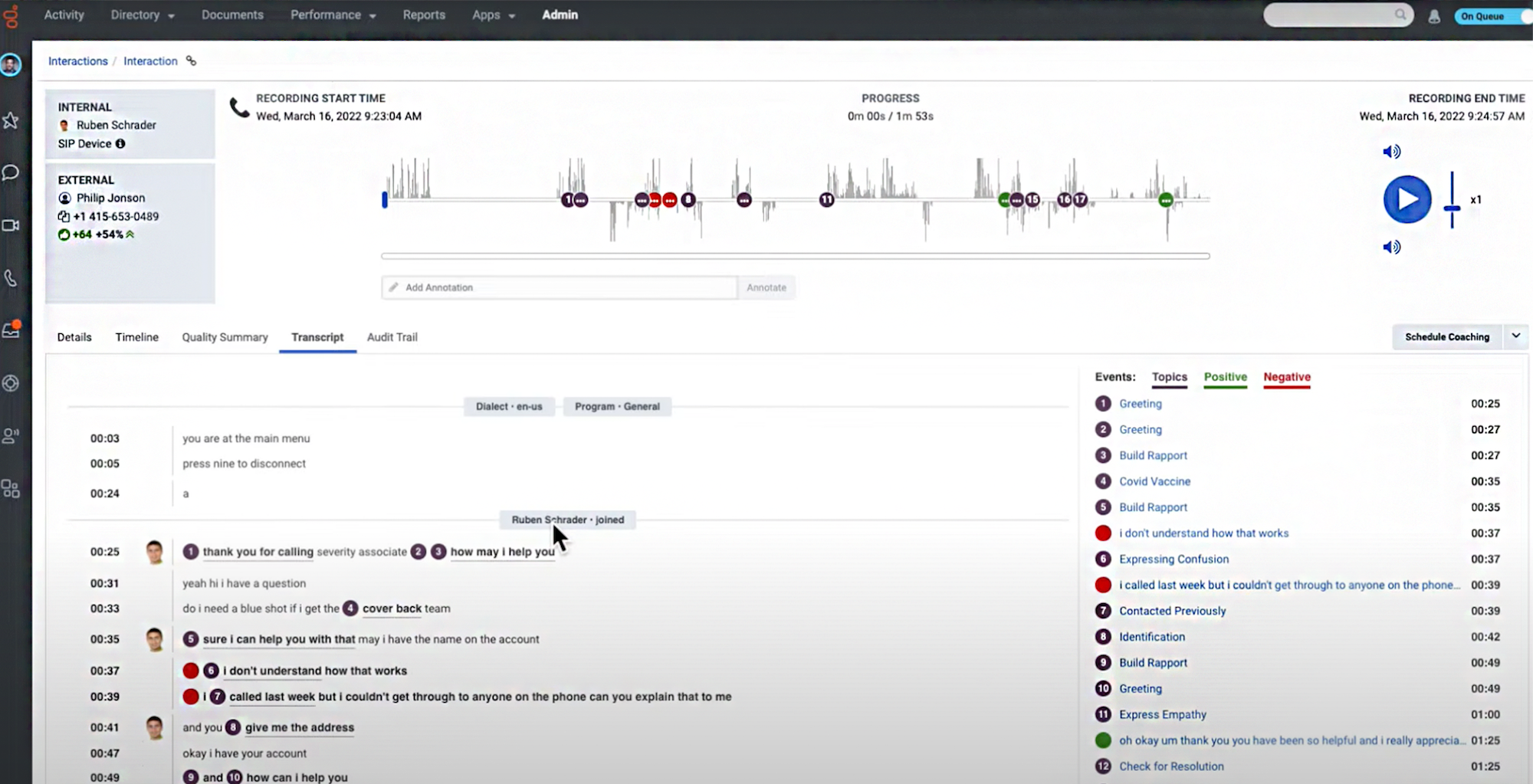
Summary: Both Genesys and Avaya offer inbound and outbound HD voice calling via local, vanity, toll-free, and international numbers on desktop and mobile devices. Genesys offers more cloud-native deployments, including native Web-RTC and AI-driven routing, and better native omnichannel capabilities, while Avaya relies more on third party integrations. Avaya is better for on-premise solutions that need a more traditional IVR and business voice system, while Genesys is better for cloud-first, digital-heavy contact centers.
Genesys' speech-enabled Interactive Voice Response (IVR) provides automated customer self-service by using pre-recorded menu prompts and ACD to instantly direct calls to the appropriate agent or department. Customers can also use IVR to complete basic business processes, such as online bill payment, order tracking, and appointment confirmations. Avaya shines with more traditional DTMF IVR and outbound dialing (POM).
Genesys admins create IVR call flows in the architect flow builder, which is more user friendly than Avaya's more traditional IVR builder. Genesys allows for the call flows to apply the same forwarding and routing strategies across channels, while Avaya relies more on third-party integrations.
The Genesys Outbound Dialer uses Preview, Predictive, Progressive, Power, and even automated, IVR-powered Agentless dialing modes to improve lead list penetration while Avaya offers outbound Proactive Contact tool- a Preview/Predictive outbound dialer that includes patented dialing algorithms, intelligent call blending, and multi-dialer management capabilities. Call detection powered by Enhanced Call Progress Analysis differentiates between live voices, smartphones, voicemail messages, and busy signals with over 98% accuracy.
Avaya SMS provides unlimited unbound/outbound texting to any number or contact, with up to 1,000 characters per message. International SMS, MMS messaging, cross-device message syncing, and number/URL detection are also included in all plans. Gensys does not include SMS texting in it's CX1 plan, which is a voice only plan, however, in its Cx2, Cx3, and Cx4 plans, Genesys includes native, unified omnichannel capabilities. This combines SMS, WhatsApp, social, and other channels under one pane of glass with shared bot logic.
Additional Avaya and Gensys voice calling features include:
- Call flip, call forwarding, call transfer, call park, call screening, call blocking
- Real-time voice-to-text transcriptions
- Dial-by-name directory
- Hold music and messages
- HUD
- Extensions
- Customer callbacks
- Voicemail-to-text, voicemail-to-email, visual voicemail
- Hot desking
- Automatic and on-demand call recording
- Shared line appearance
- Call queuing
- Custom caller ID name/number
- Missed call notifications
- Audio conferencing with local dial-in access in 55+countries
Genesys vs. Avaya Digital Channels
Summary: Genesys offers native asynchronous web messaging, and supports voice notes, campaign management, and business calling on WhatsApp, while Avaya does not. Avaya holds its own with its Social Media Hub, which is single interface that connects Avaya to key social media platforms like Facebook, Instagram, LinkedIn, and more. Avaya's UCaaS integration connects Cloud Office into the same ecosystem.
Genesys Agents can enable collaborative co-browsing and screen sharing with customers across voice and messaging apps, making it easy for agents to guide customers through support resolution processes or better see the issue at hand. If needed, remote screen control, screen highlighting, on-screen annotation, and pointing cursors are also available. Configurable masking makes it easy for customers to hide sensitive data from agents, and agents can initiate a screen sharing/co-browse session at any time. Avaya does not offer native co-browsing.
The Genesys unified email inbox lets agents search and respond to customer queries manually or via an automated email management system. Avaya email lets users receive emails from their preferred inbox within the Workspace interface. When an email is received, agents can accept/reject it, forward/transfer it to another agent or department, reply individually to the email, or reply all.
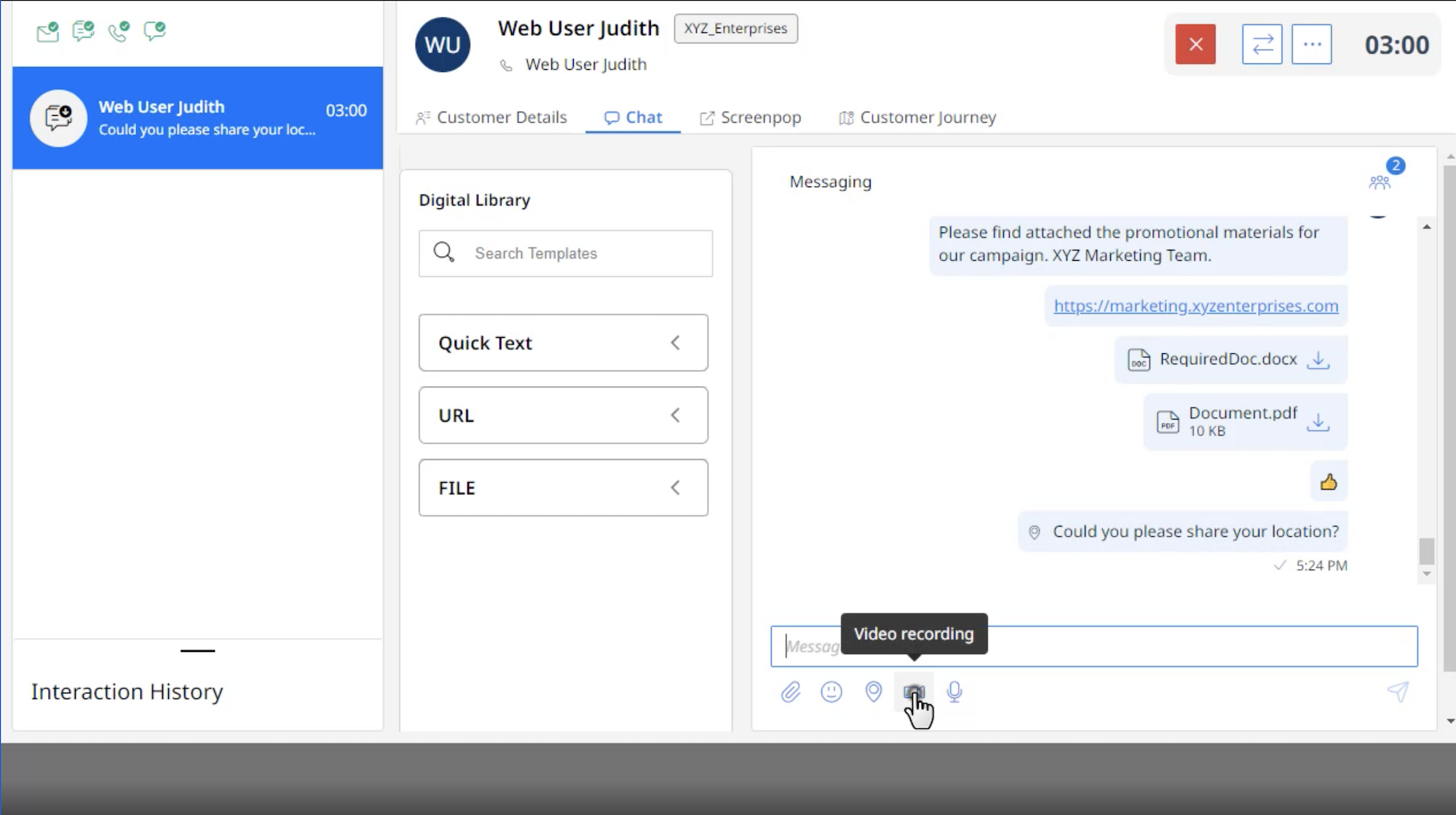
Within the Avaya chat interface, agents can also request a customer’s location information, record and share audio for more detailed support instructions, and even record and share videos for the most complex interactions. Agents receive notifications when a customer closes their chat window and can mark each chat interaction as completed in their after-contact work window.
Avaya lets admins collect social media statistics and add them to the overall Analytics portal, and generates sentiment analysis across platform posts, comments, and conversations.
Genesys vs Avaya Workforce Management and Optimization
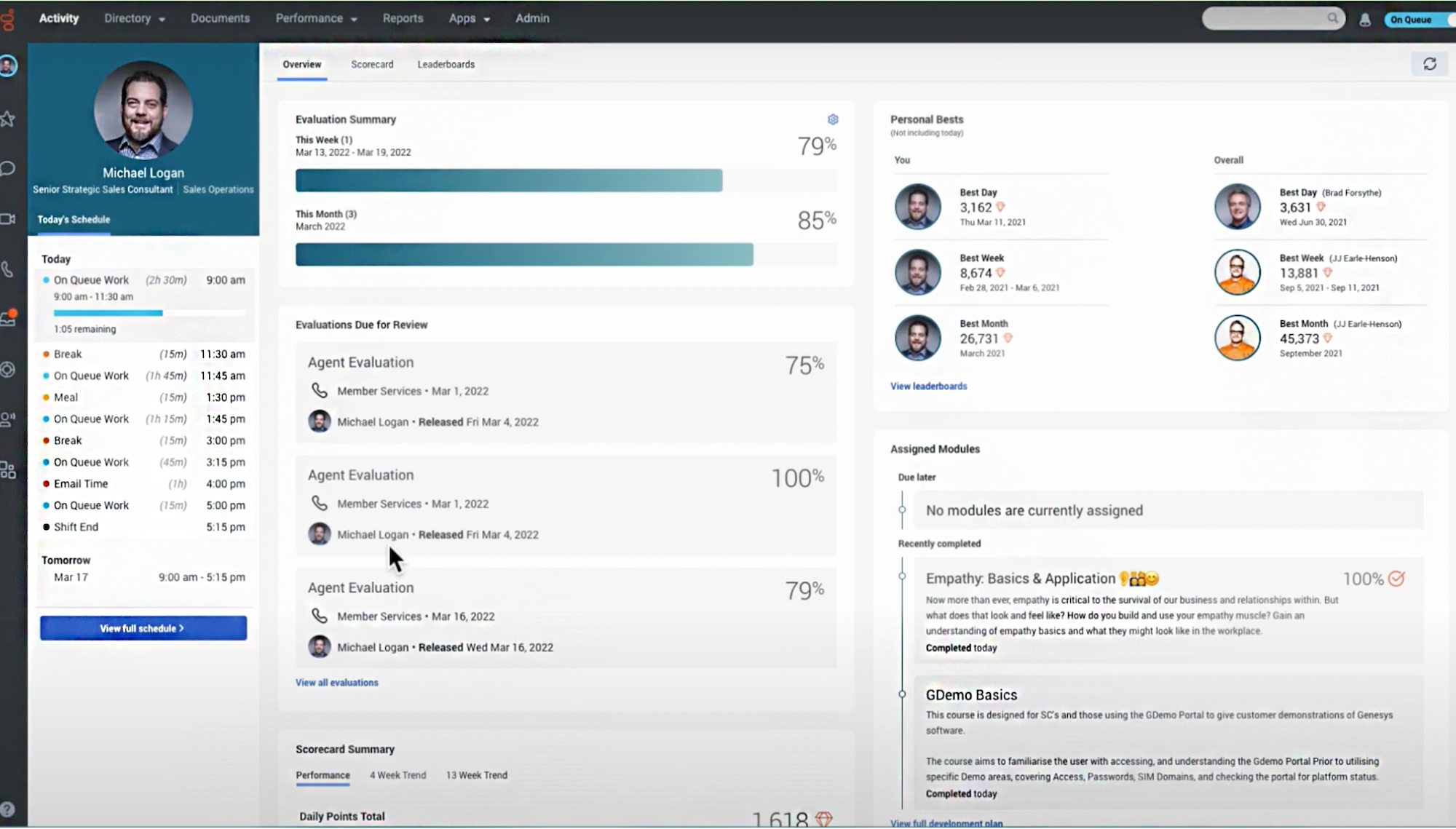
Summary: Genesys WFO/WEM is native while Avaya WFO/WEM is partner delivered. Avaya Workforce Optimization provides a central interface for contract recording, coaching and eLearning modules, voice and text analytics, agent scorecards/performance metrics, and customer feedback. Instead of focusing on increased productivity alone, Genesys WEM aims to create an optimal daily workflow informed by AI, customer feedback, speech+text analytics, and employee recognition.
Genesys Gamification displays employee KPIs on company-wide leaderboards, on teamwide or individual performance scorecards, or even within a personalized employee development hub. These development hubs contain individual feedback and assigned embedded training modules within one interface, making it easy for agents to improve their performance and pinpoint their strengths and weaknesses.
Genesys includes 25+ machine learning-enhanced automated workflow and forecasting models with a 97% accuracy rating. What-if calculations, load-based scheduling, auto-approval, shift bidding, real-time shift adjustment, and omnichannel shift change notifications automate previously tedious business processes for supervisors and employees.
Additional Genesys WEM features include:
- Voice of the Customer (VoC) customer web-based surveys for quality management
- Genesys Tempo employee self-service mobile app for scheduling, PTO/schedule change requests, performance metrics, updating and reviewing agent status, training module/feedback access, etc.
- Speech and text analytics with sentiment analysis, topic spotting, and transcription
- Non-peak hour agent reviews and training
- Automated shift allocation
- Real-time adherence monitoring, service level monitoring, occupancy monitoring
- Voice, digital, and employee screen interaction recording and analytics
Avaya WFO utilizes Verint and Calabrio to provide trend analysis and predictive analytics, “What If” scenarios, and forecasting to make it much easier to prepare for high-volume contact periods in the workplace. Based on these outcomes, Avaya automates scheduling to prevent understaffing and ensure customer satisfaction levels remain high.
Additionally, Avaya WEM provides:
- 120 real-time and historical reports
- Omnichannel manual and on-demand interaction recording (voice and data)
- Real-time quality monitoring across channels
- Agent activity recording for later and more in-depth review
- Speech and text Analytics via templated and custom KPIs pulled from messaging and voice channels and sorted into trends and themes
- Real-time and post-interaction supervisor coaching, including best practices, automatic assignment, interaction flagging, etc.
- Time off management/requests, advanced real-time adherence monitoring, automated scheduling
Genesys vs. Avaya Automation + AI Comparison
Summary: The AI architecture of Genesys and Avaya differ sharply- Gensys builds AI into its platform, while Avaya has a BYO AI approach. This makes Genesys AI easier to use out-of-the-box, while Avaya offers more control. Gensys offers a dedicated predictive ML engine for routing, along with a native AI Agent Copilot, and enhanced virtual agents, while Avaya lets you plug in Claude, ChatGPT, Gemini, etc., in order to create custom virtual agents.
Omnichannel Routing
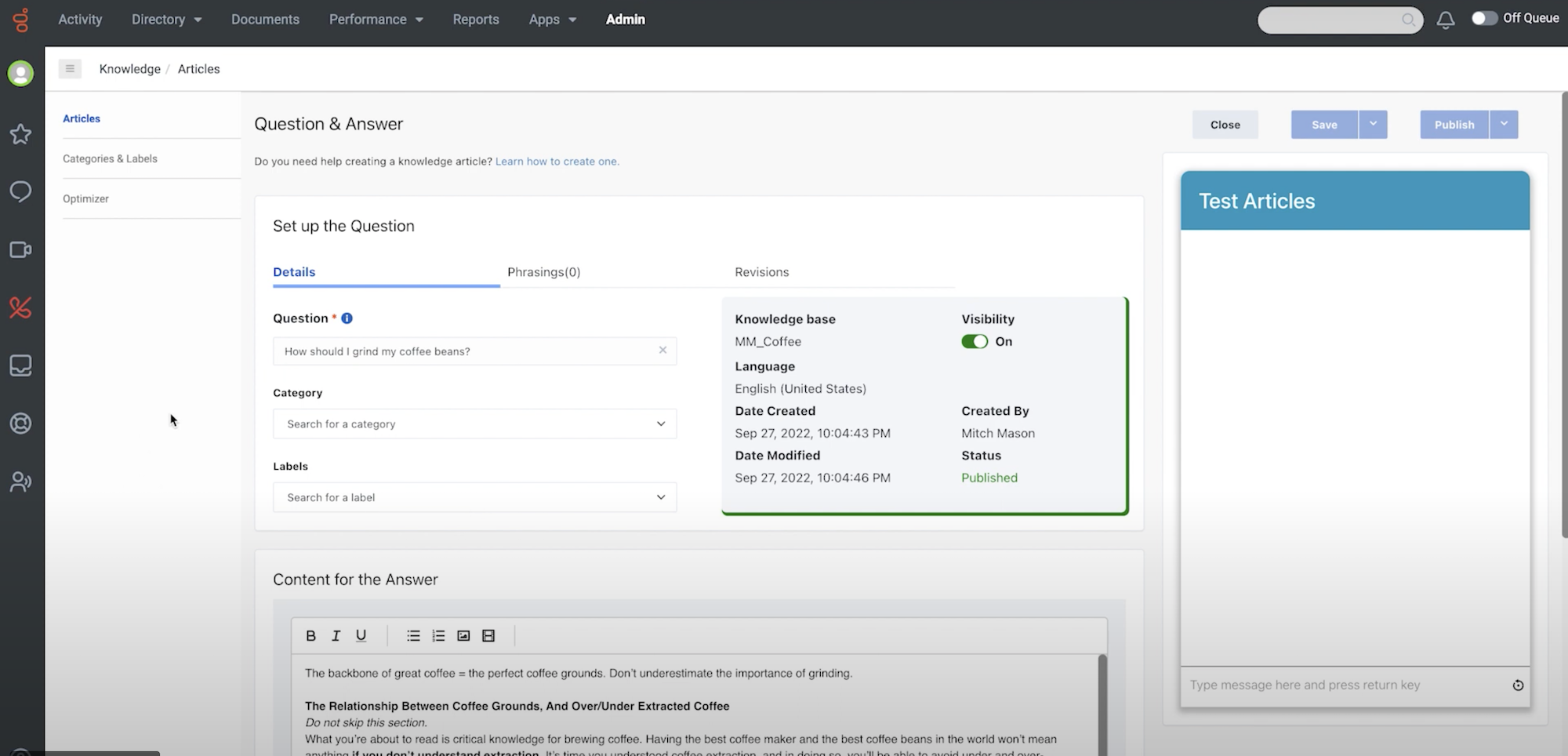
Genesys omnichannel routing lets admins create automated inbound call and messaging flows/paths based on preconfigured routing rules. These omnichannel routing strategies can be applied to interactions with live agents and fully automated interactions powered with IVAs, IVRs, and chatbots.
Avaya offers pre-configured and customized routing strategies for all channels, but is best known for its skills-based routing tools. Admins can set a primary and backup skills-based agent group for each set of conditions and workflow triggers to improve call flow path. Priority-based, time-based, and idle time routing strategies are also available.
Avaya's IVAs are newer and not as well-tested as Genesys, but it does include an Intelligent Routing feature that mines each interaction for:
- Customer intent and sentiment
- Customer segment
- Available agents with corresponding skill sets
- Available channels
- Real-time queue and wait time updates
Agent Assist
Both Genesys and Avaya offer an Agent Assist tool that evaluates customer intent and recognizes keywords and phrases using live transcription, Natural Language Understanding (NLU) and machine learning. Based on the context of the conversation, Agent Assist then automatically pulls relevant information from sources like internal knowledge base articles, agent scripts, pre-configured FAQs, and canned responses.
Genesys uses its native Agent Copilot to translate, offer knowledge suggestions and next best actions, and summarize voice and digital interactions. Avaya's agent assistant is powered by Verint and Cognigy, which has similar functionality but requires separate licensing.
In either platform, information from Agent Assist is shown on the agent’s screen and can be edited and shared, or copy-pasted directly within the conversation. Multi-lingual support is available, and agents can manually search with Agent Assist at any time without leaving the conversation.
Chatbots, Voicebots, and IVAs
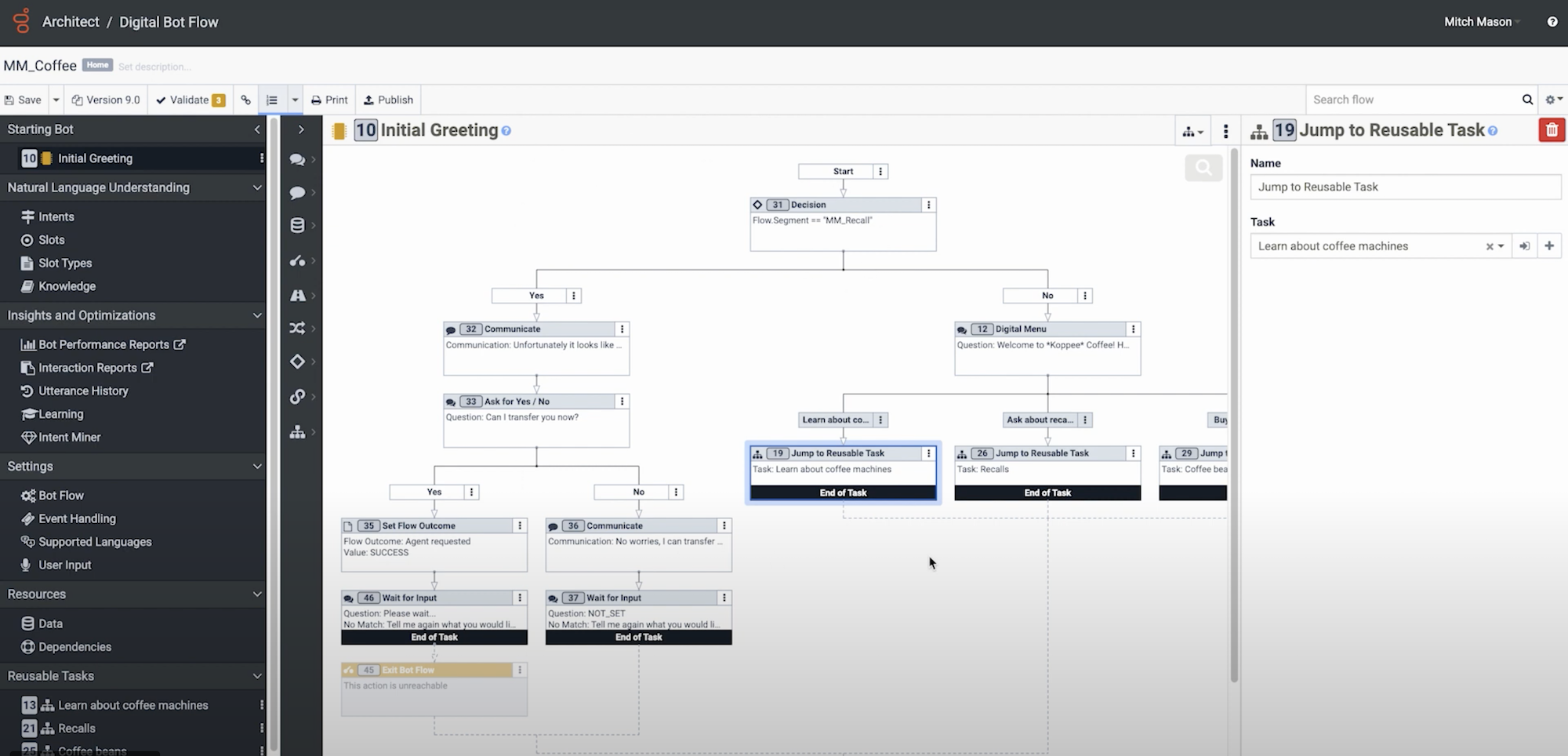
Genesys Voicebots and Chatbots are Intelligent Virtual Assistants (IVAs) powered by AI speech analytics that recognizes customer intent, evaluate conversational context, and provide real-time sales and service solutions–all without a live agent.
Unlike IVR, which primarily serves to route customers to the appropriate agent or provides only basic customer self-service, IVAs can manage advanced customer requests and interactions from start to finish. Genesys Voicebots and Chatbots can also pull data from third-party integrations to further personalize interactions across voice and digital channels.
Voicebots and Chatbots also have a much higher level of Natural Language Understanding, not just Natural Language Processing, than traditional IVRs. This allows IVAs to communicate with customers in a much more natural way than standard automated responses–so much so that it’s often difficult for customers to know if they’re interacting with a live agent or a bot.
Avaya Infinty does not have native voicebots or chatbots but they can be added using Cognigy or Verint- Avayas two primary partners. Cognigy offers pre-trained agentic AI asssistants with industry specific skills and omnichannel coverage. Verint's AI-powered bots are able to handle routine inquiries and self-service automations
Avaya users can add Virtual assistants powered by any agentic AI platform such as Claude, GPT, or Gemini and aims to replace traditional IVR interactions with omnichannel IVAs. These virtual agents help customers avoid interacting with lengthy IVR call menus that only offer limited options. Instead, it uses Natural Language Understanding to create a two-way conversation with customers.
Genesys supports virtual agents with native MCP and A2A. Allowing virtual agents to talk tothe business system and each other right out of the box. This means that Genesys virtual agents are better at resolving customer issues end-to-end than Avaya. Avaya's platform does support MCP and A2A, but it is more recent (having just been rolled out in Q4 2025) and non-native, so it may not run as smoothly as Genesys.
Genesys vs Avaya Team Collaboration
Summary: Genesys builds UC into ints platform, while Avaya outsources UC. Genesys offers basic team chat messaging and in-video collaboration functionalities but is not feature rich by UCaaS standards. Alternatively, Avaya offers a separate enterprise-grade UCaaS solution powered by RingCentral - Avaya Cloud Office (ACO)- that integrates seamlessly with Avaya Infinity. Avaya customers utilizing ACO or Avaya Aura can now access RingSense, RingCentral's conversational intelligence platform.
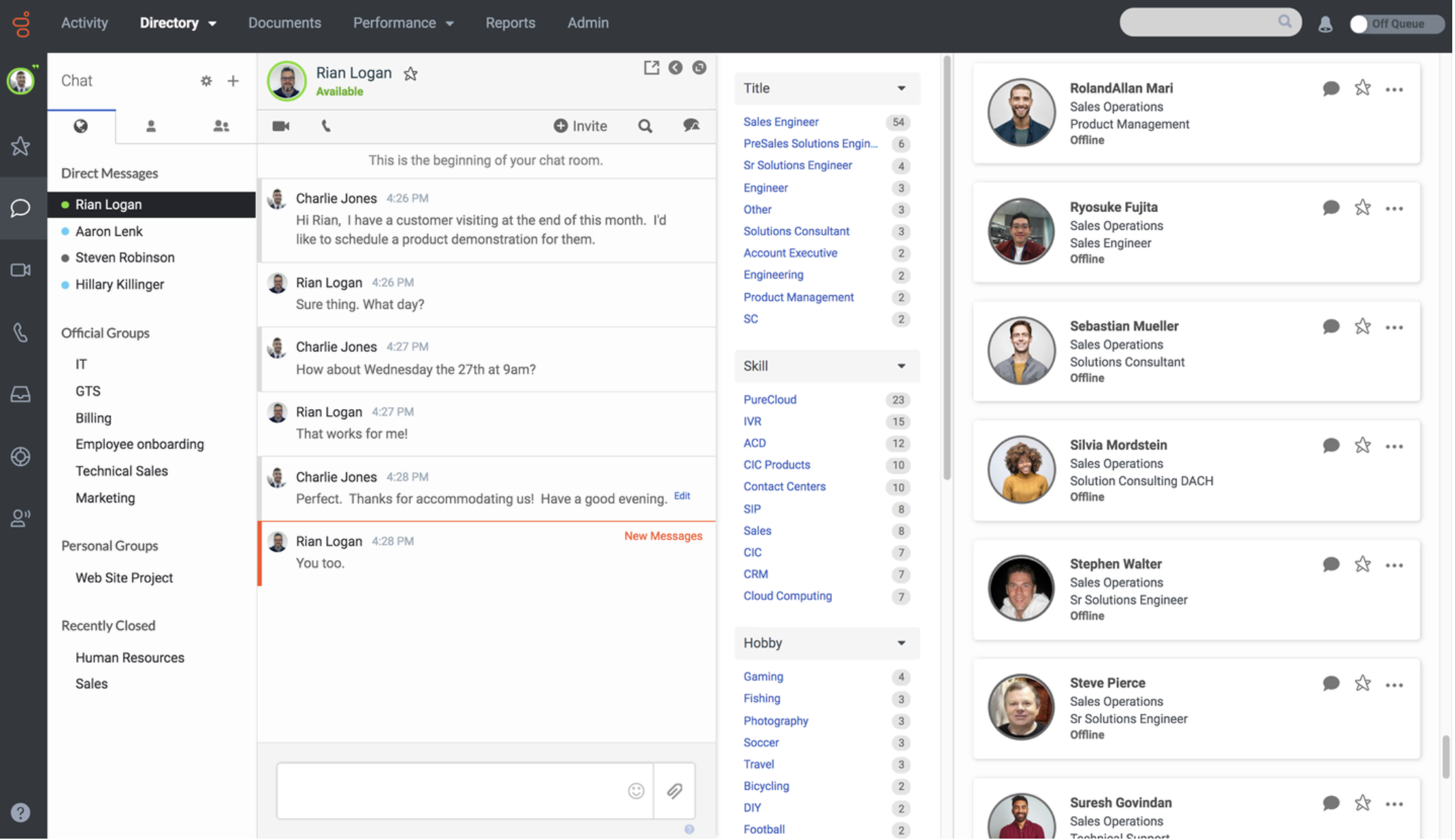
Genesys user presence gives team members an update about each other’s availability, alongside a customizable status update. Statues are color-coded, shown alongside each user’s profile picture, and automatically sync with current activity in addition to allowing manual updates. Statuses include available, busy, away, on a break, at a meal, in a meeting, in training, out of the office, and offline. Users can even specify their location and secondary status. Avaya also offers user presence updates within the persistent chat interface.
Additional Genesys collaboration features include:
- Consultation: Lets agents privately consult other agents during a live interaction
- Team Communicator: Search company directory for internal or external point of contact
- Interaction Transfer: Omnichannel call/message transfer between agents
- Agent Groups: Groups of agents linked by special skills, language, time zone, etc., can be contacted individually or en masse to quickly crowdsource information
Avaya UCaaS is powered by Avaya Cloud Office, an all-in-one team communication and collaboration application offering internal video and voice calling, chat messaging, file sharing, and more.
Admins can create company-wide persistent chat channels as well as separate Spaces for teams, roles, projects, or any other custom group. According to user permissions, members can schedule and attend video meetings, accept/reject voice calls, make posts, assign tasks, add guests, and edit/delete channels. To speed up channel creation, admins can upload CSV files with up to 100 email addresses that will receive invitations.
ACO includes unlimited video conferencing with in-meeting chat is available for up to 1,000 participants and 61 simultaneous screen streams. Multiple meeting views, including gallery, lecture, and panel, are available. Users can create new meeting links or use their personal meeting room links, share their entire screens or specific applications, and magnify shared content up to 200%.
Additional video features include smart muting/unmuting, virtual hand raising, on-demand or automatic recording with meeting duration, start time, and attendee tracking, and a two-year recording retention period.
Genesys does not include native large scale video conferencing, advanced PBX features, or global calling across 50+ countries. For organizations that require these capabilities, Genesys offers pre-built integrations with Microsoft Teams, Zoom, and 8x8.
Genesys vs. Avaya Integrations
Summary: Genesys often refers to its Cloud CX system as an API-first platform, meaning both IT developers and everyday users can take advantage of its open architecture and low-code, plus-and-play integrations. Because Avaya partners with RingCentral to power its cloud phone systems, it’s able to offer an extensive set of over 160 pre-built third-party integrations.
On the Genesys platform, the most important integrations are available in the AppFoundry Marketplace, which contains over 350 pre-built integrations and can be searched by application name or category. The AppFoundry Marketplace includes partner apps, apps developed by Genesys, and curated apps developed by other members of the Genesys community.
Genesys also offers professional services to assist with multi-vendor integration and deployment, or to create custom integrations for existing or third-party applications. Avaya DevConnect technology partners provide professional API development and deployment services to assist businesses with more complex and custom integration needs.
Avaya vs. Genesys Reporting and Analytics
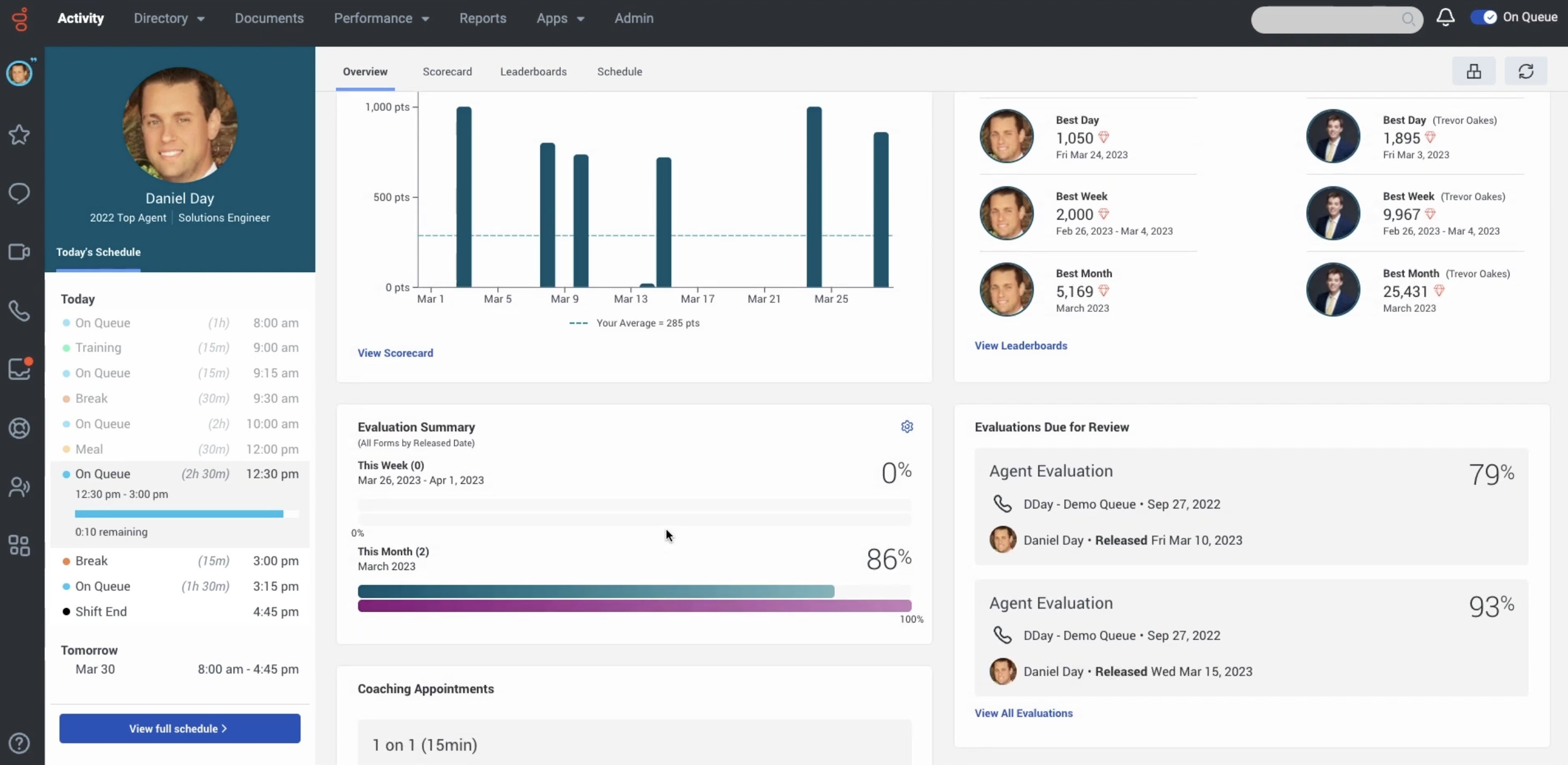
Summary: Genesys has built analytics natively into one data model, which means that every data point from routing to WEM lands in the same place and there is no stitching required. This makes it far easier to correlate data sets from different domains, such as comparing agent empathy scores to predictive routing, or link shrinkage to handle time trends. Avaya's approach is more modular, but it integrates with DataBricks to provide real-time, dynamic intelligence across channels and departments.
Both Avaya and Genesys offer real-time dashboards and historical reporting, but Genesys dashboards and reports are native and highly customizable, while Avaya's are built on web-socket based APIs and are still maturing. Genesys also offers more reporting metric options such as campaign analytics, milestone tracking, journey analytics, and predictive routing analytics, with supervisor apps for iOS and Android.
Both platforms offer AI analytics such as real-time sentiment analysis, but only Avaya offers A/B testing of AI models. On the other hand, only Genesys offers native speech analytics. Avaya users must use the Verint integration in order to obtain speech analytics including topic tracking, intent mining, NLU analytics, compliance triggers, and cross domain data correlation.
Genesys also recently launched Lakehouse Data Stream (2025), which exports data directly and continuously to Amazon S3, offering a 3 day lookback window and reducing reliance on fragmented APIs for advanced business intelligence.
Although there is currently a gap between Genesys and Avaya analytics with Genesys offering a wider breadth of pre-built views, native speech and text analytics, and cross domain data correlation, this gap is expected to close as the Avaya-Databricks integration matures.
User Experience
Summary: Genesys has a more intuitive, user-friendly dashboard for agents, but the back end tools are more complex and often frustrating for admins and supervisors. Avaya has a more familiar interface, but newer AI-powered features are often stitched in through partnerships and third party integrations.
Genesys Pros
- Flexible pricing options available, and all bundled plans include key integrations and APIs, Unified Communications, blending calling, and real-time/historical analytics
- 24/7/365 phone support for all Genesys Cloud CX customers, 24/7/365 online support portal for all customers with
- AI-powered features like predictive routing/engagement, Agent Assist, IVAs, and more have helped some Genesys customers increase productivity levels by 25% and boost digital sales by 400%
Genesys Cons
- Recent launch of Genesys Cloud CX (formerly Genesys PureCloud) makes it difficult to know which features are still in beta, determine feature timelines, and determine whether support documents are still relevant
- Disorganized and unintuitive online knowledge base (Resource Center) makes self-service frustrating or impossible
- Platform is not as user-friendly as competitors, meaning a higher learning curve–especially call flow designer and bot builder
Avaya Pros
- Advanced live agent-to-customer chat messaging capabilities that beat out the competition, such as in-chat audio and video recordings, file sharing, canned “quick responses” and longer response templates, in-chat AI-powered agent assistance, and more
- Much more modern and intuitive interface than competitors means Avaya has a greater ease of use than other CCaaS platforms, especially as it combines familiar tools like Avaya Spaces, UCaaS, and Cloud Office
- Omnichannel native and integrated CRM capabilities provide conversation histories, customer data, customer journey insights, agent notes, and admin-selected details on a single pane of glass that can be accessed manually or via automated screen pop
Avaya Cons
- Lacks the flexible pricing models of most competitors (bundled or custom plans only, no pay-as-you-go pricing) and requires lengthy contracts
- Frequently-reported uncertain future for Avaya within the CCaaS space may mean sudden changes to your Avaya Contact Center software/interface/available features, etc.
- Social media messaging capabilities require users to configure the Avaya Social Media Hub, and user reviews say not all major social media platforms may be available to all users
Who Should Use Genesys?
Genesys is best for omnichannel contact centers that need to improve both CSAT and conversion rates, but want to rely on automation and AI to optimize productivity instead of hiring new agents.
Genesys is also a good fit for:
- Call centers that want to increase outbound sales calls using auto dialers, but without compromising compliance standards
- Large-scale enterprises that need to offer more advanced customer self-service options without sacrificing personalization
- Business owners that want to increase employee engagement and decrease turnover rates within their fully on-premise, remote, or blended teams
- Businesses that need to customize much of their contact center solution, or teams that need extensive–but low-code–third-party integrations
- Businesses of any size that need scalability, flexible pricing CCaaS solutions
Who Should Use Avaya?
Avaya is best for contact centers needing a more streamlined and user-friendly CCaaS solution, with more of a focus on optimizing and automating omnichannel outbound communications than inbound customer service interactions.
While Avaya has strong inbound contact center features, they are more basic than those of competitors–making it a wise choice for medium-sized businesses needing a scalable platform that prioritizes increased sales.
Avaya is also a good fit for:
- Businesses that communicate with customers primarily via digital channels (especially website chat) instead of voice calling
- Business owners that don’t want to overwhelm agents with a complicated and intimidating contact center software
- eCommerce stores that need to be able to track and analyze social media interactions and engagement within their contact center platform
- Businesses of any size that want to automate as much as their customer service as possible via omnichannel customer self-service IVAs/IVR/chatbots