
AI voice agents are systems that use natural language processing and agentic AI to conduct voice conversations autonomously. They cover a wide array of use cases for businesses and call centers including AI receptionists, outbound sales calls, debt collection, patient intake, and more.
While implementing AI voice agents might seem like a no-brainer, there is a large cost associated with the technology. Additionally, many providers do not list prices publicly while others have complicated pricing structures and hidden fees.
In this article, we will untangle the world of AI voice agent pricing, address hidden costs, provide buying tips, and compare the most popular AI voice agents in the market.
Pricing Overview of Top AI Voice Agents
Here is a quick glance at 8 of the most popular AI voice agents along with their pricing structure and who they are best for:
| Provider | Base Rate | Pricing Model | All-In Cost/Min | Min Commitment | Best For |
| Sierra | Not publicly listed | Outcome-based | Varies | Not publicly listed, estimated to start around $150,000/year | Large B2C enterprises such as telecom and consumer services |
| Cresta | Custom, quote-based | Monthly subscription | Varies | Not publicly listed, estimated to start around $60,000/year | High volume contact centers |
| Regal | Custom, quote-based | Monthly subscription | Varies | Not publicly stated | Healthcare and education industries |
| Retell | $0 | Pay-as-you-go | $0.07/minute | No forced annual contract | High volume outbound call centers |
| Decagon | Not publicly listed | Outcome-based or usage-based | Varies | Starting at around $95,000/year | Well-funded enterprises such as SaaS and fintech |
| PolyAI | Custom, quote-based | Enterprise contracts | Varies | Most contracts start at $150,000/year | Fortune 500 companies and financial industry |
| Synthflow | $0 | Pay-as-you-go and enterprise contracts | $0.11-$0.16/minute depending on LLM | No long term commitment | SMBs, agencies, and non-technical teams |
| Bland.ai | $0-$499/month | Monthly subscription plus usage | $0.11-$0.14/minute depending on the pricing tier | No long term commitment, free tier available to start | Developer heavy teams with high volume outbound calling |
How AI Voice Agent Pricing Models Work
There are three main pricing models for AI voice agents- pay-as-you-go, monthly subscriptions, and outcome based which is often combined with enterprise contracts. Here is how each pricing model works at what the strengths and drawbacks are:
Pay-As-You-Go Pricing
Pay-as-you-go pricing means that you pay for what you are using. Providers generally charge per minute for a voice agent, per message for a chat agent, or per API call. Prices generally range from $0.05–$0.99 per minute.
Pay-as-you-go pricing is best for startups and variable volume centers because they can save money during slow months. The drawback is a lack of consistency so it is important to budget and stay on top of usage.
Monthly Subscription Bundles
Monthly subscription pricing charges companies a flat monthly fee that includes access to the platform and usually a set number of minutes or chats. Overage charges will be applied for excess minutes or messages that go beyond set limits. Providers like Synthflow and Bland.ai offer different tiers that unlock more advanced platform features.
Monthly rates can range from $30–$200 per month for SMBs, up to $200–$1,000/mo for enterprises. The main appeal of a monthly subscription is predictable costs, the main drawback is that you may end up paying for minutes or features that you don’t use.
Outcome-Based and Enterprise Contracts
Outcome-based pricing uses a per-resolution model that is the newest pricing model in the industry. Instead of paying per minute or per month, you pay a set price whenever the AI agent obtains a successful resolution. If the AI agent has to escalate the call to a human agent, you are not charged for that interaction.
The advantage to this pricing is that it allows companies to essentially pay a commission to AI agents that is based on results. The main drawback is that it can get complicated to determine what counts as a “successful resolution”. For example, if a customer suddenly hangs up, is that a “successful” interaction? Pricing typically starts around $0.99 per resolution.
Outcome-based pricing is generally combined with enterprise contracts, which are custom and quote-based, taking into account a company's specific usage, size, and goals. Enterprise contracts usually allow for lower per unit rates as well as advanced features and custom SLAs that typically aren’t available with other pricing models. Most enterprise contracts start at around $50,000 per year.
Hidden Costs Most Providers Don't Show You
For AI voice agent platforms, the base level pricing is meant to look affordable and attractive, but additional costs that make the product useful are often hidden in the background. AI tools are particularly prone to this because there are so many components involved such as the LLM, TTS, telephony, and analytics.
Here are some of those hidden fees:
Telephony and Carrier Fees
Some providers, such as Bland AI require that you bring your own telephony carrier for the platform to integrate with, and business VoIP systems vary wildly in price depending on the features, security, and reliability. Other providers charge for a phone number rental or purchase, if your business needs one. Even providers that bundle telephony service into their platform, like Synthflow, may have a separate per minute charge.
LLM Token Costs: Bundled vs Pass-Through
Every time an AI voice agent processes an interaction, it is sending text through an LLM that charges “tokens” for both the input and output. One conversation could use thousands of tokens, which adds up quickly at scale. AI voice agent providers have two different ways of charging for LLM usage:
- Bundled: The provider bundles the LLM fees into their own per minute or subscription fees so that there are no surprises. Synthflow uses this model.
- Pass-Through: The provider includes a separate charge on your bill for the LLM usage. Retell uses this model. In the pass-though model, the provider may purchase LLM capacity at wholesale and sell at a markup.
In either case, it is important to know which LLM is powering the AI voice agent as older models will be less capable, but cheaper, while newer models such as GPT 4.0 or Claude 3.5 will produce noticeably better conversations but cost more.
Premium Voice Quality Add-Ons
Most platforms offer a range of voices using TTS technology, and there is a significant difference in price for a basic voice vs. a premium voice. Basic TTS like Amazon Polly and Google sound more robotic, but only cost about $0.004 per minute. Mid-tier TTS like Azure Neural is $0.01-$0.02 per minute, while premium TTS like those from ElevenLabs cost $0.05-$0.10 per minute. Providers address this issue in a few different ways:
- Including only basic voices in lower tiers and gating premium voices like ElevenLabs
- Allowing companies to bring their own TTS service (Retell)
- Build a custom proprietary voice for each enterprise client (PolyAI)
- Charge separately for voice cloning (Bland AI)
Setup, Onboarding, and Integration Fees
Most enterprise platforms charge a one time fee for set up, although they are often not brought up until late in the negotiation process. Set up includes things like agent design and configuration, AI training on company-specific knowledgebase and policies, conversation flows, escalation logic, testing and quality assurance, and staff training. Setup fees can range from $2,000 to $200,000 for platforms like Sierra.
Developer-led platforms like Bland AI and Retell typically don’t charge for set up, but the hidden cost is your own time spent building out the platform. Some enterprise vendors also offer ongoing professional services for AI agent optimization.
Integrations can also have an added cost. Simple integrations through pre-built connectors are often included or cheap, but custom integrations into legacy or proprietary systems can cost tens of thousands of dollars.
Compliance Surcharges: HIPAA and PCI-DSS
Compliance surcharges are another added cost that may catch buyers off guard- especially those in the finance and healthcare sectors that require certifications such as HIPAA or PCI-DSS. Meeting these compliance standards is expensive for vendors because it requires third-party audits, dedicated security infrastructure, and ongoing monitoring.
Providers that have invested in this level of security will pass this cost on to the consumer by locking stricter compliance behind a higher pricing tier, or charging extra.
AI Voice Agent Providers Compared
Here’s a closer look at some of the top AI voice agents on the market right now along with pricing information and best use cases.
Sierra
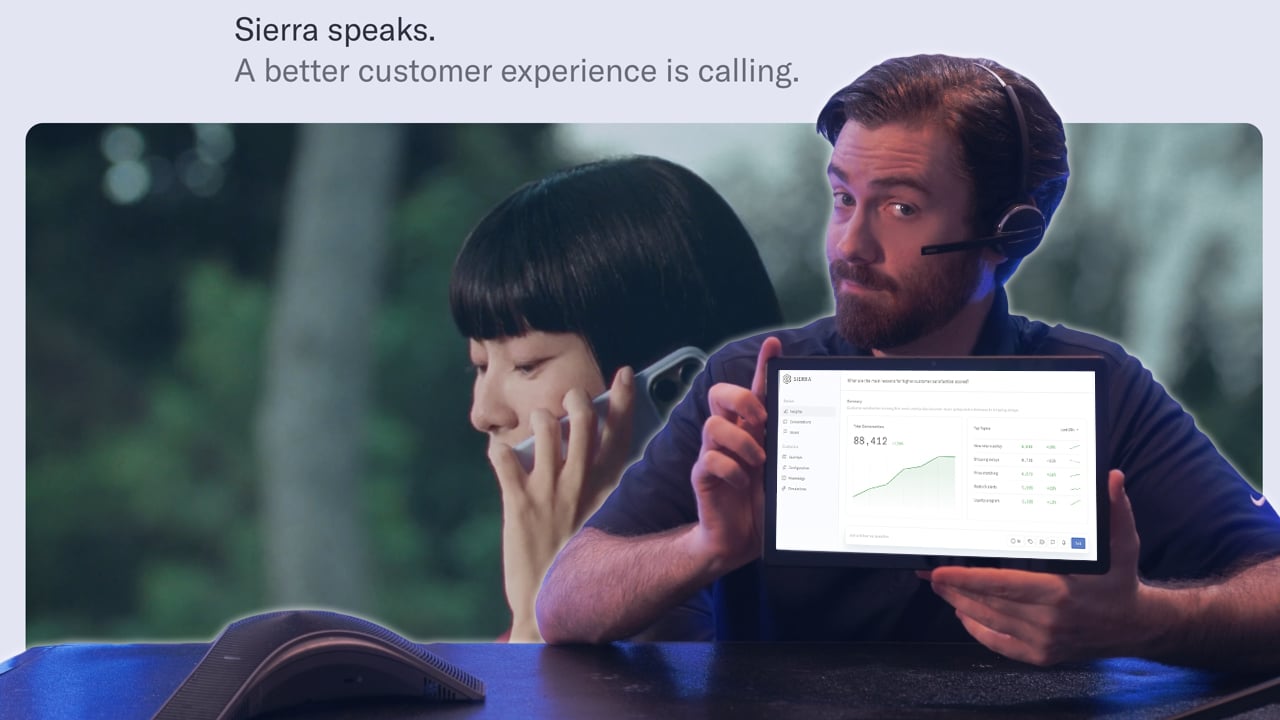
Sierra specializes in fully automated AI agents that cover voice, chat, SMS, email, and social media interactions. It is made for large enterprises that need an omnichannel solution with advanced features. Sierra’s platform draws from multiple LLMs including OpenAI, Anthropic, and Meta.
Sierra’s AI voice agents do more than just answer calls, they are able to take real action within the company’s CRM and/or order management system. This allows the AI voice agents to take orders, manage subscriptions, answer FAQs, and handle returns.
Cost and pricing model
Sierra has an outcome-based pricing model, meaning that the company is only charged for interaction in which the AI voice agent achieves a successful resolution. Enterprise contracts are mandatory, however, and the sales process is long, with contracts starting at around $150,000 per year.
Best for
- Established enterprises: Due to its high entry cost, Sierra is best for established enterprises that are willing to pay a premium price for a premium product
- B2C Companies: Sierra’s deep CRM integrations make it an excellent fit for support or sales teams in large B2C companies
Cresta
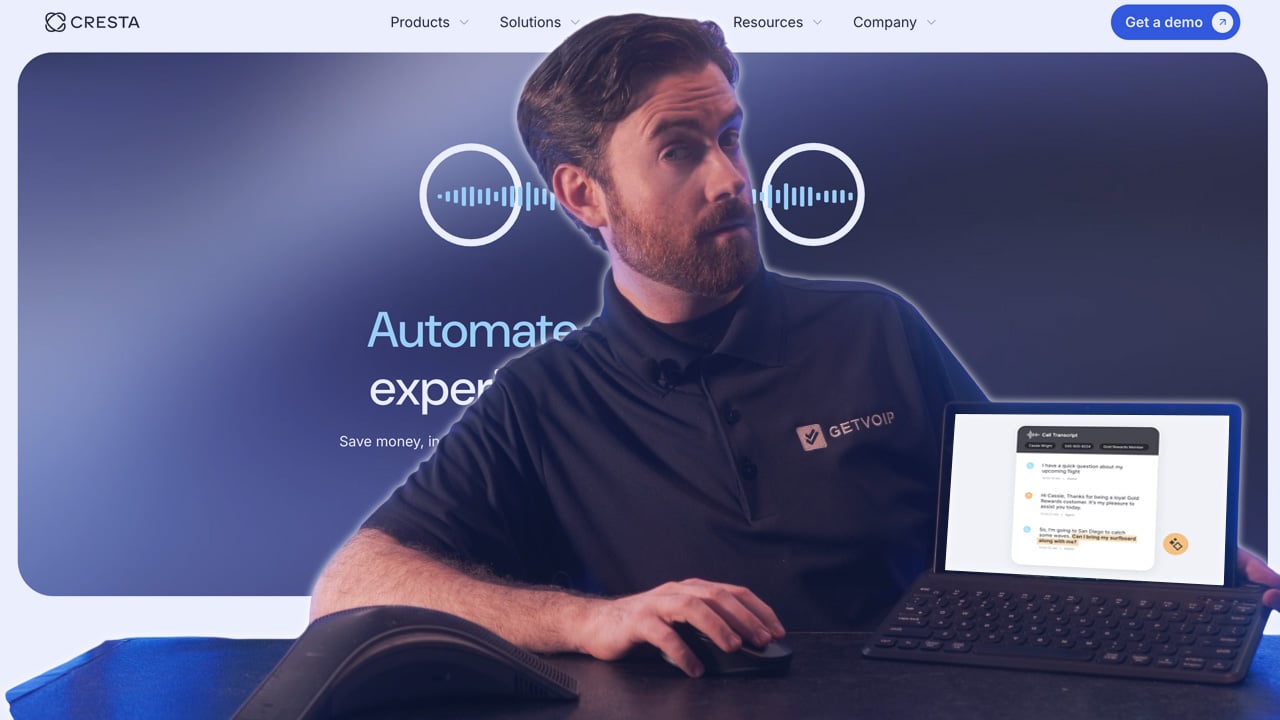
Cresta is an enterprise contact center software that combines fully automated AI agents for voice and chat with agent coaching and performance and interaction analytics. Cresta believes in helping the contact center as a whole become smarter, helping customers in automated interactions, coaching agents on compliance issues, and providing supervisors with deep insights.
Cresta is able to identify patterns in top performing agents, detect customer sentiment shifts and pain points, and automatically surface competitor comparisons in order to give agents dynamic talking points in response to customers. The main drawback is a complex and lengthy setup that often requires an AI specialist.
Cost and pricing model
Cresta uses the monthly subscription model, but like Sierra, Cresta does not list prices publicly and requires a minimum enterprise contract estimated at around $60,000 - $150,000 and up per year.
Best for
- Customer support teams: Cresta’s focus on live agent coaching and analytics makes it great for companies that are looking to improve their overall CX
- Fortune 500 companies: Cresta has a strong record with fortune 500 companies in retail, telecom, automotive and finance
Regal
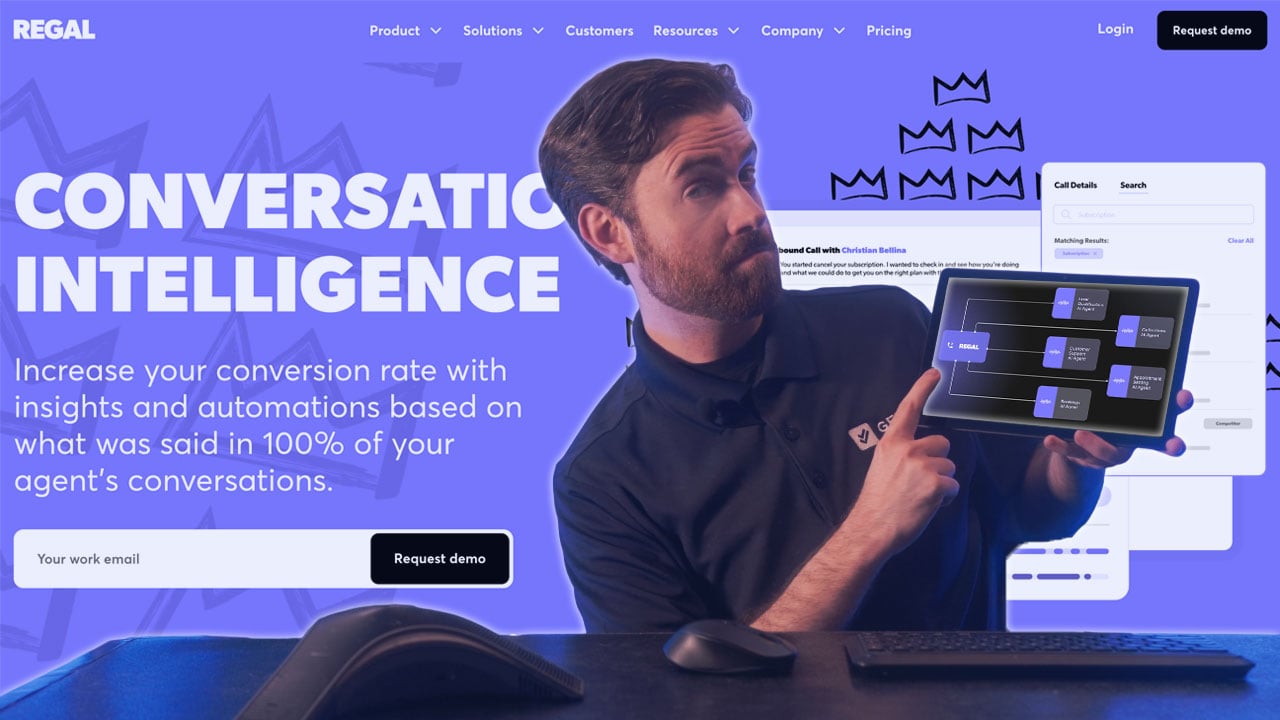
Regal is a conversational AI platform that bundles AI voice agents in with other contact center features like branded caller ID and journey orchestration resulting in a robust communications suite. Regal’s focus is on outbound calling tools, and seamless AI-human transfers.
Regal has A/B testing as well as behavior-triggered outreach built into the core product, allowing companies to build complex outbound workflows for appointment reminders, sales conversions, and more. Regal’s AI-powered lead qualification is particularly sophisticated with the ability to use website engagement and call history to dynamically prioritize outreach.
Cost and pricing model
Regal pricing is custom and usage-based. Although there is no publicly listed pricing, we do know that there are discounts offered for higher call volumes, and long contract commitments are necessary.
Best for
- Medium size businesses: Regal pricing is more accessible than full enterprise contract providers such as Sierra and PolyAI and it works well with companies that want human and AI agents to work together
- Outbound call centers: Regal doesn’t just provide outbound calling features, it has integrated intelligence into outbound calling, driving superior AI-powered outbound campaigns
Retell
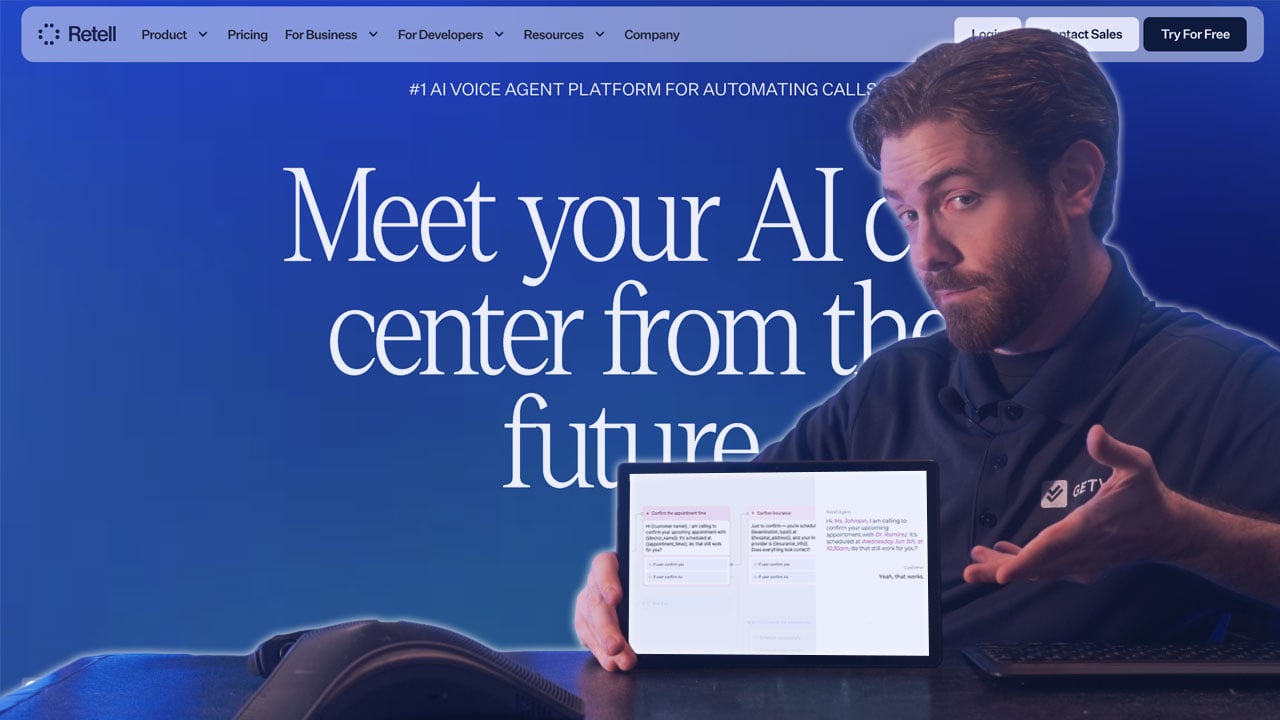
Retell is a voice platform built for developers, engineers, and tech savvy teams that want granular control over their AI phone system. Retell allows companies to choose their own text-to-speech provider such as ElevenLabs or Azure, LLM such as GPT-4 or Claude, and telephony carrier such as Twilio or Vonage.
Retell then handles coordination between all of these separate elements, ensuring seamless, natural sounding conversations. Additionally, Retell provides a UI for building agents with your chosen prompts, personality and behavior, interruption handling, post-call analytics, and language support for over 30 languages.
Cost and pricing model
Retel has flexible pay-as-you-go pricing that starts at just $0.07 per minute. This price does not include the LLM, telephony, or text-to-speech (TTS) service, however, so the all-in price will be closer to $0.13-$0.31 per minute depending on the services. Retell also requires engineering resources to set up, tune, and maintain the platform as there is no visual flow builder for non-technical users.
Best for
- Developer-led teams: Retell requires strong technical knowledge to set up and maintain but in exchange offers an extremely customizable platform
- High volume call centers: Once up and running, Retell offers a low per minute rate along with analytics and very low latency
Decagon
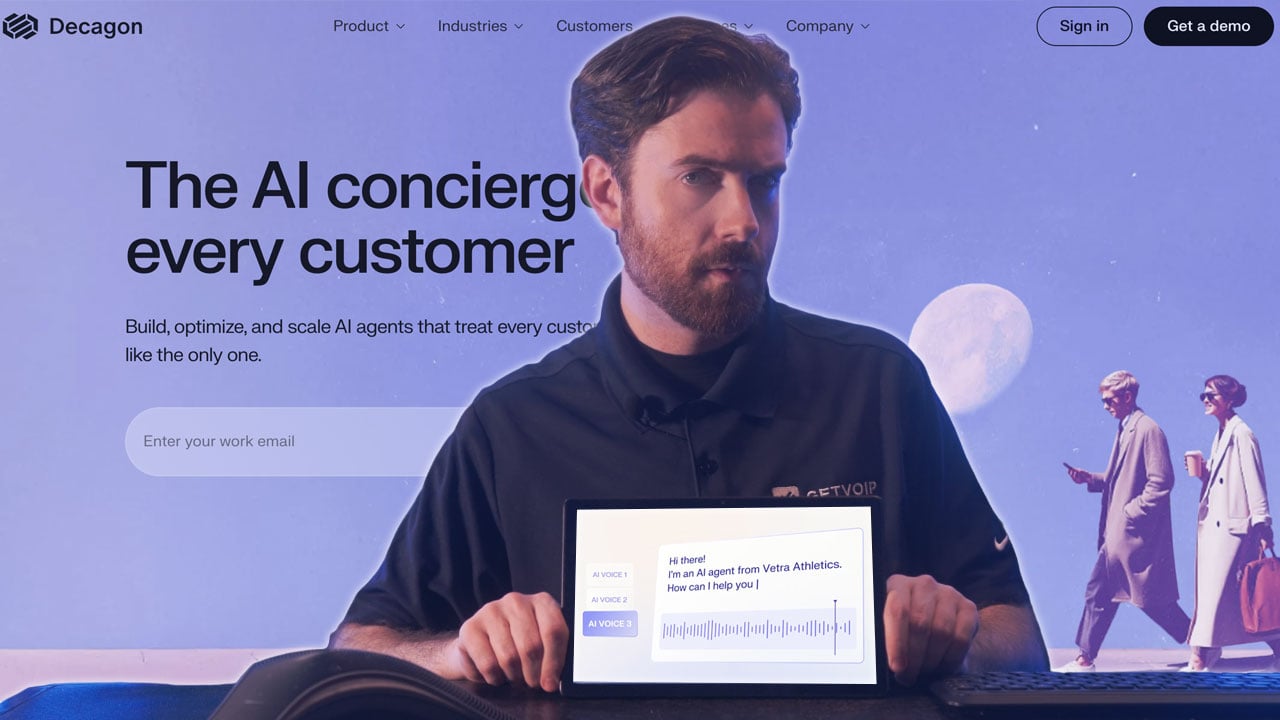
Decagon is a fully autonomous AI agent that interacts with customers over voice, chat, and email. One AI brain handles conversations across channels and shares context enabling customers to switch between channels and pick up right where they left off.
Decagon agents are able to reason through complex, muti-faceted issues and take real action on the backend allowing the agents to handle refunds, update status, manage support tickets, and more. Decagon also integrates deeply with CRMs and other apps such as Freshdesk, Intercom, and Zendesk.
Cost and pricing model
Decagon offers both outcome-based and conversation-based pricing models, allowing companies to choose whether to pay a little less for every interaction, or a little more for only those interactions that are resolved. In either case, Decagon is not for SMBs. Pricing starts at about $95,000 per year with the median being estimated around $380,000 per year.
Best for
- Companies with complex workflows: Decagon’s AI agents are reliable and sophisticated, allowing them to handle complex support workflows with multiple steps
- Omnichannel contact centers: Decagons AI agents interact across voice, chat, and email, sharing context and reasoning ability, making them ideal for omnichannel service
PolyAI
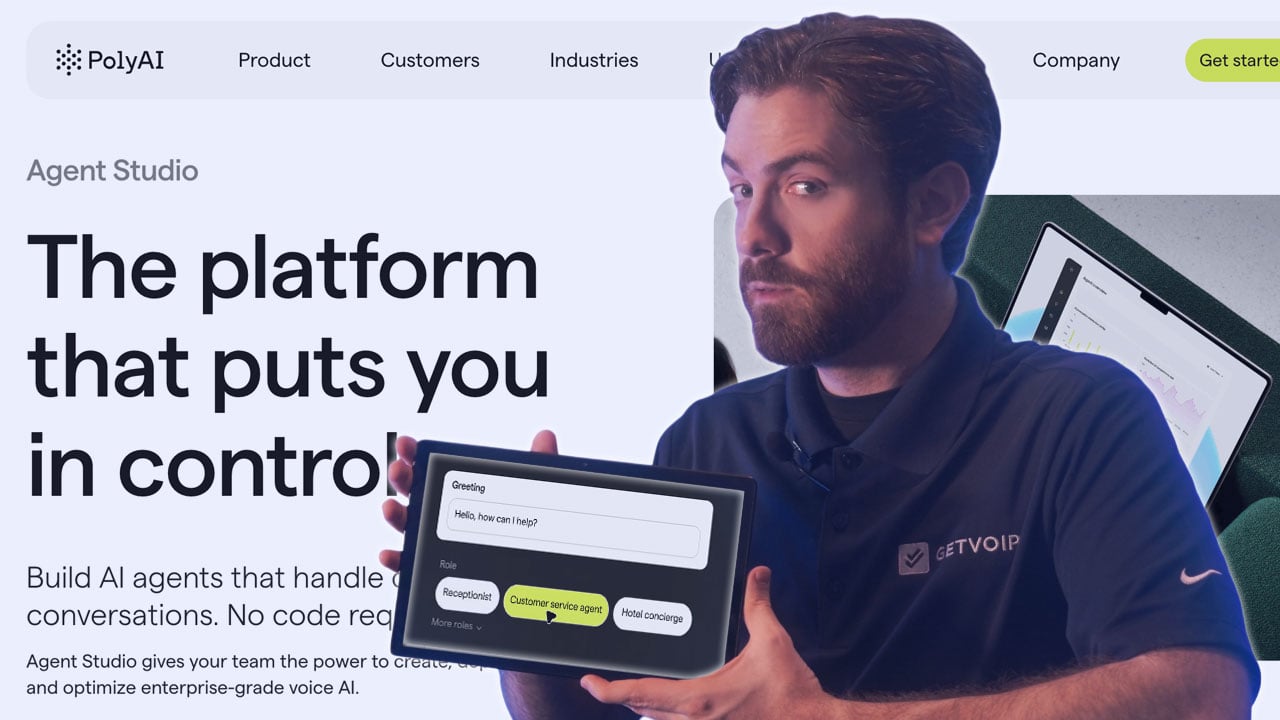
PolyAI is a fully managed AI agent platform that is known for having the most natural sounding AI voice agents in the space. PolyAI offers a number of personality and voice options to choose from with users consistently reporting that AI agents sound “warm” and “convincingly human” with the ability to handle interruptions, topic shifts, and emotional cues better than other providers.
PolyAI works with its corporate customers to design, create, and optimize AI agents that fit perfectly within your company’s structure and workflows. This is both a strength and a drawback. On the plus side, you get a very tailored platform, but with the downside that you won’t be able to implement it yourself or access self-service tools. Deployment can take from 4-6 weeks.
Cost and pricing model
PolyAI is another provider with custom, quote-based pricing and mandatory enterprise contracts. PolyAI combines this with per minute usage pricing, so that higher call volume companies will have a higher cost. Contracts start at about $150,000 per year.
Best for
- Hospitality industry: PolyAI is the gold standard for empathetic, human-like AI agents which are imperative in the hospitality industry
- Non-tech companies: PolyAI is great for large companies that want a more hands-off approach as the platform is completely managed
Synthflow
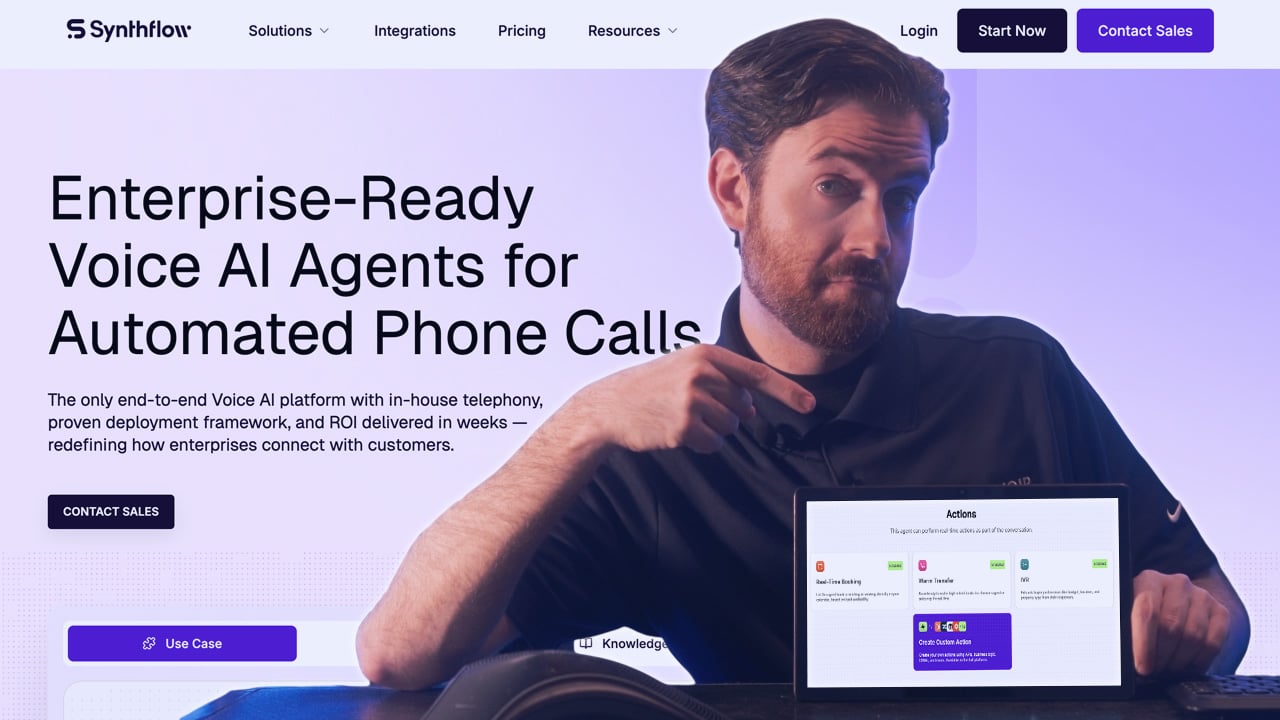
Synthflow is an out-of-the-box AI voice agent solution built for non-technical teams. Synthflow enables admins to design voice agents without code using a visual builder and premade templates. Synthflow users have the option to bring their own telephony carrier and LLM, or use Synthflow’s native telephony and GPT integration.
Synthflow features include real-time call monitoring and voice cloning capabilities. For enterprise users, Synthflow guarantees a 99.99% uptime, and offers a global low latency edge.
Cost and pricing model
Synthflow offers a pay-as-you-go option that is free to start and then usage based, as well as enterprise contracts. Pay-as-you-go costs $0.09/minute for the voice engine, plus $0.02-$0.05/minute for the LLM, and $0-$0.02/minute for telephony resulting in an all in price of about $0.11-$0.16 per minute.
Add ons include performance routing for $0.04/minute, extra concurrency for $20/concurrency/month, and a phone number for $1.50. Enterprise contracts are unlisted.
Best for
- SMBs: Synthflow offers fast deployment with the need for an IT team, as well as transparent pricing making it a great choice for SMBs
- Teams with simple workflows: Synthflow’s pay-as-you-go offering is limited in features and does not allow for deep customization or advanced workflow logic, but is an affordable solution for teams that need something fast, easy, and simple
Bland.ai
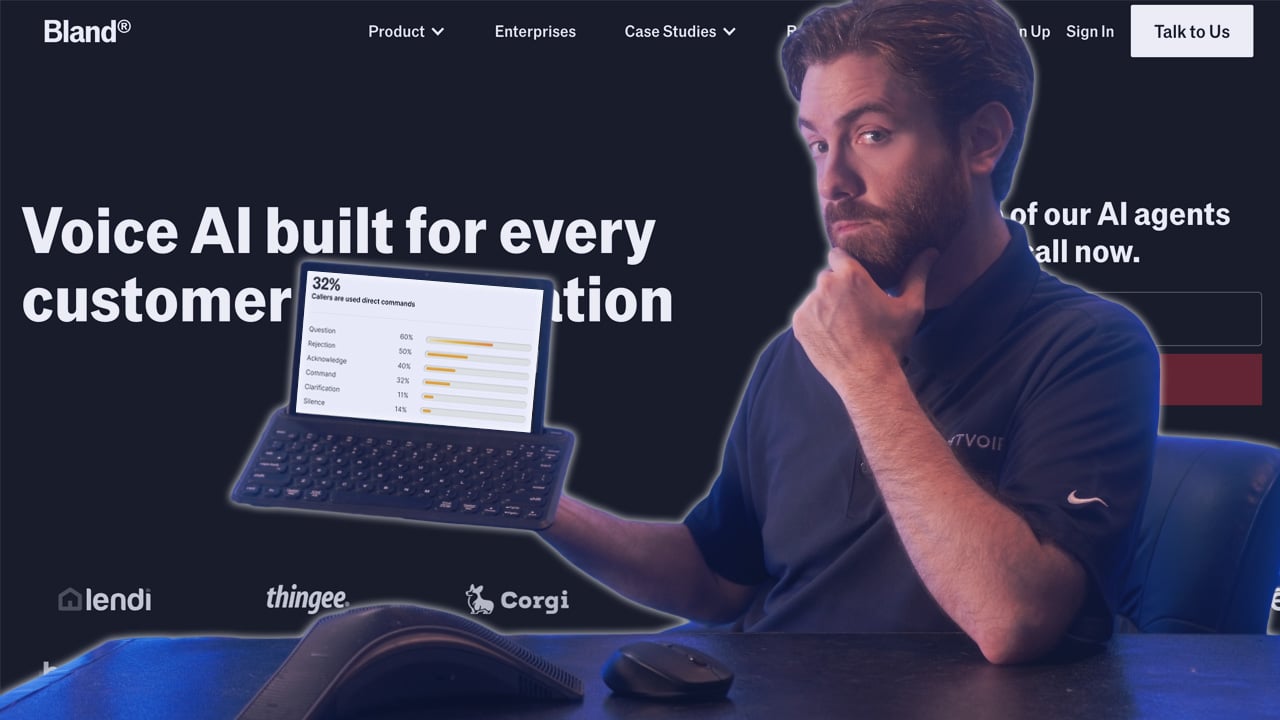
Bland AI is a developer centric AI voice platform that specializes in massive outbound calling campaigns. Bland AI can handle up to 20,000 calls per hour without any infrastructure bottlenecks. It also has voice cloning capabilities and can be integrated with a CRM or ERP for real-time data lookups. Review analytics display KPIs, sentiment, outcomes, and patterns, and allow supervisors to set objectives.
Developers program in branching dialog logic and live API calls through the platform's “Conversational Pathways” system. AI agent voices and personalities are not as “warm” as some other platforms, and there is no “no-code” option, but Bland.ai shines in high volume outbound campaigns.
Cost and pricing model
Bland AI shifted its pricing model at the end of 2025 to a tiered model with a free Start plan and two paid plans from $299-$499 per month. These subscription costs do not include calling minutes, which are an extra $0.11-$0.14 per minute depending on the pricing tier.
Best for
- Debt collection: Debt collection companies can reach out to tens of thousands of debtors each day while ensuring compliance with local regulations
- Cold calling: Where sheer numbers and programmability matter more than warmth or ease-of use, Bland AI provides excellent value
How to Choose the Right AI Voice Agent Pricing Model
Each AI voice agent pricing model comes with its own strengths and drawbacks. Taking the time to research which pricing model fits your business best will help you find the right AI voice agent provider. Here is a quick step-by-step guide:
Calculate Your True Total Cost of Ownership
To calculate your true total cost of ownership (sometimes called the “all-in” cost) you will need to find out the base rate for the platform(s) you are interested and add the cost of telephony, LLM, voice (TTS), and overage (if applicable).
Match Pricing Model to Your Call Volume Pattern
The next step is to analyze your call volume so you know about how many minutes of voice agent you will need each month.
If your business is seasonal and experiences variable calling patterns, a pay-as-you-go model will save you money in the off season. If your company experiences stable, predictable call volume, a subscription offers more predictability in pricing, but it might still be cheaper to go with a pay-as-you-go plan if your volume is low.
Compare Volume Discount Thresholds
If your company has consistently high call volume, you can usually save money on an enterprise plan or subscription with volume discounts. For example, Synthflow and Retell both offer a drop in per minute pricing if you commit to at least 50,000 minutes per month.
Evaluate Contract Length and Minimum Commitments
Some providers charge monthly and you can cancel at any time while others require an annual contract. If you decide to go with an annual contract, make sure to find out if there are early termination penalties.
Factor In Sales vs Support Use Case Economics
Not all calls have the same economic value, and your pricing tolerance should reflect this. When an AI agent is handling revenue generating calls such as sales conversions, lead qualification, upselling, etc., a higher per minute cost is justified. For example, if an AI agent call results in a conversion worth $10,000 in customer lifetime value, a cost of $2 per minute is justified.
For support calls, the goal is to resolve issues as quickly and cheaply as possible without sacrificing customer satisfaction scores. In this case, it makes sense to save as much as possible on per minute costs, especially at high volume.