

Contact center platforms are embracing ethical AI, expanding their omnichannel presence, evolving the way they use automation, and improving the agent experience–but what does that mean for your business right now?
In this post, we’ll explore the following top 2026 contact center trends:
- Responsibly Integrating and Using AI
- Generative AI for Contact Center Operations
- Voice Analytics and Conversation Intelligence
- Omnichannel and Automation Take a Leap
- Improving the Agent Experience
- Proactive and Predictive Engagement
Responsibly Integrating and Using AI
Building ethical AI is all about balancing innovation with responsibility. Giving users insight into how AI makes its decisions allows users to control and understand their interactions with AI systems.[*]
Companies will start conducting regular bias audits, such as those employed by IBM’s AI Fairness 360 toolkit. Adding clear ethical guidelines and human oversight is another key step to ensure AI alights with human values. When done correctly, these efforts create AI that’s effective and beneficial to society.
Businesses are applying human ethics standards to virtual agents, signaling the rise of ethical AI. AI monitoring tools check chatbot response accuracy, customer sentiment, and resolution rates.
The following are some of the AI quality assurance methods driving a responsible usage:
- Bias Detection: AI tools now include features that identify and reduce biases when it comes to automated responses to ensure all customers get fair treatment regardless of demographic.
- Performance Benchmarking: AI systems benchmarked against real-world scenarios from human agents expose areas of improvement for both sides when it comes to response speed, accuracy, and customer satisfaction metrics.
- Sandbox Environments for Testing: Prior to any deployment, AI solutions go through rigorous testing in controlled environments to simulate a wide range of customer interactions and to “stress test” their capabilities.
- Human Oversight Mechanisms: AI-powered solutions should include escalation pathways for human agents to take over issues when AI encounters something outside of its scope. Likewise, regular company-wide audits ensure regulatory compliance and ethical standards remain in place.
- Customer Feedback Loops: Post-interaction surveys and sentiment analysis give companies the big picture on how customers feel about AI interactions. Iterative improvements are made to assure AI systems evolve to meet customer needs and expectations.
Generative AI Transforms Contact Center Operations
Contact center AI adoption is accelerating. A staggering 80% of contact center organizations have stated they are investing in generative AI or expect to do so in the coming months.[*] The technology is delivering measurable results across productivity, cost reduction, and customer satisfaction metrics. One company with 5,000 customer service agents that implemented generative AI saw a 14% increase in issue resolution per hour and a 9% reduction in handle time.[*]
These productivity gains add up quickly. Leaders estimate that applying generative AI to customer care functions could boost productivity at a value ranging up to 40% of current function costs.[*]
The following are critical cases where contact centers are deploying generative AI:
- Real-Time Agent Assistance: AI provides agents with instant, context-aware suggestions during customer interactions by analyzing conversation history and knowledge bases. By classifying service issues and automatically routing customer contacts, AI is boosting contact center productivity by 1.2 hours a day[*]
- Advanced Virtual Agents: Unlike traditional chatbots, generative AI-powered virtual agents understand context and handle complex queries with personalized responses. 80% of customers who interact with an AI chatbot have a positive experience while AI-driven software increases customer satisfaction scores by an average of 12%[*]
- Automated Quality Assurance: Current manual evaluation methods for assessing agent effectiveness typically cover less than 5% of total call volume.[*] Generative AI systems analyze 100% of interactions, automatically scoring performance and identifying coaching opportunities without time or resource-heavy manual reviews
- Predictive Customer Needs: A third of major customer experience decision-makers saying they utilize AI underscores its critical role in predicting customer needs and delivering personalized experiences to get you that return on investment.[*] AI anticipates customer issues before they escalate by analyzing historical data and behavioral patterns
Customer care organizations are running at two different speeds. Top performers have seized the opportunities delivered with a bow by advances in digital technologies with ruthless prioritization. The other companies struggle to fit a patchwork of digital point solutions into legacy care ecosystems, AI can reduce customer service costs by as much as 30%, making it a strategic boon for competitive contact centers.[*]
Voice Analytics and Conversation Intelligence
Voice analytics has evolved from basic call recording into sophisticated conversation intelligence platforms. 81% of contact center executives have invested in voice and text analytics, up from 62% in 2020.[*] The technology analyzes tone, emotion, and speech patterns to uncover trends that traditional metrics miss.
The speech analytics market is growing at a compound annual growth rate of 25.5%.[*] The latest voice analytics platforms detect customer frustration before it's verbally expressed, identify successful de-escalation techniques, and pinpoint exact phrases that lead to positive outcomes.
Contact centers are implementing conversation intelligence through:
- Insight-rich Sentiment Analysis: AI monitors your callers' emotional journeys throughout calls and tells managers when conversations trend toward antagonistic or negative. When customers experience something worth talking about, they're 56% more likely to give positive feedback and 55% more likely to recommend you to friends and family.[*] Voice analytics means intervention before customer relationships stand to become risk-heavy
- Performance Insights: Speech analytics solutions analyze recorded conversations to help agents identify solutions to resolve customer issues. AI identifies successful behavioral patterns across top-performing agents, allowing training programs to focus on proven techniques rather than generic best practices
- Customer Journey Mapping: By analyzing conversations across touchpoints, voice analytics reveal pain points and stopgaps that annoy your base most within the customer journey. Companies use these insights to reimagine processes proactively, reducing the need for future contact
- Automated Compliance Monitoring: Automated systems flag potential compliance violations and policy breaches in real-time. This protects both customers and companies while reducing the manual burden of quality assurance reviews
48% of brands expect conversation intelligence tools to enhance customer experiences and drive increased revenue.[*] Organizations using advanced voice analytics discover previously invisible insights about customer needs and operational inefficiencies that drive strategic improvements. The technology transforms contact centers from cost centers into strategic intelligence hubs that fuel company-wide innovation.
Omnichannel and Automation Take a Leap
To meet everchanging CX expectations, modern contact centers are increasingly focused on omnichannel self-service. Omnichannel self-service in contact centers lets customers resolve their own issues or find answers using the channels they want to. Whether it’s through chatbots, mobile apps, websites, and interactive voice response (IVR) systems, these channels work seamlessly together so customers can switch between them without having to repeat themselves. Users can start a troubleshooting session on a website, then move over to a chatbot for help, then finish by connecting to a live agent–without losing any conversation history.
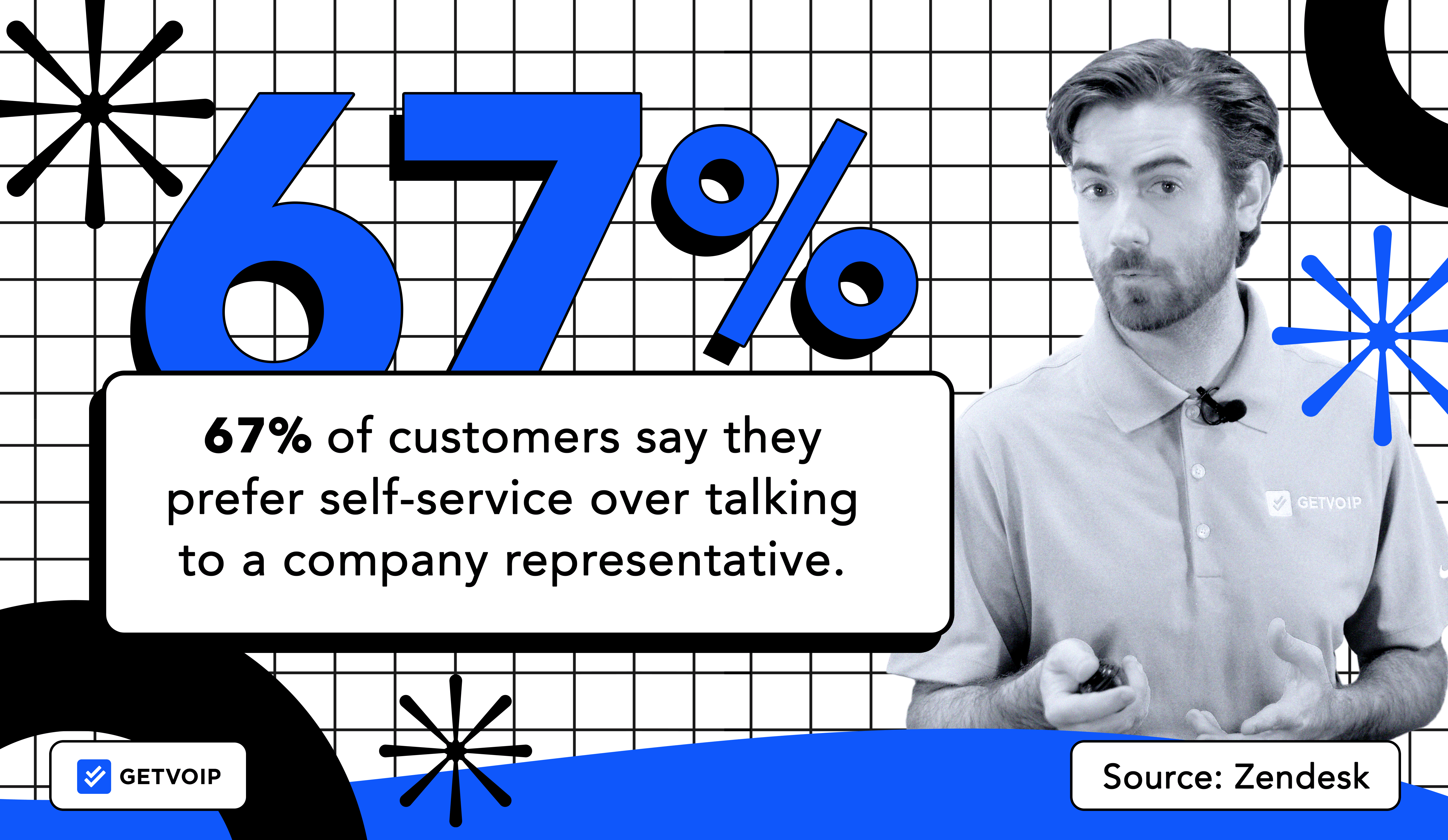
The end result is a smooth, personalized experience that keeps customers coming back and helps businesses solve problems cost-effectively. Customers are already sold on this. 67% of customers say they prefer self-service over talking to a company representative.[*] Businesses must revamp their existing knowledge bases and customer portals to accommodate customers who want to independently resolve issues. Self-service can include helping customers track their orders, request refunds, and even resolve account issues–without any agent intervention.
Chatbots and IVR systems are transforming themselves to better handle complex customer queries. A virtual assistant through text or voice is now able to handle billing questions, basic technical support, and account updates across different channels, including social media. Nearly 70% of customers expect a response within a day when using social media channels to communicate with businesses.[*]
Improving the Agent Experience for Better CX
Contact center leaders are prioritizing the agent experience to maximize workforce efficiency and curb attrition rates. Contact centers have an annual agent turnover rate of 60%, with 18% of agents citing poor treatment from customers and anxiety as key factors for their departures.[*] To increase agent retention, contact centers are employing the following key initiatives:
- Flexibility-First Workplaces: Many businesses are embracing hybrid work schedules, allowing agents to work in-office and remotely. Resignations fall by 33% when workers shift from full-time in-office to a hybrid schedule with two days remote.[*] Agents can work from home on select days, then come into the office to get their fill of in-person interactions and build a sense of community. This helps maintain a healthy work-life balance.
- Gamification: Contact centers are adopting gamification strategies to increase overall workforce engagement through recognition and leaderboards. Initiatives like rewarding agents for achieving increased customer satisfaction scores boost productivity, engagement, and motivation.
- AI-Powered Coaching: Artificial intelligence provides individualized agent feedback to improve agent performance and further develop skillsets. AI platforms monitor emotional intelligence insights in real-time to offer feedback on empathy, tone, and conversational flow to ensure agents perform at their best.
- Self-Scheduling: Accommodating agents who are just as human as their customers and allowing them to adjust work schedules autonomously can cut attrition rates. Workforce management tools allow agents to directly request shift swaps or needed time off in real-time to foster a sense of flexibility and transparency.
Proactively Assuring Quality Service
Proactive quality assurance leverages AI and newer tools to anticipate issues before they happen. Predictive analytics identifies customer concerns based on historical analytics and past customer behavior, flagging potential problems to agents before customer escalation.
By leveraging tools that proactively combat low customer satisfaction, a company can cut its average handle time by at least 20% year-over-year.[*]
Here are some of the ways AI and proactive quality assurance are changing the game:
- Predictive Insights: AI actively monitors customer interactions and suggests ways agents can deliver a better experience in real-time. Speech analytics platforms break down speech patterns, tone, and even specific keyword usage to gauge customer satisfaction during live conversations. Managers and highly trained personnel can step in swiftly to prevent escalation or a negative experience before it happens.
- Automated Quality Checks: Customizable agent performance score cards automatically “grade” agents based on preset criteria like compliance or customer satisfaction. These automated scorecards cut down on manual reviews, keep records accurate, and even assign agents relevant training modules for review.
- Scenario Planning: AI models generate “practice” customer conversations to simulate potential challenges like unexpected call volume surges or a service blackout. This ensures agents are prepared with protocols and scripts to respond to these issues without lowering CSAT scores.
- Real-Time Analytics: With the right tools, agents can adjust their approach on the fly during live interactions using real-time sentiment analysis. Mid-call, they can receive actionable prompts and suggestions to improve outcomes. Integration of real-time analytics has grown anywhere from 5-10% recently, and is expected to grow further. That's expected to grow.[*]
Contact Centers Accelerate Growth Through Trends
The trends shaping how contact centers handle customers and their personnel in 2026 show a significant shift towards personalization, integrating AI ethically and effectively, and assuring employees they have a workplace that cares. Embracing these innovations keeps businesses competitive and focused on delivering exceptional experience in a landscape changing by the second.
Be sure to check out our in-depth CX and contact center software reviews to compare providers by available features, pricing, user experience, and customer support–so you can find the right solution for your business needs.