

Video conferencing has continued to gain popularity and the industry has seen several advances over the last year resulting in video meetings that are smoother, more personalized, and more engaging. UCC firms like Zoom and others have breathed new life into the space by leveraging the rapid advancements in generative AI.
Overall, the video conferencing market grew by about 8%-12% year-over-year, from 2024 to 2025.[*] Providers like Cisco, Microsoft, Google, and Zoom all leaned into artificial intelligence this past year to enhance their platforms with powerful virtual assistants. There was also a focus this year on addressing the video conferencing frustrations of the past few years and creating more seamless virtual interactions.
Let's take a look at the biggest video conferencing trends heading into 2026.
Hybrid Model Gains Popularity
In 2025, the hybrid virtual-in-person model transcended the workplace into meetings and large scale events. Where hybrid events used to feel disjointed, thanks to advancements in AI, they have become more flexible and fluid, able to embrace inclusion without sacrificing a sense of presence. In 2025, over three-fourths of organizers reported embracing the hybrid model for events.[*]
AI features benefited hybrid events with real-time transcription and captions, automatic speaker framing, real-time engagement monitoring, smart attendee matching, automated follow-ups, and more.
Hybrid work also remains a popular model in a variety of industries, with about half of remote-capable employees working in a hybrid workplace in 2025.[*]
At WebexOne 2025, Cisco announced AI-driven enhancements to RoomOS 26 that would smooth out hybrid meetings by leveraging agentic capabilities to ensure every participating device is tuned to the meeting needs such as spatial audio zones and AI-powered optimizations.
Increased Reliance on Artificial Intelligence
Before this year, video conferencing providers were experimenting with AI tools that could generate meeting summaries, identify action items, and capture insights. In 2025, AI technology was advanced enough to do so much more, and providers shifted from an experimental, to a performance mindset.
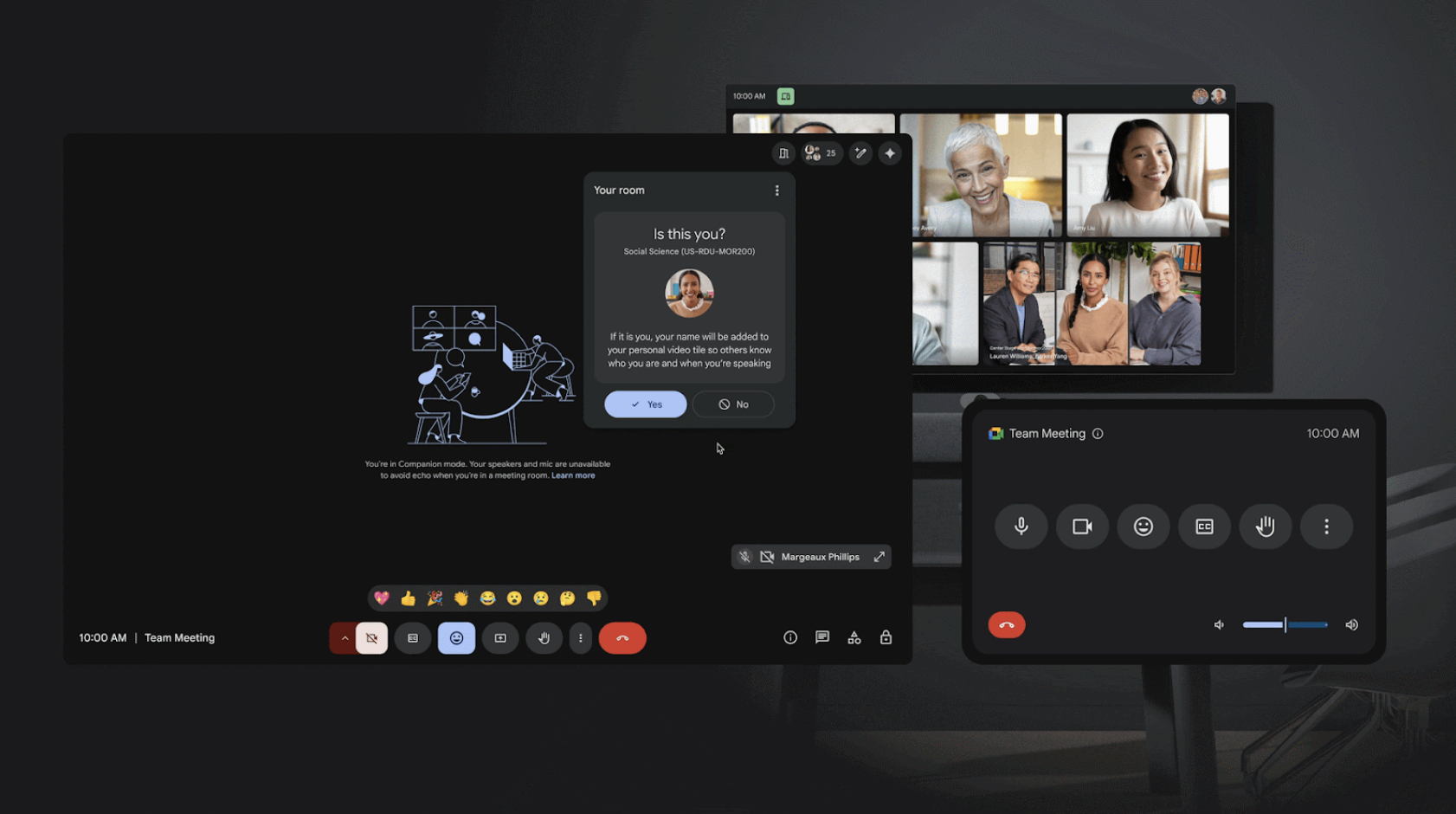
In 2025, Google added full system audio sharing on Google Meet, allowing presenters to share audio without any lagging or feedback. This feature was made possible thanks to AI-powered background noise detection tools. Google Meet is also now able to detect when someone is in a conference room to reduce echo.
Webex by Cisco introduced the next generation of AI agents in 2025 that can not only take notes during meetings but can automate follow-ups and action items and are built to connect data from calls, workflows, customer interactions, and video meetings in order to demolish data silos.
In 2025, Microsoft Teams also updated its AI intelligence and began offering real-time language translation in both text and voice for video meetings in 9 different languages, bridging the gap for global teams.
Virtual Events - Not Going Anywhere
The widespread adoption of virtual events seems to have given me (and many others) much-needed freedom to do things that seemed out of the question.
In 2025, the virtual events industry continued expanding, generating about $98.56 billion across the global market.[*] AI chatbots were doing more than ever before, handling Q&A sessions, dealing with logistics, sending notifications, and more. The result was that virtual events are becoming more engaging and hyper-personalized to every attendee.
And most every mainstream UCC provider has a feature or entirely built-out platform to facilitate such happenings - in most cases, for events for folks in the tens of thousands. And yes, this means Zoom, Webex, Microsoft Teams, and Google Meet.
3D and Immersive Tech Gets Closer To Reality
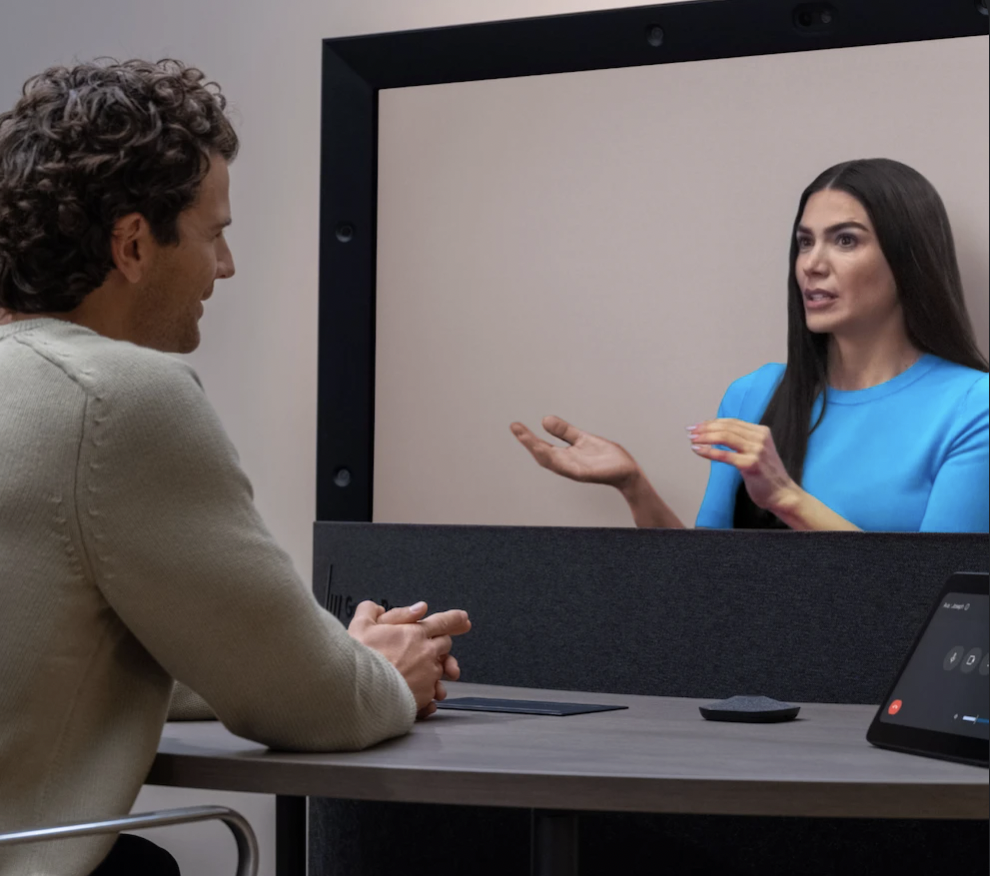
One of the biggest breakthroughs of 2025 in the video conferencing space came from Google Beam, a successor to Project Starline. Beam is working on 3D video calls using AI volumetric video and depth displays. AI volumetric video is a way of capturing and transmitting people or objects as 3D renditions, using AI to clean and compress their images to appear 3D and life-size on the other end. Beam's focus is on preserving eye contact, facial expressions, and natural presence during virtual interactions.
In 2025, AR and VR also started being used to create virtual spatial meeting environments (3D meeting rooms), and pilot programs have been introduced to facilitate AR/VR training in the surgical, pilot, and disaster management fields.[*]
Tools that allow users to scan real spaces and create AR/VR digital environments such as Meta's Hyperspace also hint at a future where meetings are more three dimensional and immersive.[*]
There were some setbacks in the AR/VR space in 2025, however, with Microsoft Mesh being phased out as a standalone product, and Meta's Horizon Workrooms being shut down in early 2026. Although AR and VR technology may not infiltrate the workplace as quickly as was previously thought, it is certainly on the horizon.
Video Conferencing is Constantly Evolving
There is so much to cover that it can be difficult to mention everything, but video platform users are always coming up with new and innovative ways to leverage said platforms to enhance how they work. In 2026, I don't expect that to change one bit.
There will likely be more artificial intelligence inserted into these platforms to make the process of working from anywhere more efficient.
2026 will likely be the year that video conferencing gains some of its most innovative functionalities and even wider adoption, for that matter. It is another thing that we will know in due time.