Conversational AI in healthcare is an intelligent virtual agent that holds natural-sounding, two-way voice and text conversations with patients, then completes the customer request or relevant task autonomously or by involving a human agent.
Especially in the healthcare sector, conversational AI is best seen as a tool to reduce routine and high-volume work, provide patient self-service for basic tasks, and handle high contact volumes. Essential use cases include appointment scheduling and reminders, medication refills, billing questions, payment, patient intake and verification, request triage, and escalation to the correct department or professional.
Conversational AI should not handle medical emergencies or clinical tasks, and unresolved issues should be quickly handed off to a human.
Getting value out of a conversational AI investment isn’t just about choosing the right model or platform. More importantly, it’s about HIPAA safeguards and appropriate data handling, complete third-party and internal systems integration, and a clear escalation path with assigned AI agent ownership.
What Is Conversational AI in Healthcare?
Conversational AI in healthcare uses agentic AI to understand and respond to patient requests using natural speech or text instead of forcing them through static IVR phone trees that follow a fixed, limited script. By contrast, conversational AI interprets patient sentiment and intent, asks clarifying questions, pulls relevant data from connected tools and knowledge bases, then acts within its limits to resolve the problem, complete the task, or escalate to a human.
Successful conversational AI deployment works across voice and digital channels seamlessly: it preserves context and starts the conversation from exactly where it left if patients switch from voice to text, from text to email, or from email to chat messaging.
Conversational AI works across three connected layers:
- Speech recognition: Speech-to-text converts a caller’s audio into text, and text-to-speech produces the spoken reply.
- Natural language understanding (NLU): Large Language Models (LLMs) determine what the patient said, what they want, and their current emotion/sentiment. The AI Agent then pulls relevant details from your connected applications.
- Orchestration and integration: The AI takes direct action within rules defined by your healthcare organization, then shares the interaction data with your connected systems, creating a self-improvement loop.
The orchestration and integration layer is where most of the real work and risk lives. A system that understands a patient request but can’t connect to the scheduling tool is little more than a sophisticated message-taker.
Note that the Conversational AI category is often blurred with Gen AI, agentic AI, and transcription tools. Gen AI tools draft the response for a human to review, but they can’t take action. Agentic AI can act autonomously, within limitations set by the organization. Transcription tools create interaction summaries and conversation transcripts.
Conversational AI Use Cases Across the Patient Journey
Conversational AI is used across the patient journey in three main stages: first contact, pre-appointment prep, and patient follow-ups. Two internal use cases for conversational AI sit beside the patient-facing ones: automated quality assurance and conversation analytics.
Scheduling, Billing and Call Routing at First Contact
First contact is where high volumes concentrate and where clinical risk is the lowest. Therefore, it’s a natural starting point for conversational AI deployment. Key use cases in this phase include:
- Scheduling, rescheduling, confirmations, reminders across voice and text channels
- Answering billing and insurance questions, handling balance inquiries and payment plans, and reviewing eligibility basics
- Smart routing, which connects patients with the right queue and agent according to patient intent, when the AI agent can’t fix the issue on its own
A successful AI-human handoff preserves conversational context, patient intent, and caller identity. It also tells the human agent what it already accomplished on its own, preventing patient repetition.
Patient Intake, Protocol-Based Symptom Triage and Escalation
Pre-appointment tasks carry more clinical and compliance exposure, and include:
- Patient intake, like collecting medical history, current prescriptions, insurance details, consent forms, and the reason for the visit
- Standard symptom assessment using approved protocols in order to determine an appropriate level of care: self-care, same-day care, routine appointment, medical emergency, etc. Note that the conversational AI does not provide diagnoses or treatment plans
- Identifying red flags and immediately escalating the conversation for symptoms that require bypassing the standard conversational flow, like chest pain and shortness of breath
Remember that escalation is a design decision made before, not after, conversational AI launch. Always define triggers that force escalation, who receives that escalation and how quickly they must respond, and a fallback plan that outlines what happens if no one answers.
Post-Discharge Follow-Up, Medication Adherence and Ongoing Check-Ins
The post-appointment stage is where conversational AI acts as an extended member of the patient’s care team, managing:
- Standard patient check-ins the days after discharge to go over the recovery plan, ensure prescriptions are filled, and surface side effects early
- Medication reminders for refills, periodic medication adherence prompts, and continued monitoring
- Basic behavioral health support actions like mood check-ins, self-care reminders, and between-appointment care
How Conversational AI Reduces Routine Work and Improves Patient Access
Conversational AI offers countless benefits to healthcare organizations, but those benefits are all conditional. They include:
- Additional staff time: If AI is able to entirely resolve patient requests end-to-end, the front desk, nurses, and other care coordinators can get the time spent on routine, repetitive tasks back. This means more time with patients, higher productivity, and less stress – but only if the AI agent doesn’t escalate those tasks to a human.
- 24/7 availability: Patients, family members, and care teams can get around-the-clock access to essential information and complete basic tasks on their own schedule. Patients can speak in their preferred language, on their preferred channel, and avoid long hold times. A clear escalation path and guardrails for what AI agents can and can’t do ensure compliance and proper patient care.
- Fewer no-shows: Multiple multichannel reminders outperform one-off appointment reminder texts and emails, while easier intake form completion and appointment rescheduling also reduce the risks of no-shows. For instance, one study of primary health care centers in the United Arab Emirates found a baseline no-show rate of 21% before implementing AI-driven scheduling and reminder systems, underscoring how much room there is for improvement.
- A consistent patient experience: Most importantly, conversational AI agents create a more familiar, consistent, and better long-term patient experience. Patients know what to expect, their conversations pick up where they left off, and they no longer have to repeat themselves. The experience is only improved, however, with a human-in-the-loop, firm guardrails, and unified, connected systems.
Safety, Data and HIPAA Compliance Checks Before Launch
Especially in the healthcare field, compliance and privacy is paramount. Before launching a conversational AI agent, healthcare providers must review agent accuracy, HIPAA applicability, data control, and of course, patient trust.
Accuracy
LLMs can hallucinate or produce wrong or unhelpful answers. In a patient-facing setting, narrowing what the system is allowed to say, not trusting that it will say the right thing, is the best way to narrow hallucination risk.
Practical controls include grounding answers in approved content, restricting clinical topics, and routing anything that requires clinical judgement directly to a medical professional. AI’s job is to collect, route, and complete administrative tasks – not clinical ones.
HIPAA Applicability
Consumer-facing chatbots aren’t under HIPAA obligations. HIPAA regulations are attached to covered entities like providers and business associates that handle PHI (Protected Health Information). Therefore, when a patient just types symptoms into a general-purpose tool like ChatGPT or Claude, that generally falls outside the definition of a covered entity. However, if a provider deploys that same model to talk to patients directly, the regulatory situation is different.
Vendors that create, receive, transmit, or maintain PHI on behalf of a provider are technically business associates requiring a BAA.
Data Control
Before deployment, understand exactly where patient data goes and who can touch it. Begin with recording and transcripts: where are they stored, in which region, and who can access them?
Then, confirm the deployment model: is it a multi-tenant cloud, a private cloud, or on-premises? Does PHI ever leave the clinical environment?
Ask for default and customizable retention periods for audio, transcripts, and conversation logs – along with any zero retention options. Make sure you know if conversation data is used to train or improve the vendor AI models. Access to admin consoles should be protected by roles-based permissions, single sign-on, and multi-factor authentication. Finally, require audit logs detailed enough to reconstruct exactly what the AI said, what data it read, and what actions it took in every conversation.
Patient Trust
Many patients are wary of automated phone systems and AI, especially after years of poor IVR experiences. Design should always disclose that a patient is speaking to an AI agent, make it easy to reach a human, and never trap patients in loops.
Health literacy varies widely in any patient population, so test with real patients across ages, languages, and income levels – not just with staff. Remember that multilingual models don’t guarantee equal performance in every language.
Top Conversational AI Platforms for Healthcare
Now that you know what conversational AI in healthcare is capable of, let’s review some of the top conversational AI providers, including:
Hyro
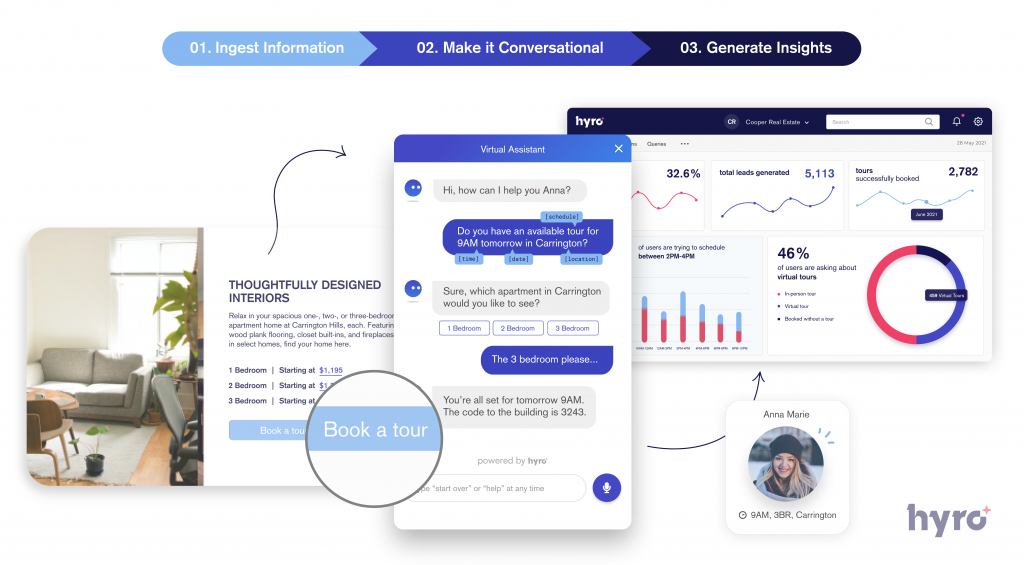
Hyro is a HIPPA-compliant, plug-and-play conversational AI solution that integrates with key healthcare tools like Epic, Athenahealth, eClinicalWorks, and Kyruus Health. Top Hyro healthcare customers include Weil Cornell Medicine, Intermountain Health, and Montefiore Health Systems. Key advantages include fast time-to-deployment in as few as three days, omnichannel communication, and advanced patient self-service options.
Common use cases include prescription management, physician search, direct patient engagement across voice and digital channels, and scheduling management.
With Hyro, customers like Tampa General Hospital cut wait times by 58% and daily call abandonment by 56%.
Pricing and Plans
As of this writing, Hyro’s pricing is entirely quote-based, meaning prospective users should reach out to a Hyro representative directly. Pricing is based on contact volume, channels, and use cases.
Standout Capabilities
- Call Center Automation: Capabilities include smart routing, agent end-to-end resolution, and SMS deflection to resolve or deflect over 85% of calls.
- Care Intelligence: Conversational intelligence that tracks AI agent performance, workflow bottlenecks, patient experience quality, and more. It also provides proactive predictions with suggested actions and tracks patient self-service usage.
- Voice and Chat AI Agents: Hyro’s agentic AI agents come with pre-built healthcare skills and are powered by a combination of LLMs and Hyro’s proprietary healthcare-specific language models designed to handle 10 times more patient inquiries.
Limitations
- Lack of Transparent Pricing makes it difficult for healthcare providers to estimate costs and plan budgets
- Narrow, healthcare-only platform essentially requires third-party CCaaS integration and allows for expansion only within healthcare use cases
- Not ideal for smaller practices or boutique firms that mostly service patients in-person
Best For
Hyro is best for mid-size and enterprise healthcare providers looking for a multi-lingual, industry-specific alternative to basic chatbots. Ideal Hydro users want to go live quickly, with minimal internal AI configuration. It’s also a good fit for teams looking to protect patients from healthcare coverage loss, and pediatric hospitals needing to streamline the appointment management process.
kore.ai

kore.ai is an enterprise AI agent solution that serves a variety of industries, including healthcare. Its {Artemis} platform allows healthcare practices to build, scale, and optimize AI agents all in one AI-native system – resulting in up to 5x faster time-to-value. Existing customers include CVSHealth, onecall, Alcon, NYC Health+Hospitals, and Colgate.
kore.ai integrates with essential healthcare applications like nextgen, Epic, Oracle Cerner, denticon, artera, and more. The platform is LLM-agnostic, manages multi-agent orchestration, and helped one unnamed healthcare organization handle over 1 million daily calls across 7,000+ stores.
Pricing and Plans
kore.ai pricing isn’t published on the provider’s website, but its documented billing model charges per 15-minute conversation session. Third-party statements consistently report that pricing starts at $50-$150 per month.
Standout Features
- ARCH: kore.ai’s agent builder tool that lets users turn plain-language agent prompts into live agents that connect with existing workflows and knowledge bases to improve the patient experience. Users can test AI agents before deployment, set guardrails, and leverage persistent memory to retain interaction context across tools and channels.
- AI-native contact center: kore.ai’s full stack contact center lets healthcare providers manage AI agents, omnichannel routing, workforce management, quality management, real-time monitoring, and enterprise knowledge base data in a unified interface. Users don’t need to have an existing contact center solution to benefit from kore.ai.
- Agent Assistance: Provides real-time, in-conversation next-best-action suggestions to human agents, plus auditability and traceability. Every conversation automatically feeds back into the platform, so it improves continuously with more use.
Limitations
- Session-based billing makes it difficult to estimate the cost of calls and leads to large variations in pricing during busy seasons
- More internal configuration required than other providers listed here, due to enterprise platform depth
- Few named provider proof points may make justifying the investment to executives more difficult
Best For
kore.ai is best for enterprise-level healthcare providers prioritizing scalability and fast AI ROI, along with a solution offering complete AI agent lifecycle management. It’s also right for healthcare insurance companies, those working within life sciences, and those looking for a complete AI-powered contact center solution. Those using kore.ai want to leverage AI across the entire patient experience, including care coordination, lab results, patient registration, patient referrals, and internal operations like HR.
SoundHound AI
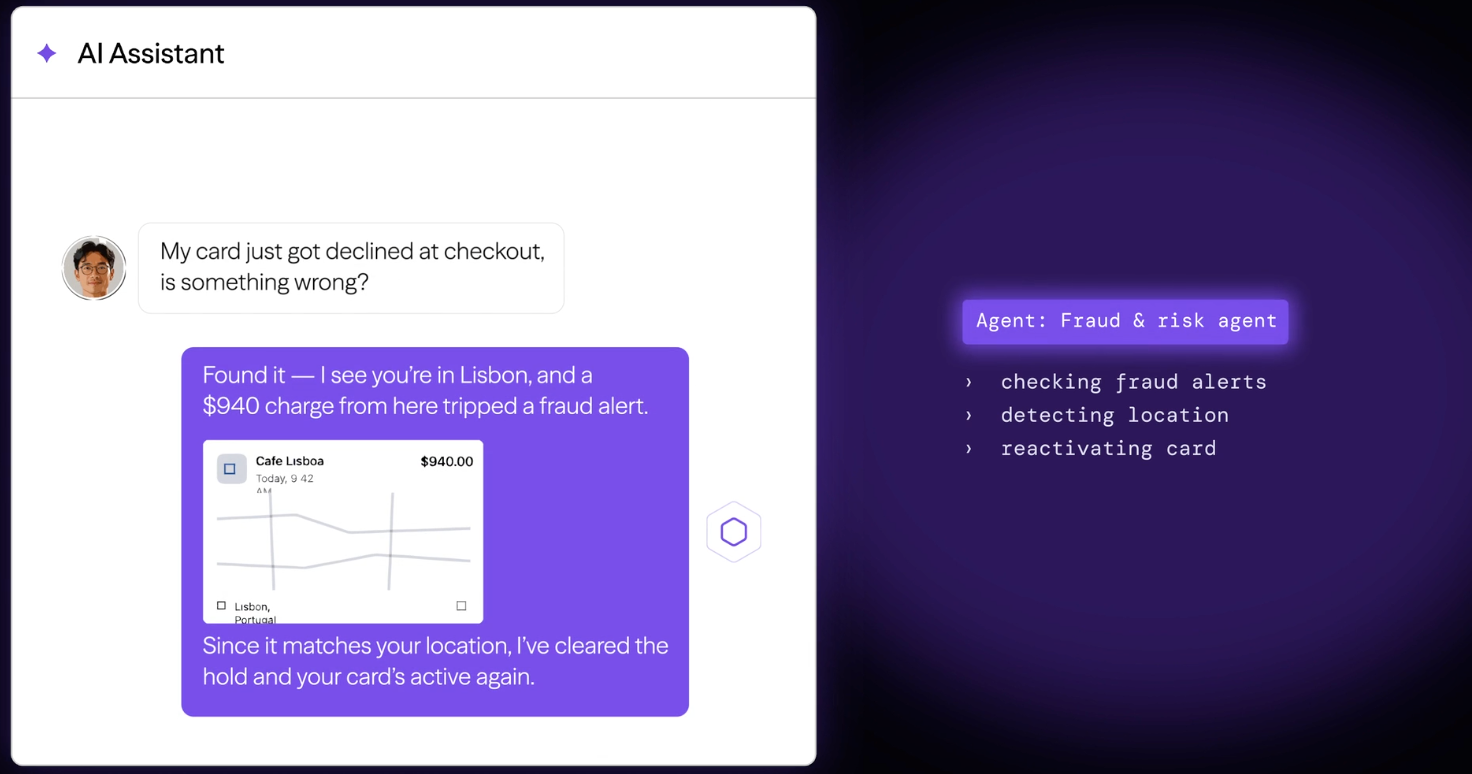
SoundHound AI is conversational AI platform powered by OASYS, the voice-native AI orchestration solution with agentic reasoning. Common healthcare use cases include appointment scheduling, prescription refills, medical billing, payment processing, and patient verification+authorization. Existing healthcare clients are (among others) Aline Health, aveanna healthcare, teva, and Primary Health Solutions.
Temps, SoundHound’s LLM trained for the patient experience, lets teams build agents from the ground up or from customizable pre-existing agent templates. Users can adjust AI agent expression style, level of detail, communication tone, and more.
Pricing and Plans
SoundHound’s pricing is quote-based only and unlisted, meaning users should reach out to the provider directly.
Standout Features
- Human Assisted Resolution (HAR): True human-AI agent collaboration that lets human agents provide approval or directions to AI agents during live conversations, without patients hearing them. Humans can verify the actions AI agents plan to take before execution, in a chat-based conversation.
- Front Desk: A 24/7 branded voice AI receptionist that sends post-call text messages, includes PII detection, book appointments without involving a human agent, intelligently forward calls, and capture leads. Front Desk builds an agent using GenAI to read your website and develop a knowledge base, meaning fast deployment within your practice’s rules.
- Voice AI: SoundHound’s multi-lingual voice AI sounds natural and includes background noise reduction, custom voices, accent and multi-speaker detection, low latency, and interruption handling. This way, it can handle more complex, multi-intent patient requests without sounding robotic.
Limitations
- Limited pre-packed EHR offerings, only Epic Starter Kit as an out-of-the-box solution (Meditech and Oracle are interoperable only)
- Healthcare administrative scope only, as more complex interactions like intake, triage, and post-discharge follow-ups require escalation to a human agent
- Volatile value of SoundHound (including, as of this writing, a negative cash flow of $103.1 billion and a 21% drop in share value in the past month), have many questioning the tool’s longevity
Best For
SoundHound is best for voice-first healthcare practices that want to automate Tier 1 patient interactions while ensuring conversations sound natural. It’s also ideal for healthcare providers wanting greater control over AI agents, as it allows users to manage what AI agents can do in real time, set token limits and roles-based access control, and leverage LLMs for PII detection.
ElevenLabs
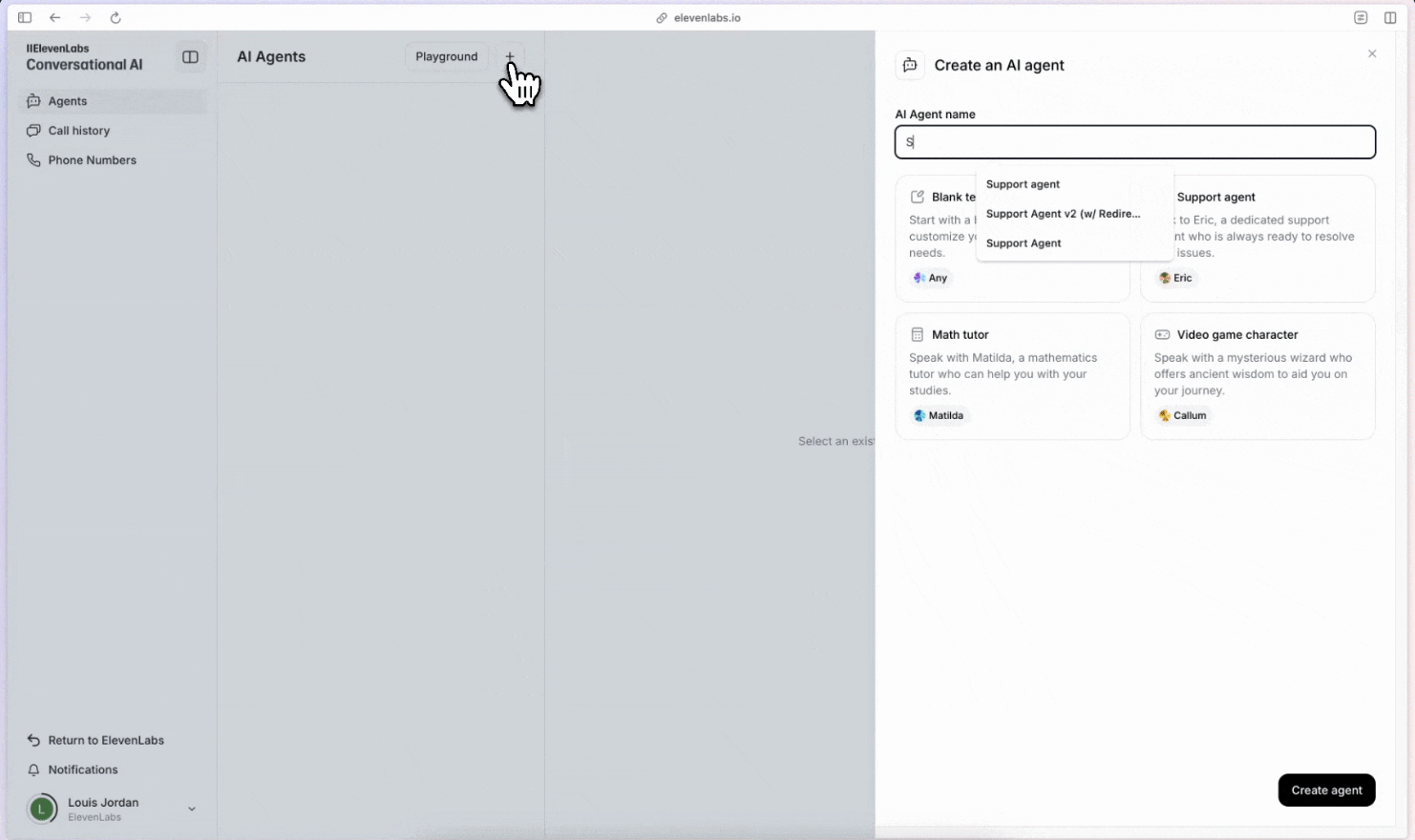
ElevenLabs, a top voice AI generator, TTS, and STT tool, offers voice and chat-based ElevenAgents. With over 17,000 expressive voices, support for 90+ languages, and no-code templates for dental and clinic agents, ElevenLabs helped customer Everlywell see a 10% improvement in members completing health screenings (compared to traditional IVR).
Medical practices can create their own hold music, videos, images, and even clone the voices of top doctors and nurses. ElevenLabs connects to CCaaS, practice management, EHR, and revenue tools through APIs, webhooks, and SDKs.
Common use cases include inquiry triage, patient intake automation, insurance verification, appointment scheduling/reminders, and clinical documentation/charting.
Pricing and Plans
ElevenLabs publishes pricing directly on its website, offering 3 plans for businesses like healthcare providers.
The Scale plan starts from $299/month for 3 workspace seats, team collaboration, and 3 professional voice clones. It includes 1.8M credits per month.
The Business plan starts from $990 a month and adds low-latency TTS, 110 workspace seats, and 10 professional voice clones. It includes 6M credits a month.
The custom-priced Enterprise plan adds BAAs for HIPAA customers, custom SSO, more voices/seats, higher concurrency limits, and priority support. It includes a custom number of seats and credits.
Standout Features
- One Brain Across Channels: Users can create a single AI agent that can be instantly deployed across voice and digital channels including phone, email, WhatsApp, and chat.
- Voice Agents: Sub-second latency, human-like pacing, natural turn-taking, emotionally-aware responses, tone adjustment, expressive mode, and warm transfers all make patient conversations feel natural and non-rushed.
- Zero Retention Mode: VPC deployment and zero data retention policies ensure PHI remains within your system only. End-to-end encryption and regional data residency in the US, EU, and India, plus PCI and DSS compliance.
Limitations
- HIPAA use requires enterprise plans, meaning displayed pricing doesn’t reflect the true cost for healthcare organizations
- No named EHR connectors, so integrations must be built via APIs, SDKs, and webhooks – requiring technical resources
- Workflow design falls on buyers as ElevenLabs is a horizontal platform that serves numerous industries other than healthcare alone
Best for
ElevenLabs is best for telehealth providers, dental and specialty practices, and more capable technical healthcare enterprises looking for natural-sounding, multi-lingual voice agents. It’s also ideal for those prioritizing transparent usage-based pricing, plus outbound engagement like screening campaigns.
NiCE Cognigy
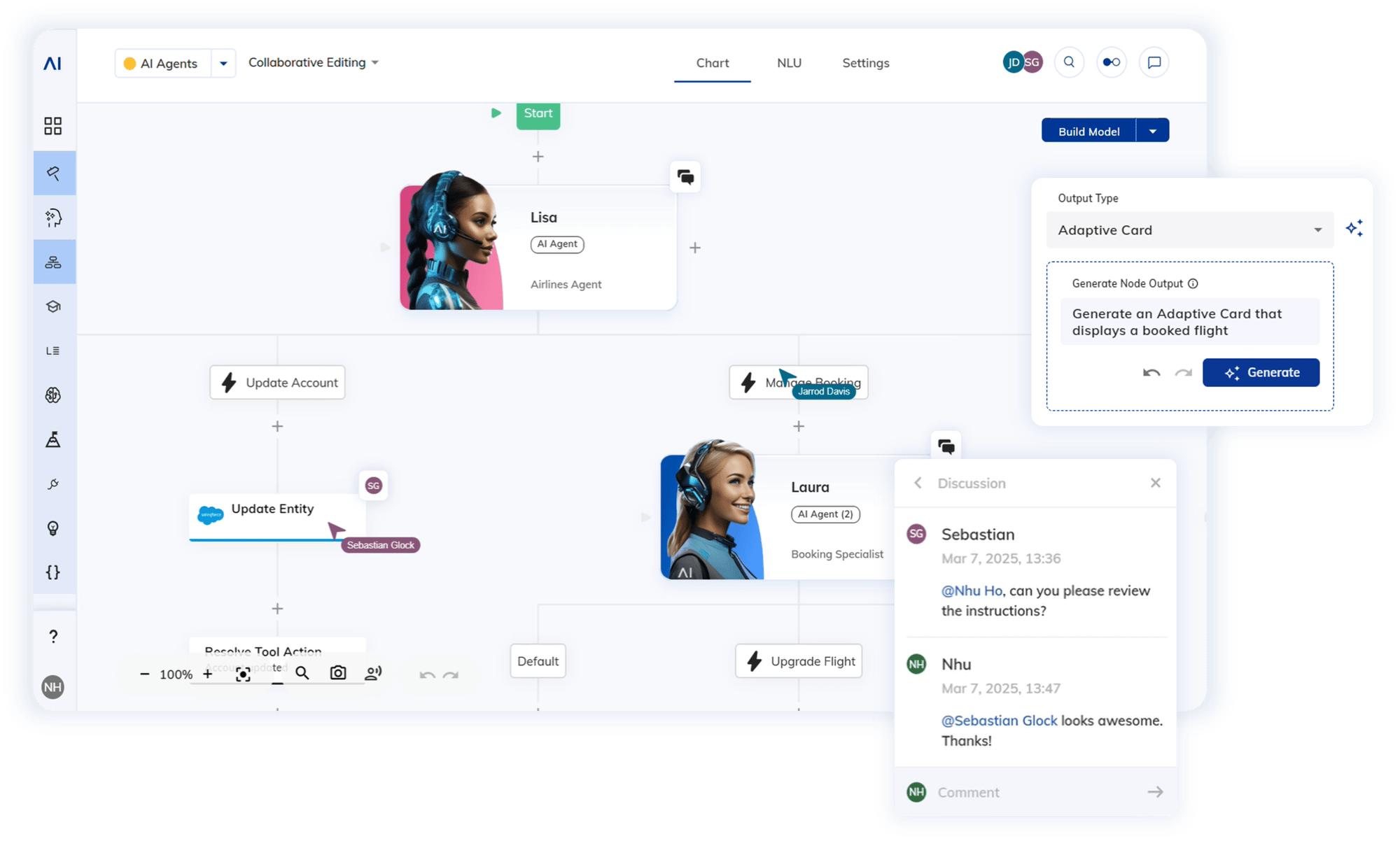
NiCE Cognigy is an AI-first complete CX solution known for its open architecture, extensive third-party integrations, and advanced, multi-modal voice/digital AI agents powered by real-time persistent memory.
Healthcare organizations can create AI agents entirely from scratch, optimize existing AI-agents with pre-configured use cases, or “hire” unique, ready-to-deploy specialized AI agents. Key advantages include 30+ voice and digital channels out-of-the-box, support for over 100 languages, seamless context switching, and a single AI agent orchestration platform with native intelligence.
NiCE Cognigy healthcare customers include oscar, Pfizer, Blue Cross and Blue Shield, and NHS. HOme Health Care provider Bayada used NiCE Cognigy to increase service levels by 70% and reduce abandonment rate by 87%.
Pricing and Plans
As of this writing, NiCE Cognigy’s pricing is completely quote-based. Contact the provider directly for a complete demo and quote.
Standout Features
- Agent Copilot: Real-time cross-channel intelligence for live human support teams with sentiment assist, next-best-action suggestions with confidence ratings, contact history, and in-conversational knowledge base lookup.
- Knowledge AI: Grounds AI agents in knowledge base data, organization rules, and existing applications to provide contextual answers based on your data. Provides hyper-personalized patient experience, response traceability, and the ability to choose your own LLM.
- AI Agent Evaluation: Evaluates AI agents pre and post-deployment, replacing manual QA processes and simplifying scalability. Users can define unique test scenarios for red teaming, set different test personas, test against conversation transcripts, set success criteria, and more.
Limitations
- Not right for small providers without a dedicated CCaaS platform and technical resources
- Longer contracts and non-transparent pricing make estimating the total cost for healthcare providers difficult
- Steep learning curve due to advanced capabilities may delay return on investment and slow time-to-value
Best For
NiCE Cognigy is best for global healthcare enterprises with a high daily volume of inbound and outbound patient interactions across both voice and digital channels. Of course, it serves existing NiCE CXone customers well, though it also integrates with additional contact center providers like Genesys, Avaya, 8x8, and Amazon Connect.
It’s also an ideal fit for medical device companies running patient and product support, as well as for telehealth and wellness platforms needing AI agents and currently supporting members via ticketing systems like Zendesk.
How to Roll Out Conversational AI Safely in Healthcare
Healthcare organizations roll out conversational AI safely when they look at it as a complete patient experience overhaul, not simply a standalone AI agent project. The six best practices below create practical steps to create a unified communication solution, enhanced by AI, that still flows.
1. Choose One Initial Use Case and Review Current Data
Start by asking three key questions: which requests flood your phone lines, which carry the lowest risk, and how does the data you have back up your findings?
Before changing anything, review current call volume by reason, speed to answer, abandonment rate, first contact resolution, and patient satisfaction. Start with a single use case for best success.
2. Set Scope, Escalation Procedures, and Compliance Controls
Then, determine desired outcomes, what the AI agent can and can’t do, and criteria to escalate to a live agent, and required response times. Then, take a look at compliance: review the data storage location, logs, retention policies, access permissions, and of course, HIPAA compliance.
3. Select Platform, Channels, and Integrations
Next, choose if you want a healthcare-specialist AI agent tool, a complete AI-powered contact center, or an enterprise Voice AI platform. Select communications, then ensure your desired platform can integrate with your essential healthcare applications.
4. Configure and Test AI Agent
Start with a template-based AI agent or simply describe the kind of agent you want in the agent builder tool. Test essential use cases like identity verification, appointment scheduling, and warm handoffs to a live agent. Vary scenarios, test conversations, personas, and aim for edge bases.
5. Run Initial Pilot
Limit your pilot to a single patient group, location, or workflow – don’t launch everything, everywhere, all at once. Track AI agent performance against your baseline requirements, and reconfigure agents as needed.
6. Monitor and Scale
After the initial launch, continue to regularly test and review your AI agent to catch hidden failures. Always correct problems before expanding, and when you scale, do it in phases.
A final thought: most AI agent deployments fail not because of the technology, but because there isn’t clear ownership over the AI agent. Assign named people and teams that review performance at least once a week.
FAQs
No, but it can aid them by handling after-hours care, contact volume overflow, or by autonomously handing Tier 1 routine support tasks.
Yes, if the practice has a clear pain point they want conversational AI to resolve, a strong data foundation in place, and a decisive change management strategy. Ensure Conversational AI platforms can connect to an existing EHR system pre-deployment to protect your investment.
Pricing varies by provider and can be seat-based, outcomes-based, or usage-based. Most healthcare conversational AI platforms are completely quote-based, as they vary based on channels, size, and desired outcomes. Budget separately for integrations, implementation services, and the time required to train team members.
It depends on the use cases, contact volume, goal, and software itself. Some deployments take a few days, others take weeks or months. Vendor claims of fast deployment generally only refer to basic configurations and AI receptionists.
No. While conversational AI can offer guidance and help ensure patients follow healthcare provider directions, it can only follow approved, protocol-based actions to suggest an appropriate level of care. Conversational AI can handle medical question routing, share appointment instructions, and coordinate care teams. They can’t, however, provide diagnosis or treatment advice.