When shopping for automation tools and cutting through the vendor noise, the debate between using a chatbot or conversational AI comes up. This guide is here to distinguish differences between the two, where each belongs best, and how to choose the right fit.
TL;DR
- Chatbots follow fixed rules but conversational AI understands intent. Chatbots match keywords to scripted responses, while conversational AI uses NLP and machine learning to interpret what users actually mean, even when phrasing varies
- Context is the defining dividing line. Chatbots treat every message as a standalone input. Conversational AI tracks the full conversation thread, so users never have to repeat themselves across a multi-turn exchange
- Chatbots are cheaper to start, conversational AI costs less at scale. Rule-based systems are faster to deploy but require constant manual upkeep. Conversational AI demands more upfront investment but improves on its own and handles growing query complexity without rebuilding
Quick Comparison: Chatbot vs Conversational AI
Before we dive in, here’s a quick glance at how each of these two technologies stack up:
| Chatbot | Conversational AI | |
| Technology Basis | Rule-based if-then logic and fixed scripts | NLP and machine learning |
| Complexity Handling | Low, works best with simple predictable queries | High, handles nuanced and multi-step requests |
| Learning Ability | Static, requires manual updates | Continuously improves from interactions |
| Conversation Style | Single-turn, follows a set path | Multi-turn, retains context across exchanges |
| Typical Use Cases | FAQs, order tracking, basic scheduling | Troubleshooting, personalization, complex support |
| Cost and Setup | Lower cost but faster to deploy | Higher investment but longer implementation |
What is a Chatbot?
A chatbot is a program meant to respond to user input by following a rote, pre-defined set of rules. What it does is look at what you typed, search for a pattern to recognize, then return a corresponding answer that “makes sense.” There is no understanding behind the choice. Think of it as a sophisticated lookup table instead of intelligence.
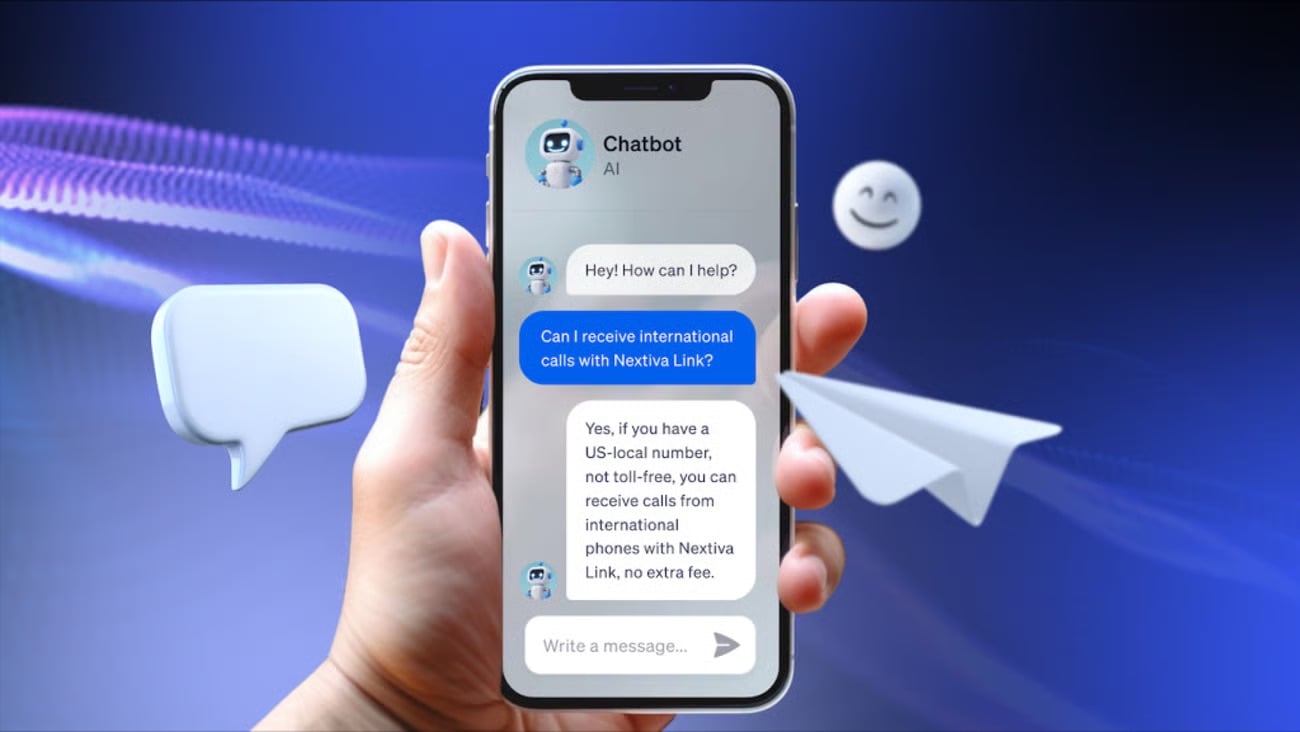
Some compare chatbots to vending machines in that you press buttons and get the item corresponding to the choice. Though, if you press a combination that doesn’t line up with an item, nothing happens. Chatbots, like vending machines, cannot improvise.
Types of Chatbots
Not all chatbots are run the same way. They all follow rules, but how they interact with input varies. Here are common variants:
- Menu-based chatbots: These will show users what options are available to click through. The conversations tend to be steered by the chatbot, so the user will not type freely unless prompted. These are simple to build and work solidly when requests are narrow and pre-defined
- Keyword-recognition chatbots: This type scans user messages for any trigger words and sends back a response mapped to any defined keywords. These give an illusion that the chatbot understands language but often falters if phrasing varies or veers away from the trigger word
- Hybrid rule-based chatbots: This variant will layer some basic Natural Language Processing (NLP) atop a foundation of rules. While they can handle a bit more variation in phrasing, these still face limits when conversations go off script
- AI-powered and LLM chatbots: These interpret user intent and generate responses dynamically instead of pulling from a script. They are effectively conversational AI delivered through a chat interface, so they fall on the conversational AI side of this comparison.
Chatbot Use Cases and Limitations
Chatbots can work exceptionally well when one knows which lane they best occupy. For operations needing high-volume, low-complexity, and highly predictable problem solving, chatbots are the best choice. Use cases include store hours, shipping status, appointment booking, and simple FAQs that have one defined answer.
Limitations pop up fast when dealing with users who go outside the script. If someone queries the bot with something it’s not trained to handle, they get a generic error or looped back to the main menu. That experience is sure to annoy users who may abandon the interaction and just call in, something chatbots are meant to circumvent. In fact, a recent survey found that not being able to reach a live human is the #1 CX dealbreaker that causes consumers to abandon a brand altogether.
What is Conversational AI?
Conversational AI is a broader set of technologies that use Natural Language Processing (NLP) and machine learning to comprehend what users are trying to tell it. There are no keywords or scripts, it instead interprets intent and tracks context through a conversation. When it generates a response, it’s relevant and based on what it actually knows.
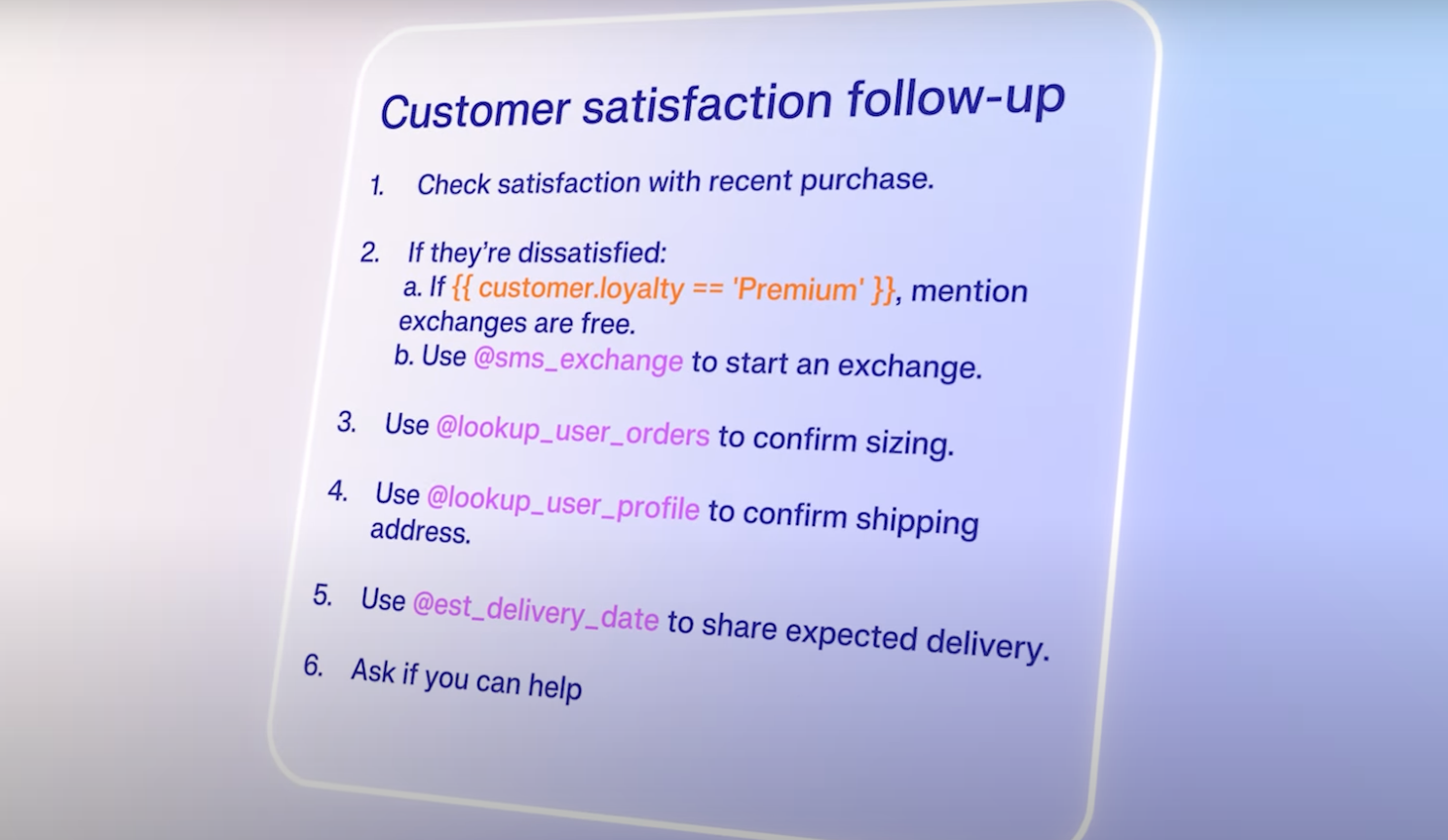
Unlike a chatbot that only hears the words, a conversational AI understands what those words mean.
Core Technologies Behind Conversational AI
There are several different technologies that layered together make conversational AI a possibility, tech like:
- Natural Language Understanding (NLU): This component parses out what the user really wants, regardless of their phrasing. NLU takes on intent classification and entity extraction, to find the goal and relevant details in a message
- Machine Learning: A conversational AI system improves continually thanks to processing real interactions, finding common patterns, and adjusting behavior accordingly. It should not need a human to manually scrub through scripts when new queries come in
- Sentiment Analysis: The most advanced systems know when users are frustrated, when issues are urgent, or when a user is confused. These signals allow it to change its tone or even escalate to human agents preventatively
- Multi-turn Context Recognition: Conversational AI notes and remembers what was said earlier in the interaction to form context that informs every response. That way, users do not need to re-explain themselves every other message
Conversational AI Use Cases
Conversational AI platforms work best in situations where the chatbot model falters. Whether customers need personalized product recommendations based on their history or complex trouble shooting where the right fix is based on follow-up questions, conversational AI is ready. Especially, support interactions where the user’s situation doesn’t fit a standard template.
Conversational AI can reason towards a satisfactory response versus a dead end when users ask something the system has never seen before.
However, conversational AI has limits of its own. Its answers can only be as accurate as the source content and training data behind them, so an outdated return policy document produces a confidently wrong answer instead of an error message.
It also cannot answer questions that depend on live data, like current inventory or a refund status, unless it has an integration to the system holding that data. Someone on your team has to own content upkeep, or the system will keep repeating whatever stale information it was given.
How Chatbots and Conversational AI Relate
A chatbot is an interface, a program users talk to through a chat window, while conversational AI is the technology stack that can sit behind that interface.
Rule-based chatbots use no conversational AI at all. AI-powered chatbots are conversational AI delivered through a chat window, so the two terms overlap more than vendor pages suggest. Conversational AI also powers non-chat tools, such as voice assistants and phone-based virtual agents.
For that reason, the comparisons on this page set rule-based chatbots against conversational AI platforms, which differ in capability and cost.
Key Differences Between Chatbots and Conversational AI
There are quite a few spaces where chatbots and conversational AI do not have any parity at all. The following situations highlight where these two technologies diverge.
Technology and Intelligence
The gap here is not a matter of degree. It is a structural difference in how each system works. A chatbot is configured. A human user has to write its rules, map the keywords, and build a corresponding decision tree. When unexpected issues occur and the product shifts over time, a human has to go back and update it manually.
Conversational AI gets its basis through active training. Yes, that still comes from human data. But here, it learns and harvests true insights from that data, the properly adjusts based on real interactions. Unlike a chatbot, conversational AI never will require someone to anticipate every possible question in advance. This core difference becomes more apparent and key as query volume grows and user behavior becomes harder to predict.
Conversation Handling
A chatbot interaction is always going to be a well-tread and predefined path with no flexibility. The system is designed to move users from A to B to C, and if one tries to jump to D out of sequence, it usually stumbles flat on its face. Every message is treated as an isolated incident.
Conversational AI has a holistic approach in that it sees interactions as a single coherent thread. It knows that when a user points out "the one I mentioned earlier," said user was referring to a product they mentioned five messages ago. Context retention is what makes multi-turn conversations work and feel natural. This component is completely absent in rule-based systems like chatbots.
Training and Maintenance Requirements
Chatbots are faster and cheaper to set up. You are essentially writing a script, which does not require machine learning expertise or large datasets. The trade-off is that maintenance is manual and ongoing. Every new product, policy change, or query type that falls outside the existing rules has to be added by hand.
Conversational AI requires more upfront investment. You need training data, annotation, and in many cases a team with model optimization experience. The payoff is that the system improves on its own over time and handles a much wider range of inputs without constant human intervention.
Rule-based chatbots are typically text-only widgets that live on a single website or app, and each one is configured for that one channel.
Conversational AI handles both voice and text, and it can carry context from chat to SMS to a phone call so a customer who starts on the website does not start over when they call in.
For support teams with busy phone queues, it can replace touch-tone IVR menus, with voice bots resolving or routing calls based on what the caller says rather than which key they press.
Real-World Examples: Chatbots vs Conversational AI in Action
Below we'll run through a common situation and point out how both chatbots and conversational AI would run through these. The differences are stark.
Customer Service Scenario Comparison
Consider a user contacting support with this message: "I ordered two items last week, one arrived damaged and the other never showed up. I need help with both."
With a Rule-based Chatbot
The bot scans for keywords and likely latches onto "order" or "arrived." It returns a canned response about checking order status, possibly with a tracking link. The damaged item and the missing item are two separate problems, and the bot has no mechanism for handling a compound request. The user hits a dead end and calls in.
With Conversational AI
The system identifies two distinct issues within a single message, damaged item and missing delivery, and addresses both. It asks clarifying questions where needed, initiates the relevant processes, and either resolves both or hands off to an agent with a full summary of what was already discussed. The user does not have to repeat themselves.
Where Each Technology Excels
Chatbots are genuinely the right tool when your query volume is high, your request types are narrow, and the stakes of getting it slightly wrong are low. A bot that handles "what time do you close?" or "send me a password reset link" does not need to understand nuance.
Conversational AI earns its cost when the interactions are complex, when context matters, or when the system needs to improve without constant manual input. Trying to use a basic chatbot in those situations does not save money. It just moves the cost to abandoned conversations and frustrated customers.
How to Choose: Chatbot vs Conversational AI
Choosing between a chatbot and conversational AI depends on the complexity of your customer interactions, the resources available to your team, and how much flexibility your support experience needs over time. Here are a few factors to consider.
Quick Decision Guide
| If your situation is… | Start with | Why |
| High-volume, repeat FAQs | Chatbot | Questions have one fixed answer, so scripted responses are cheap and reliable |
| Routing and triage | Chatbot | Menu-driven flows sort users into the right queue without needing to understand nuance |
| Support that depends on account history or judgment calls | Conversational AI | Requests need context, follow-up questions, and reasoning across multiple turns |
| Mixed simple and complex traffic | Hybrid | Rules handle the predictable volume while AI takes the harder remainder |
| Fast-changing products or policies | Conversational AI | It adapts to new phrasing and content without rebuilding decision trees by hand |
Assess Your Query Complexity
Pull a sample of your actual incoming support requests and categorize them honestly. If the majority have a single correct answer that does not depend on context, a chatbot can handle them. If a significant share requires follow-up questions, account lookups, or nuanced judgment calls, you are looking at conversational AI territory.
Evaluate Your Budget and Resources
Chatbots cost less to build and less to maintain in the short term. If budget is the primary constraint and your use cases are simple, starting with a rule-based system is a reasonable decision. Just be honest about the ceiling you are accepting.
Conversational AI requires more investment upfront but the cost per interaction tends to drop as the system scales and improves. For organizations handling large support volumes with varied query types, the math often favors the higher initial investment. Research shows organizations leveraging AI in CX have improved automated resolution rates by 21 percent on average, alongside an 18 percent increase in service agent efficiency.
Consider Scalability and Learning Needs
A chatbot scales in volume but not in capability. You can handle more conversations, but you cannot handle more complex ones without rebuilding parts of the system. If your product, service, or customer base is evolving quickly, that limitation becomes a recurring problem.
Conversational AI scales in both directions. It handles more volume and it handles more complexity over time, without requiring a proportional increase in manual configuration work.
Explore Hybrid Approaches
The either-or framing does not always reflect what is practical. Many organizations run a hybrid architecture where rule-based logic handles the majority that are simple and predictable, while a conversational AI layer manages the more complex remainder.
This approach lets you control costs on the high-volume simple traffic while still delivering a quality experience on the interactions that actually require intelligence. It also gives you a natural upgrade path as your needs grow.
FAQs
Siri is a conversational AI. It uses natural language understanding, retains context within a session, and handles a wide range of inputs that no rule-based script could anticipate.
ChatGPT is conversational AI powered by a generative model, which puts it in a different category entirely from rule-based chatbots. The conversational format is how you interact with it, but the underlying technology is far more advanced than any scripted system.
Not without significant rebuilding. Adding NLP and machine learning layers on top of a rule-based foundation is possible, but at a certain point you are essentially replacing the system rather than upgrading it. Most organizations find it cleaner to move to a purpose-built conversational AI platform when the time comes.