
Five9 is an established enterprise contact center platform built for high-volume operations, while Dialpad is an AI-native platform that merges business phone, contact center, and team messaging into one app.
Five9 wins for large-scale, outbound-heavy, or regulated contact centers that need workforce management and advanced dialers. Dialpad wins for teams that want an all-in-one communications tool with real-time AI built into every call.
Which one fits you comes down to three things: your team size, whether your call volume leans inbound or outbound, and whether you need internal communications in the same platform that handles customer calls.
This guide walks through a side-by-side snapshot, a dimension-by-dimension breakdown of where each platform wins, and a decision framework that routes you to a pick based on your situation.
The Verdict: Five9 vs Dialpad in Brief
Five9 Intelligent CX is an enterprise-grade cloud contact center (CCaaS) platform designed for high-volume inbound and outbound operations. Its depth is in the operational layer: predictive dialers, workforce management, quality assurance workflows, and the granular routing customization that regulated industries require.
Dialpad is an AI-native communications platform that combines a business phone system (UCaaS), a contact center, and team messaging in a single app. Its defining trait is that AI transcription, sentiment analysis, and live coaching run natively on every call rather than as purchased modules.
Choose Five9 if you run a large or outbound-heavy contact center that needs robust dialers, forecasting and scheduling, and compliance tooling.
Choose Dialpad if you want unified voice, messaging, and native AI at a lower total cost with a deployment measured in hours rather than weeks, especially for blended or inbound-focused teams.
How We Evaluated Five9 vs Dialpad
We compared both platforms using the criteria that matter most to contact center buyers, weighted by how much each one changes the total cost and daily experience:
- Pricing and total cost of ownership: We looked past headline rates at seat minimums, add-on modules, and AI usage charges, since these drive the real bill more than the sticker price
- AI architecture: We examined how each platform delivers AI (built into every call versus sold as modules), because this shapes both cost and what agents actually see live
- Outbound and workforce tooling: We compared dialer types, campaign management, forecasting, scheduling, and QA depth, the dimensions that separate enterprise CCaaS from lighter platforms
- Deployment and consolidation: We assessed setup time, implementation overhead, and whether the platform replaces adjacent tools or requires stitching systems together
- Review signals: We weighed verified user reviews and peer discussions to check vendor claims against reported experience
Sources included current vendor documentation and pricing pages, product demos, and user reviews across major software directories.
Five9 vs Dialpad at a Glance
| Dimension | Five9 | Dialpad |
| Starting price & seat minimums | From $119/concurrent user per month across 5 suite tiers, annual commitment, aimed at high-volume contact centers | Contact center plans from $80 to $150/user per month, no steep seat minimums, scales down to small teams |
| AI architecture | Modular: AI sold through suite tiers and add-ons, with a bundled AI-minute allowance per seat and advanced AI reserved for higher tiers | Native: AI transcription, sentiment, and coaching available as add-ons for lower-tier plans and included on higher-tier plans |
| Outbound dialers | Predictive, progressive, power, and preview dialers with TCPA compliance tooling | Power dialer in sales tiers; no predictive dialing |
| Workforce management & QA | Full WFM/WEM suite: forecasting, scheduling, quality management, supervisor analytics | Real-time coaching and AI scorecards, but no full WFM suite |
| UCaaS + CCaaS consolidation | Contact center only; internal comms require a separate UCaaS platform | Phone, video, team messaging, and contact center in one app |
| Deployment speed | Multi-week implementation with guided onboarding | Configurable in hours; self-serve setup |
| Compliance & regulated fit | Deep: granular IVR customization, voice biometrics, rigid regulatory workflows for healthcare and finance | Solid certifications, lighter regulatory workflow customization |
| Integrations | Enterprise CRM and WFM ecosystem: Salesforce, ServiceNow, Oracle, Microsoft | Broad SaaS ecosystem: Salesforce, HubSpot, Zendesk, Google Workspace, Microsoft 365, plus ATS platforms |
| Best for | High-volume, outbound-heavy, or regulated contact centers | SMB and mid-market teams wanting unified comms with built-in AI |
How Each Platform Compares
Below is the full head-to-head, one dimension at a time, with a winner named for each.
Pricing and Plans
Five9 prices per concurrent user across five suite tiers starting at $119/month, with the full omnichannel and AI-heavy suites climbing past $200. Each seat includes a bundled allowance of AI minutes, and usage beyond it is billed on top. Five9 requires an annual commitment, offers no free trial, and its seat-minimum expectations effectively price out small teams: this is a platform sold to established contact centers through a scoping process, not a self-serve signup.
Dialpad's entry point is meaningfully lower. Contact center plans run from $80 to $150 per user per month, there's no steep seat floor, and a 14-day free trial lets teams validate before committing. Because the UCaaS layer (phone, video, messaging) is part of the same platform, teams consolidating tools often eliminate a second subscription entirely, which is where Dialpad's total-cost advantage compounds.
Where costs accumulate differs by platform. On Five9, watch the add-ons: workforce management modules and AI usage past the bundled minutes raise the real bill well above the tier price. On Dialpad, watch tier gating: the strongest coaching and analytics sit in the higher contact center tiers.
Winner: Dialpad on total cost of ownership for small and mid-sized teams. Five9's pricing is defensible only at the scale its tooling is built for.
AI Architecture: Native vs Modular
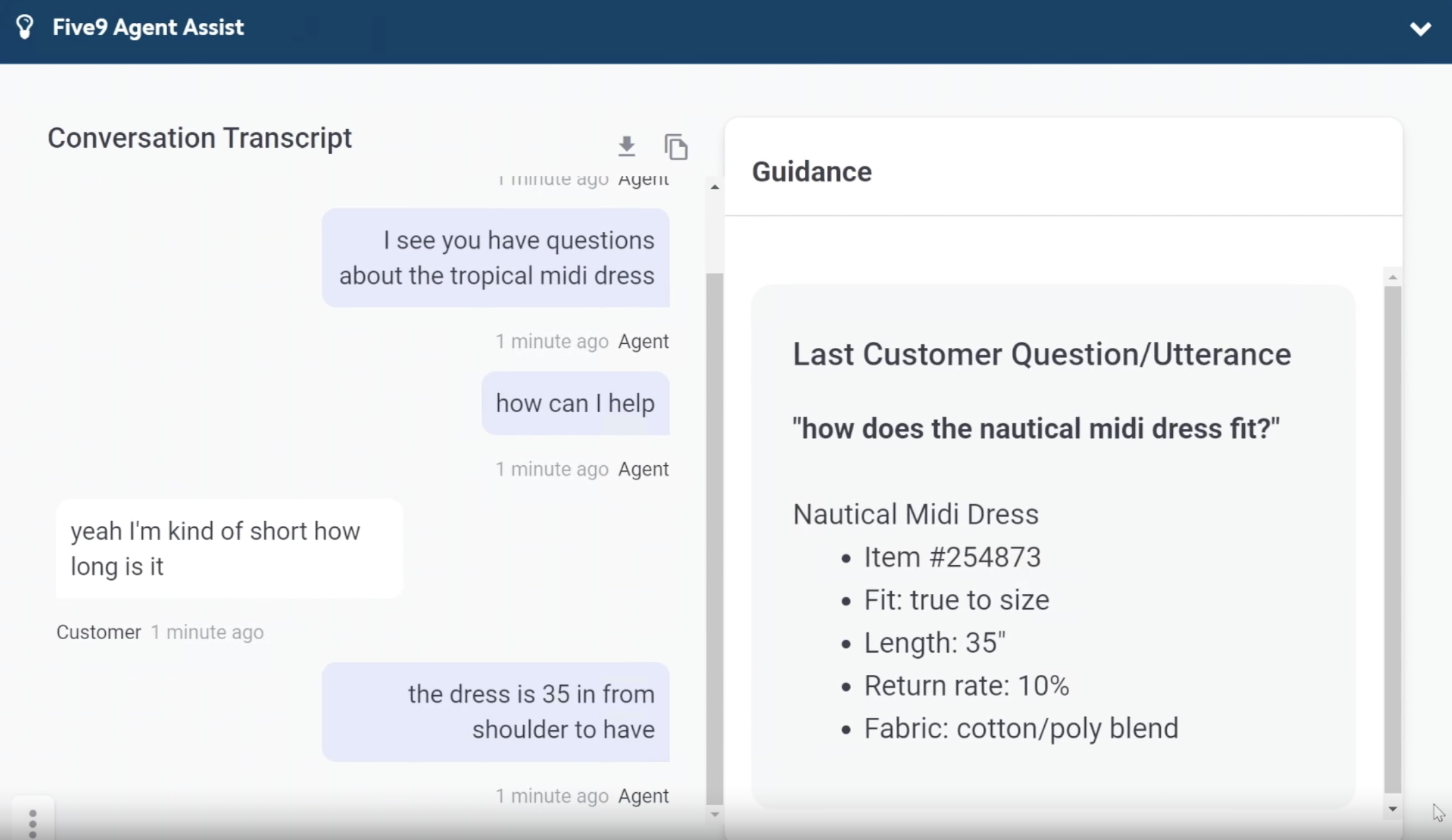
This is the sharpest structural difference between the two platforms. More than 80% of surveyed business leaders have already deployed AI in their contact centers, according to the Five9 Business Leaders CX Report.
Dialpad runs its own AI engine natively on every call. An agent sees a live transcript as the conversation happens, sentiment shifts are flagged in real time, and managers get alerts when a call turns negative, all without enabling or purchasing anything. Post-call summaries and action items generate automatically across all traffic.
Five9 delivers AI through its suite structure. The bundled AI-minute allowance covers a baseline per seat, advanced capabilities like custom AI agents and deeper analytics sit in higher tiers, and heavy usage is metered. The upside of the modular approach is control: an enterprise can scope exactly which AI runs on which traffic, which matters for cost management and compliance review at scale.
Winner: Dialpad for out-of-the-box AI on every call. Five9 wins where AI needs to be scoped, governed, and budgeted per deployment.
Outbound Dialers
Five9 was built around outbound. It offers predictive, progressive, power, and preview dialers with campaign management, list prioritization, and TCPA compliance controls, the toolkit dedicated sales and collections operations rely on to keep agents talking rather than dialing.
Dialpad's outbound tooling is lighter. Its sales-focused tiers include a power dialer and voicemail drop, which covers steady outbound follow-up, but there's no predictive dialing and no comparable campaign engine.
Winner: Five9 for dedicated outbound campaigns at scale. Dialpad is sufficient where outbound is secondary to support and internal communications.
Workforce Management, QA, and Supervisor Analytics
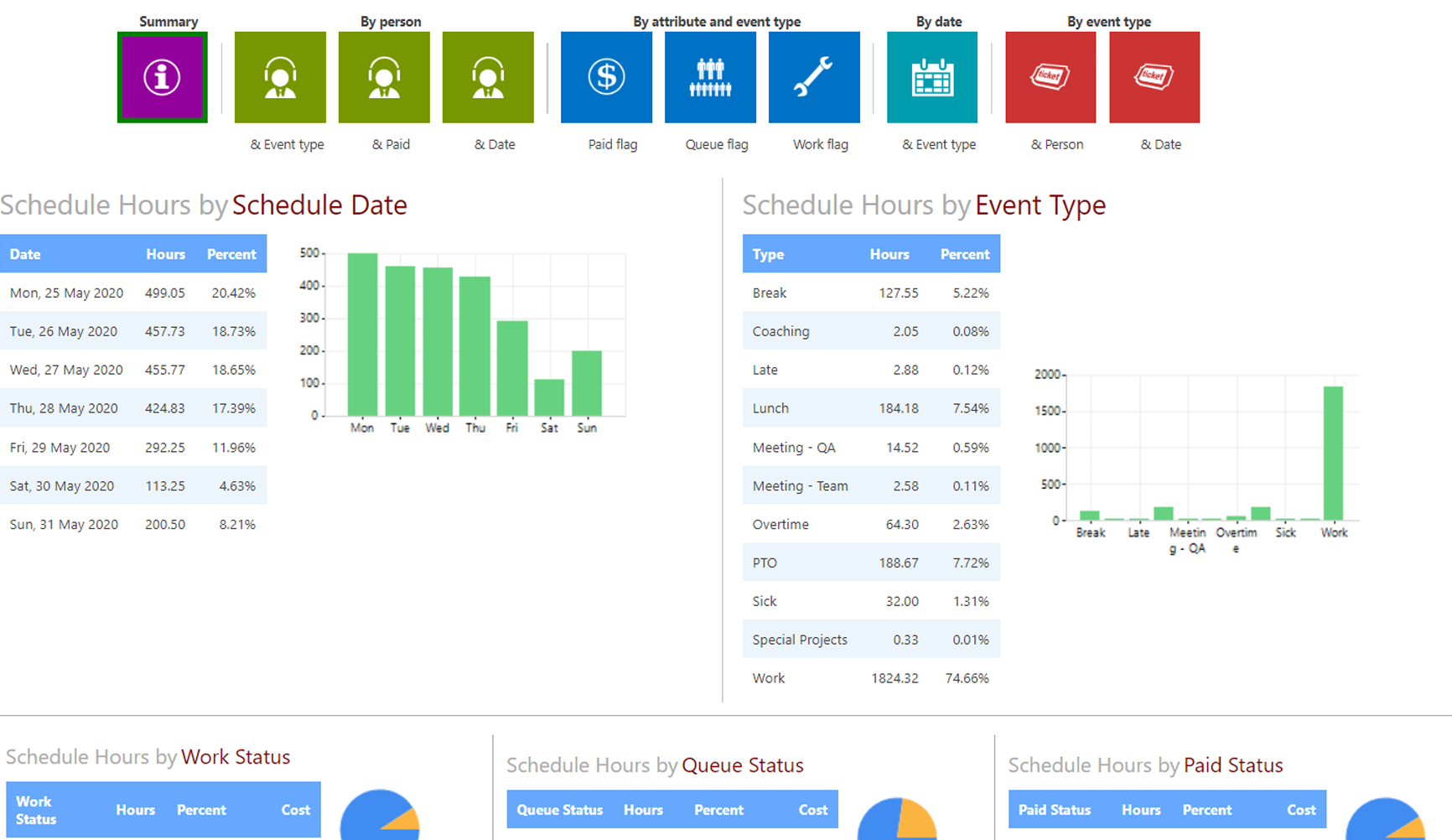
Five9's workforce optimization suite is enterprise-grade: forecasting models, agent scheduling, formal quality management workflows, and supervisor dashboards deep enough to run a several-hundred-seat floor. This layer is a primary reason large contact centers pick Five9 despite the cost.
Dialpad covers the coaching layer well, with real-time assist, AI scorecards, and call analytics, but it doesn't attempt a full WFM suite. There's no native forecasting or shift scheduling, so larger teams end up bolting on a third-party WFM tool.
Winner: Five9 for any team that needs forecasting, scheduling, and formal QA. Dialpad's coaching tools are strong for its target market but stop short of workforce management.
Platform Consolidation, Deployment, and Compliance
These three dimensions split cleanly between the platforms.
- Consolidation: Dialpad puts internal messaging, video meetings, and customer calls in one app, so a support rep and the wider company work in the same tool. Five9 handles the contact center only, which means pairing it with a separate UCaaS platform (commonly Microsoft Teams or Zoom) and managing the integration between them.
- Deployment: Dialpad configures in hours through self-serve setup. Five9 implementations run weeks, with guided onboarding for custom routing, IVR trees, and integrations. That overhead buys precision, but it's real time and cost.
- Compliance: Five9 fits regulated sectors in a way Dialpad doesn't match, with granular IVR customization, voice biometrics, and the rigid, auditable workflows that healthcare and banking compliance teams require.
Winner: Dialpad on speed and all-in-one simplicity; Five9 on regulated-industry rigor.
Integration Ecosystems
Five9's ecosystem leans enterprise: deep, mature connectors for Salesforce, ServiceNow, Microsoft Dynamics, and Oracle, plus prebuilt UC integrations that pair it with Teams and Zoom. If your stack is built around enterprise CRM and ITSM platforms, Five9 slots in cleanly.
Dialpad's catalog is broader across the modern SaaS stack: native Salesforce, HubSpot, Zendesk, Google Workspace, and Microsoft 365 connections, an open API, and unusual reach into applicant tracking systems, which recruiting-heavy teams use to log candidate calls automatically.
Winner: depends on your stack. Check your own CRM and helpdesk against each catalog rather than comparing raw connector counts. Enterprise ITSM stacks favor Five9; modern SaaS stacks favor Dialpad.
How to Choose Between Five9 and Dialpad
Route yourself by the variable that actually decides it:
- If you run an enterprise or high-volume contact center (100+ concurrent agents, formal QA, forecasting needs), choose Five9
- If you're an SMB or growing team that needs customer calling plus internal comms without an implementation project, choose Dialpad
- If your operation is outbound-heavy (sales campaigns, collections, telemarketing), choose Five9 for its predictive dialer and campaign tools
- If your focus is inbound support plus internal communication, choose Dialpad and consolidate onto one platform
- If you want phone, messaging, video, and contact center in one app, choose Dialpad; Five9 requires a separate UCaaS alongside it
Avoid Five9 if you have a small team, a tight budget, or need to be live this week. The seat expectations, annual commitment, and implementation timeline are built for a different buyer.
Avoid Dialpad if you need full workforce management, predictive dialing, or rigid compliance workflows. Those are exactly the dimensions where Five9's depth justifies its cost.
If neither fits: Aircall suits teams that want fast, simple phone support with CRM depth. RingCentral RingEX fits businesses that want UCaaS-first with a contact center upgrade path. Genesys Cloud CX and Avaya serve large regulated enterprises that want alternatives to Five9's model.
FAQs
Five9's closest competitors are the enterprise CCaaS platforms: NICE CXone, Genesys Cloud CX, Talkdesk, and Avaya, plus the contact center products from UCaaS vendors like RingCentral, 8x8, and Zoom. NICE and Genesys compete most directly on workforce management depth and AI analytics at enterprise scale.
Dialpad competes with UCaaS-first platforms like RingCentral, Nextiva, Zoom, and 8x8 on the unified communications side, and with Aircall, Talkdesk, and Five9 on the contact center side. Its most direct competitors are platforms that similarly blend phone, messaging, and AI, with RingCentral being the most frequent head-to-head matchup.
Both. Dialpad sells a standalone business phone product and dedicated contact center tiers with omnichannel support, IVR, queue management, coaching tools, and AI analytics. It's a genuine CCaaS option for small and mid-sized support teams. What it doesn't offer is the enterprise workforce management and predictive dialing layer that platforms like Five9 provide, which is the boundary of its contact center fit.
Yes, and that's Dialpad's core pitch. The same app handles internal team messaging, video meetings, and external customer calls, so companies can run company-wide communications and their support or sales operation on one platform rather than pairing a contact center with a separate UCaaS tool.