
Our Verdict: Both Bland.ai and Synthflow deliver professional AI voice agents capable of handling inbound and outbound calls, but I discovered substantial differences across nearly every category we tested. We came to the conclusion Synthflow is overall a stronger choice thanks to its no-code interface, more transparent pricing structure, and a robust onboarding process that made it easy to jump in.
While both platforms handle voice conversations with natural language processing capabilities, we prefer Synthflow's easy and no-frills setup compared to Bland.ai's more technical and requirement-heavy process. Bland.ai requires JavaScript, Python, or cURL knowledge even for basic implementations, making it less accessible for non-technical teams. Bland.ai does excel in its mid-call API integration capabilities, which allow developers to build highly customized workflows.
If you're a business that just wants to get deployment out of the way without the tech-y know-how, Synthflow delivers a better experience due to its drag-and-drop builder, generous 14 day free trial, and private Slack support channels. However, companies who already have strong development teams and complex integration needs should consider looking at Bland.ai's extensive API capabilities despite the apparent learning curve.
How We Compared Bland.ai vs Synthflow
We evaluated both platforms using the following criteria:
- Pricing and Plans: We looked into each provider and their pricing model, extra attention was given to per-minute charges versus subscriptions, hidden fees, and how scalable each one was for smaller businesses versus enterprises. We also checked who offered a free trial (few did) and what limits came with those trials
- Call Handling Capabilities: We tested whether they offered 24/7 availability, the degree of how simultaneous call capacity worked per platform, how each stacked in terms of conversation quality, and how deep was their multilingual support
- Appointment Scheduling: We tested calendar integrations, booking flexibility, confirmation systems, and rescheduling capabilities
- Human Support & Escalation: We examined backup options, transfer protocols, complex inquiry routing, and after-hours coverage
- Lead Management & Qualification: We evaluated lead screening tools, qualification processes, CRM integration depth, and follow-up automation
- Analytics & Reporting: We reviewed what actionable call data insights each platform offered, performance metrics, and dashboard functionality
- Integrations: We tested each platform's range in terms of CRM compatibility, which calendar software connections they offered, marketing automation tools, and Zapier/Make connectivity.
- Call Intelligence & AI Customization: We explored voice customization options, learning capabilities, FAQ handling accuracy, and custom scripting
- Customer Support: We evaluated how well stocked each platform's knowledge base was on necessary information, which support channels were offered, response times for staff, and other markers for user satisfaction
Bland.ai vs Synthflow: At a Glance
We found that while Bland.ai excels in mid-call API integrations, it does require technical expertise for implementation. Meanwhile, Synthflow prioritizes ease of use with its visual workflow builder, which goes a great way of making it accessible to businesses without programming resources. Both platforms can handle high call volumes effectively, though Bland.ai can process up to 20,000 calls daily for enterprise clients while Synthflow scales based on concurrent call limits.
| Bland.ai | Synthflow | |
| Starting Price | $0.14/min (usage-based) | Enterprise contracts start at $30,000/year |
| Setup Difficulty | Requires coding knowledge | No-code, drag-and-drop |
| Response Latency | ~800ms | <500ms |
| Voice Options | In-house library + OpenAI | ElevenLabs (100+ voices) + voice cloning |
| Free Trial | No (demo calls only) | Demo only |
| 24/7 Support | Discord + email | Private Slack (Growth/Agency plans) + tickets |
| CRM Integrations | Via Zapier (6,000+ apps) | Direct: Salesforce, HubSpot, + Zapier |
| LLM Options | Custom LLM + OpenAI | GPT-3.5, GPT-4, GPT-4o, Claude, Llama |
| Compliance | GDPR, SOC2 | GDPR, SOC2, HIPAA (Enterprise) |
| Best For | Enterprises with dev teams | Businesses seeking quick deployment |
Bland.ai vs Synthflow: Direct Comparison
Bland.ai and Synthflow differ in several key areas, and we wanted to dive deeper into exactly what each platform offers across common AI voice agent functions. Here's a quick hit list of what we discovered:
- Call Handling Capabilities: It's clear both can take on 24/7 calling, but Synthflow delivers reflexive response times (sub-500ms vs 800ms), while Bland.ai requires custom code for added value but scales to 20,000 daily calls for enterprise clients who need it
- Human Support & Escalation: Synthflow includes built-in transfer capabilities through a visual interface, while Bland.ai requires API integrations but offers more complex escalation logic for technical teams
- Lead Management & Qualification: Synthflow provides pre-built lead qualification templates with direct CRM integrations, while Bland.ai requires custom development but offers complete flexibility through APIs
- Appointment Scheduling: Synthflow includes built-in calendar integrations and booking workflows, while Bland.ai requires custom code for scheduling functionality
- Call Intelligence & AI Customization: Bland.ai offers superior flexibility for technical teams with custom LLM support, while Synthflow provides self-service voice customization and multiple LLM options without developer involvement
- Analytics & Reporting: Synthflow includes built-in dashboards across all plans, while Bland.ai requires businesses to build analytics infrastructure through API exports
- Integrations: Synthflow offers direct CRM integrations with Salesforce and HubSpot plus Zapier connectivity, but to Bland.ai's credit, it provides extensive API access but requires integration maintenance
Call Handling Capabilities
Both platforms provide unlimited calling capabilities with 24/7 availability. Bland.ai charges $0.09 per outbound minute and $0.04 per inbound minute with enterprise clients able to dispatch up to 20,000 calls daily, while Synthflow's Pro plan includes 25 concurrent calls that scale to 80 on the Agency plan. The conversation quality shows clear differences, with Bland.ai operating at approximately 800ms latency compared to Synthflow's sub-500ms response time.
For multilingual support, Bland.ai provides voice cloning for any language as an add-on feature, while Synthflow includes multilingual capabilities through its ElevenLabs integration with various accents built in. Both handle high call volumes effectively, though Synthflow offers an uptime SLA as part of its Enterprise plan while Bland.ai maintains SOC2 and GDPR compliance without public uptime guarantees.
Winner: Synthflow - Faster response times, clearer pricing structure, and guaranteed uptime for enterprise clients makes Synthflow the stronger choice for businesses prioritizing call quality and reliability.
Human Support & Escalation
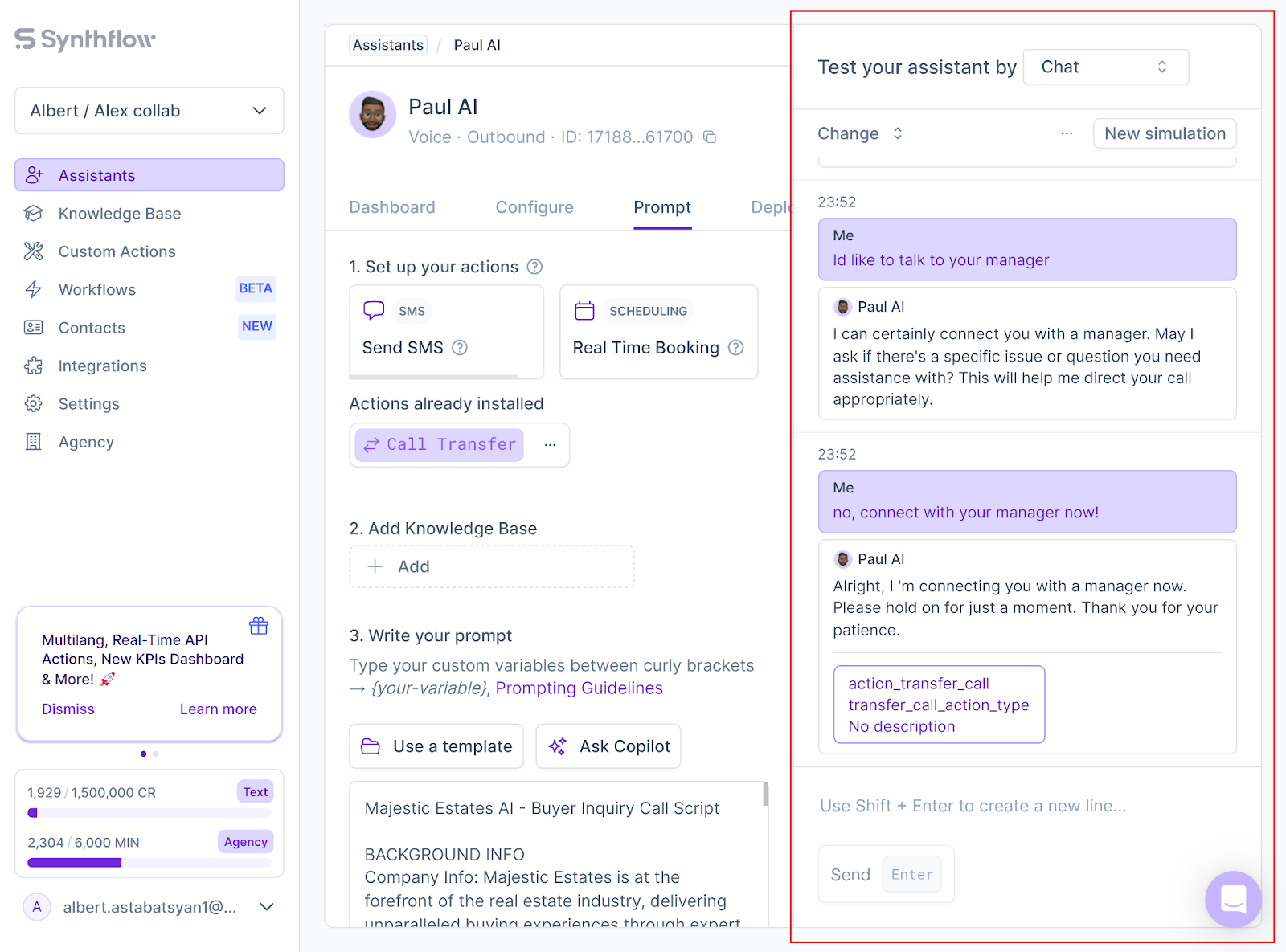
Both platforms handle call transfers to human representatives, but implementation differs significantly. Bland.ai requires custom API integrations for escalation workflows, giving technical teams complete control but requiring programming knowledge. Synthflow includes human transfer as a built-in feature through its no-code interface, allowing users to set up transfer rules visually based on customer requests, sentiment detection, or specific keywords without writing code.
Synthflow's workflow builder lets businesses create different paths for business hours versus after-hours calls, automatically routing to voicemail or 24/7 support teams. Bland.ai offers similar capabilities through custom coding. Complex inquiry handling shows both platforms can manage sophisticated dialogues, with Bland.ai using sub-prompts to break down conversations while Synthflow achieves results through multi-prompt capabilities and mid-call functions.
Neither platform offers built-in sentiment analysis for automatic escalation, though both can transfer when customers explicitly request human assistance.
Winner: Synthflow - The visual workflow builder makes escalation scenarios easier to configure without requiring ongoing developer involvement, reducing setup time and maintenance costs.
Lead Management & Qualification
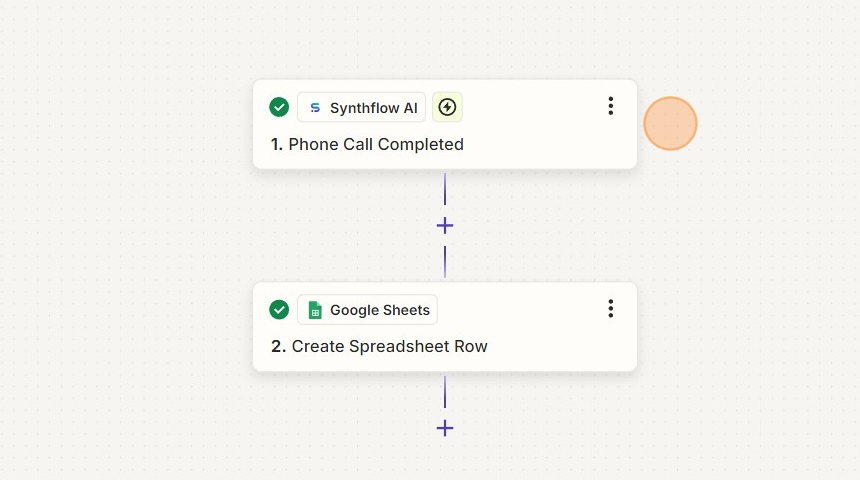
Bland.ai handles lead management through custom API integrations that require development teams to program qualification questions, score responses, and route high-quality leads. The platform offers Zapier integration connecting to over 6,000 apps, providing extensive connectivity for teams comfortable managing integrations. Synthflow includes pre-built lead qualification templates through its visual interface with direct Salesforce and HubSpot integrations that automatically capture lead data and update CRM records without middleware.
Bland.ai requires API calls to extract and store call information, while Synthflow automatically captures call data and pushes information to connected CRMs in real-time. For follow-ups, Bland.ai can trigger actions through Zapier or custom webhooks requiring technical knowledge, whereas Synthflow includes built-in capabilities for scheduling callbacks, sending SMS messages, or triggering email sequences directly from the workflow builder.
Both platforms support lead scoring, though Bland.ai teams need to build scoring logic into custom code while Synthflow users assign point values through visual rules.
Winner: Synthflow - Direct CRM integrations, visual workflow building, and built-in follow-up automation makes Synthflow more accessible for sales teams without dedicated developers.
Appointment Scheduling
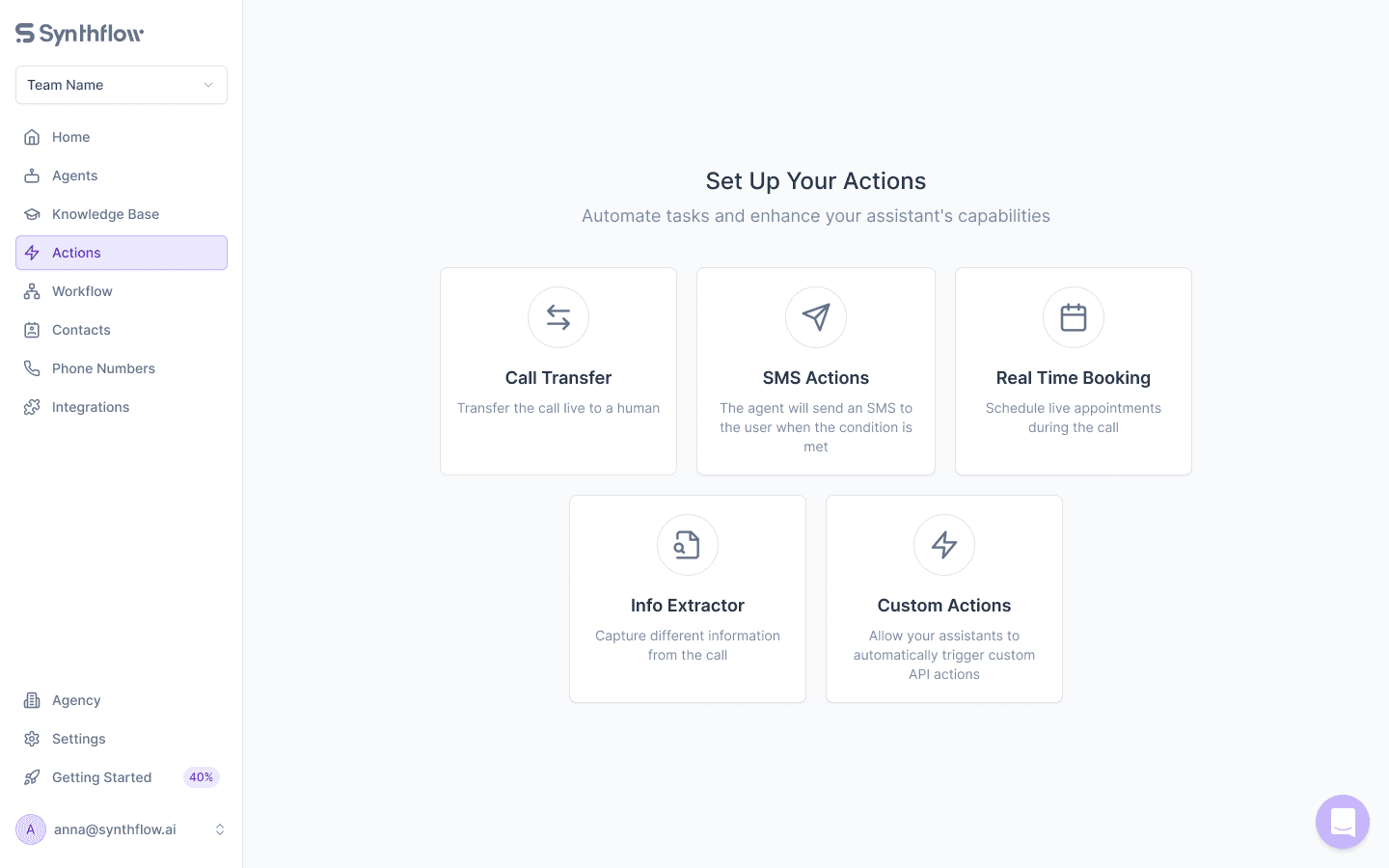
Bland.ai handles appointment scheduling through API integrations with calendar platforms. The platform can check availability, propose times, and book appointments during calls, but implementing these features requires custom development work. Synthflow includes appointment booking as a built-in workflow action, connecting directly to calendar platforms through its interface where users configure availability rules and buffer times without writing code.
Bland.ai triggers confirmations through external automation tools like Zapier, requiring businesses to maintain those connections separately, while Synthflow includes confirmation and reminder capabilities within its platform with automatic SMS or email confirmations after bookings.
Rescheduling capabilities exist on both platforms, though Bland.ai teams need to build rescheduling logic through custom code while Synthflow provides rescheduling as a standard workflow option allowing callers to check new times during a single call.
Winner: Synthflow - Built-in scheduling features with visual configuration make Synthflow significantly faster to deploy for appointment-based businesses, reducing time-to-value and ongoing maintenance requirements.
Call Intelligence & AI Customization
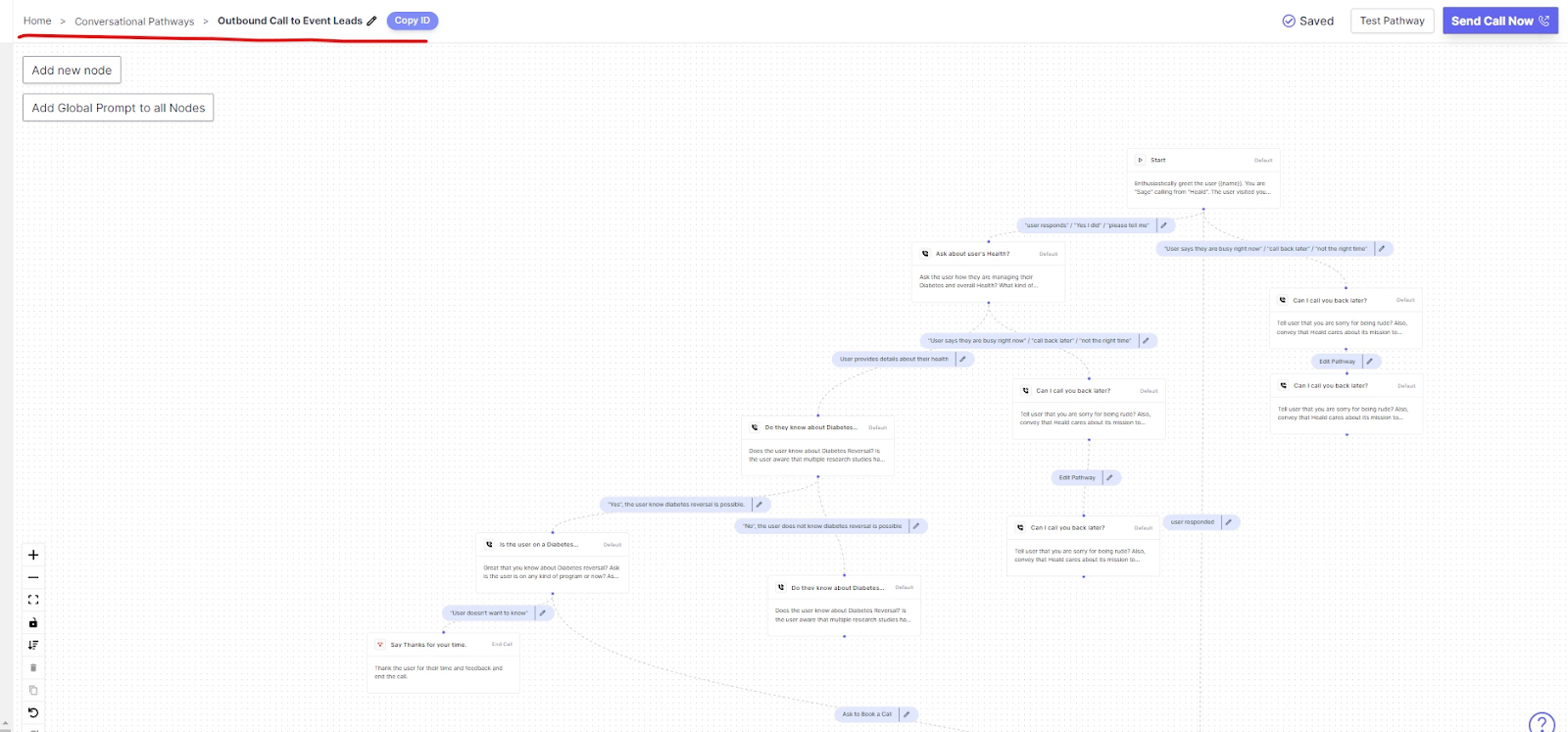
Bland.ai provides an in-house voice library plus generic OpenAI voices with voice cloning as an add-on feature, though accessing advanced customization requires working directly with Bland.ai's engineering team. Synthflow integrates with ElevenLabs, providing hundreds of pre-made voices with self-service voice cloning, allowing users to switch voices and adjust speaking rates directly through the dashboard without contacting support.
For AI learning and customization, Bland.ai uses its custom LLM platform designed for lower-latency conversations with sub-prompts handling complex dialogues, but training these models requires technical expertise. Synthflow supports multiple LLM options including GPT-3.5, GPT-4, GPT-4o, Claude, and Llama with no additional LLM charges, allowing users to switch between models through the dashboard.
FAQ handling differs as Bland.ai requires building FAQ logic into custom code while Synthflow provides FAQ templates and knowledge base integration. Custom scripting shows the starkest contrast, with Bland.ai offering complete programmatic control for development teams while Synthflow uses visual scripting through drag-and-drop conversation paths.
Winner: Bland.ai for technical teams, but we suggest Synthflow for non-technical teams - Bland.ai offers superior flexibility for businesses with strong development capabilities, while Synthflow provides better accessibility for teams prioritizing speed and ease of use.
Analytics & Reporting
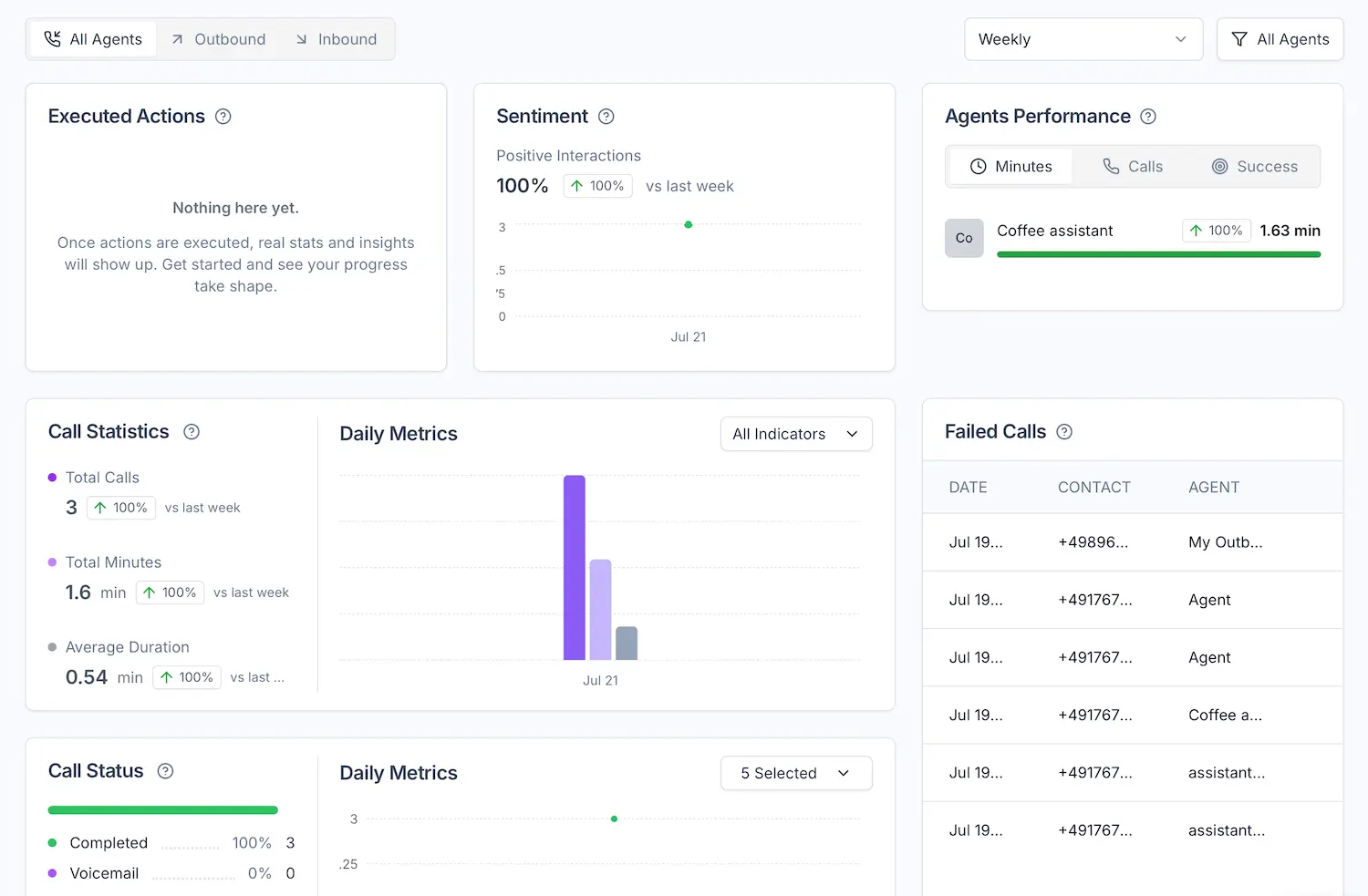
Bland.ai offers basic reporting via API, allowing businesses to export call data through API requests, providing complete flexibility in how data gets analyzed. Technical resources are required to build reporting infrastructure. Synthflow includes built-in analytics dashboards accessible to all users with automatic tracking of call volume, duration, success rates, and conversation paths without requiring data exports or custom development.
For performance metrics, Bland.ai requires businesses to define and capture metrics through implementation code, while Synthflow automatically captures standard metrics and allows users to define custom success criteria through the workflow builder.
Both platforms support call recording and transcription, though Bland.ai requires setting up recording storage and transcription services separately while Synthflow includes recording and transcription with searchable transcripts accessible from the dashboard.
Winner: Synthflow - Built-in dashboards and automatic metric tracking provide immediate value without requiring business intelligence infrastructure, making performance data accessible to broader teams.
Integrations
Integration ecosystems determine how effectively AI receptionists connect with existing business systems. Bland.ai offers comprehensive Zapier integration connecting to over 6,000 applications plus out-of-the-box Twilio integration for customized telephony setups, providing maximum flexibility but requiring businesses to maintain these connections independently.
Synthflow takes a different approach with direct, native integrations to Salesforce and HubSpot for CRM functionality, eliminating middleware and reducing potential failure points while also supporting Zapier and Make for broader connectivity.
For CRM compatibility specifically, Bland.ai can connect to any CRM with an API through custom code or Zapier but requires technical setup and ongoing maintenance, while Synthflow's direct Salesforce and HubSpot integrations work out of the box with automatic contact syncing and call logging.
Calendar software and marketing automation tool support exists on both platforms through different mechanisms, with Bland.ai connecting via API integrations or Zapier requiring setup for each connection while Synthflow includes built-in calendar integration options configured through its interface.
Winner: Synthflow - Direct CRM integrations combined with visual workflow building create more maintainable integration architectures, though Bland.ai offers more flexibility for custom scenarios requiring specialized connections.
Bland.ai vs Synthflow: Pricing and Plans
Both platforms structure their pricing so distinctly, it's definitely because these tools suit different market positions. Bland.ai truly works off a hard-set usage-based model starting at $0.09 per outbound minute and $0.04 per inbound minute. They also charge additional fees for advanced features like voice cloning and multilingual support.
Bland.ai doesn't offer a free trial, providing only demo calls before requiring businesses to contact sales representatives. Synthflow uses a tiered subscription model with bundled features and included minutes, offering a 14-day free trial for businesses to test functionality before committing.
Bland.ai Pricing
Bland.ai's pricing model centers on $0.14 per connected minute for both outbound and inbound calls. Beyond this base rate, businesses can opt for higher limits and more knowledge bases with a platform fee of $299/month and a usage charge of $0.12 per minute. Additional costs may apply for voice cloning, multilingual support, and GPT prompt handling (amounts not publicly disclosed).
The platform limits individual accounts to 100-2,000 calls per day depending on the plan, with only enterprise clients able to exceed this threshold up to 20,000 daily calls. While the usage-based structure can appeal to high-volume businesses, the per-minute cost can become expensive with SMS fees and integration charges added on top.
Synthflow Pricing
Synthflow now only offers enterprise contracts starting at $30,000 per year. Final pricing is scoped around call volume, telephony setup, concurrency, integrations, and security.
Enterprise customers can negotiate compliance features, SLAs, SIP trunking, and volume discounts. The platform charges approximately $0.13 per minute, with additional fees for workflow usage and concurrent call capacity.
Should You Choose Bland.ai or Synthflow?
Choosing the right AI voice agent platform depends on your team's technical capabilities and business needs. Bland.ai and Synthflow take fundamentally different approaches: Bland.ai prioritizes deep customization through code, while Synthflow emphasizes accessibility through its no-code interface.
Bland.ai is Best For:
- Enterprises with strong development teams: Companies with JavaScript, Python, or cURL expertise can leverage Bland.ai's extensive API capabilities and mid-call integration flexibility to build highly customized voice agent workflows
- Businesses requiring extreme customization: Organizations with unique requirements benefit from custom tools and fine-tuned mid-call actions made with APIs, plus the option to bring custom LLMs for specialized AI capabilities
- High-volume call operations: Enterprise clients can dispatch up to 20,000 calls daily
Bland.ai is Not Right For:
- Non-technical teams: Even running a basic phone call requires writing code
- Businesses prioritizing quick deployment: Setting up custom tools and conversational pathways requires contacting Bland.ai's engineering team
- Companies needing responsive support: Bland.ai relies primarily on Discord with slow email response times, with users reporting difficulty getting timely assistance
Synthflow is Best For:
- Small to medium businesses without technical teams: The no-code platform with drag-and-drop interface launches voice agents without programming experience
- Organizations requiring top-tier customer support: Enterprise clients receive private Slack channel access with 24/7 support
- Businesses with existing CRM investments: Direct Salesforce and HubSpot integrations work out of the box, automatically syncing contact information and logging activities
Synthflow is Not Right For:
- Businesses who need niche integrations: While Synthflow connects to common business tools well, organizations needing connections to proprietary legacy systems or unusual third-party platforms may find limitations
- Teams who need extreme conversation customization: The visual workflow builder handles most scenarios effectively but may feel limited to development teams wanting programmatic control
- Low volume operations: The platform's high base cost honestly feels like overkill for businesses handling only occasional calls
Best for Small Businesses
Small businesses without technical teams will find Synthflow more accessible. The no-code interface allows business owners to build appointment booking systems or lead qualification scripts within hours. The 14-day free trial provides risk-free testing compared to Bland.ai's demo-only approach, while transparent bundled pricing eliminates surprise charges. Direct CRM integrations reduce implementation costs by connecting to Salesforce or HubSpot through simple authentication rather than building API connections.
Our Pick: Synthflow - No-code building, transparent pricing, and direct integrations make Synthflow ideal for small businesses.
Best for Professional Services
Professional services firms benefit from Synthflow's built-in appointment scheduling and compliance certifications. Calendar integration allows reception staff to set up booking workflows without technical assistance, while Enterprise plans include HIPAA certification for medical practices. Private Slack channel access provides 24/7 support for quick issue resolution. Large consulting firms with technology teams might benefit from Bland.ai's customization for building sophisticated qualification workflows.
Our Pick: Synthflow for most professional services, but we found Bland.ai for large firms with technical resources
Best for High Call Volume
Bland.ai enterprise clients can dispatch up to 20,000 calls daily with usage-based pricing benefiting organizations with predictable patterns, while Synthflow's Agency plan supports 80 concurrent calls with custom Enterprise configurations. Synthflow's sub-500ms latency maintains quality under load, and Enterprise pricing drops to $0.08/min while bundling features Bland.ai charges separately. Built-in dashboards provide immediate visibility, while Bland.ai requires building analytics infrastructure.
Our Pick: Synthflow for most high-volume operations, whereas Bland.ai shines for technically sophisticated organizations who have those volume requirements but need more out of it.
Is There A Clear Winner?
Synthflow emerges as the winner in many of the categories we looked into: ease of use, response time, pricing transparency, support quality, and built-in features. Bland.ai still has its evident pros, like how it offers unmatched flexibility for custom integrations and specialized workflows that still need extensive development resources compared to plug-and-play offerings.
The right solution depends on whether you need a technical, API-first AI voice agent like Bland.ai or an accessible no-code solution like Synthflow. For most businesses, Synthflow provides faster deployment, more predictable costs, and better ongoing support. The time saved and low-effort cost of entry is hard to beat.