
1971
The Presentation
1973
Network Standard
1985
Open Use
1985
Token Ring LAN
1988
WaveLAN
1989
WaveLAN Submission
1990
Father of WiFi
1993
Public Hotspots
1993
WaveLAN Rollout
1994
Wireless Andrew
1996
Conflict Reduction
1997
802.11 Standard
1998
MobileStar Hotspots
1999
Wi-Fi Alliance
1999
Apple AirPort
1999
802.11b Standard
2000
802.11a Standard
2003
802.11g Standard
2003
Spectrum Increase
2003
Calypso C1250i
2004
802.11i Standard
2005
802.11e Standard
2005
100 Million Chipset
2009
802.11n Standard
2009
1 Billionth Chipset
2009
IEEE 802.16 Standard
2009
CSIRO Lawsuit
2010
1 Million Hotspots
2010
President's Spectrum Increase
2012
CSIRO Lawsuit 2
2014
802.11ac Standard
2014
First 802.11ac Router
2015
70 Million Hotspots
2016
802.11ac Wave 2
2016
WiGig Arrives
2017
KRACK Discovery
2018
Whole-Home Mesh
2018
WPA3 Security
2018
A Simpler Name
2019
Wi-Fi 6 Arrives
2020
The 6 GHz Band
2020
OpenRoaming
2021
Wi-Fi 6E Arrives
2021
Long-Range HaLow
2022
Wi-Fi 6, Release 2
2022
A Connected Home
2023
Networking With Light
2024
Wi-Fi 7 Arrives
2024
Multiple Links
2024
6 GHz Goes Further
2025
Wi-Fi Positioning
2025
Wi-Fi Sensing
2026
Outdoor 6 GHz
2026
Wi-Fi 7, Release 2
2026
Toward Wi-Fi 8
2026
Ambient-Power Wi-Fi
Conclusion
1971
The Presentation
The University of Hawaii provides the first public demonstration of a wireless packet data network, ALOHAnet, operating on UHF (Ultra High Frequency) radio waves. The system includes seven computers spread across four islands, which can communicate with the central computer on the Oahu Island without phone lines.
1973
Network Standard
Robert "Bob" Metcalfe of the Xerox Palo Alto Research Center in California writes a memo about his Ethernet network standard for interconnecting computers. The introduction of a standard rather than merely proprietary solutions starts the ball rolling for a similar wireless standard.

1985
Open Network Use
Prompted by engineer Michael Marcus, the Federal Communications Commission (FCC), America's telecoms regulator opens the ISM (Industrial, Science, and Medicine) Band of the wireless spectrum for use in communications without a government licence. The released frequencies include: 900 MHz, 2.4GHz and 5.8GHz.

1985
Token Ring LAN
IBM introduces Token Ring LAN, running at 4 Mbps.
1988
Release of WaveLAN
CR Corporation and AT&T Corporation release WaveLAN, intended for use in cashier systems, proposing it as a wireless alternative to existing Ethernet and Token Ring systems. WaveLAN operates at 900MHz or 2.4 GHz, and offers speeds of 1 to 2 Mbps.
1989
WaveLAN Submission
NCR submits the WaveLAN design to the IEEE (Institute of Electrical and Electronics Engineers) 802 LAN/MAN Standards Committee.
1990
Father of WiFi
The IEEE 802.11 Working Group for Wireless LANs is founded, under the Chairmanship of Vic Hayes, the “Father of WiFi”.


1993
Public Hotspots
Henrik Sjödin proposes the idea of public access Local Wireless Networks at the NetWorld+Interop conference in The Moscone Center in San Francisco. While he does not use the term “hotspot”, this is considered the first mention of the concept.
1993
WaveLAN rollout
AT&T complete their first largescale installation of WaveLAN: at Carnegie Mellon University. This is an important testing ground for largescale deployment, as well as an important research partnership.
1994
Wireless Andrew
Funded by the National Science Foundation, Dr. Alex Hills of Carnegie Mellon begins to implement "Wireless Andrew" a wireless research initiative which originally provided coverage to 7 buildings on campus.





1996
Conflict Reduction
Australia’s Commonwealth Scientific and Industrial Research Organization (CSIRO) patents a technique for reducing multipath interference of radio signals transmitted for computer networking. This technique, developed by John O'Sullivan, eventually finds its way into the 802.11a (and later) standards.



1997
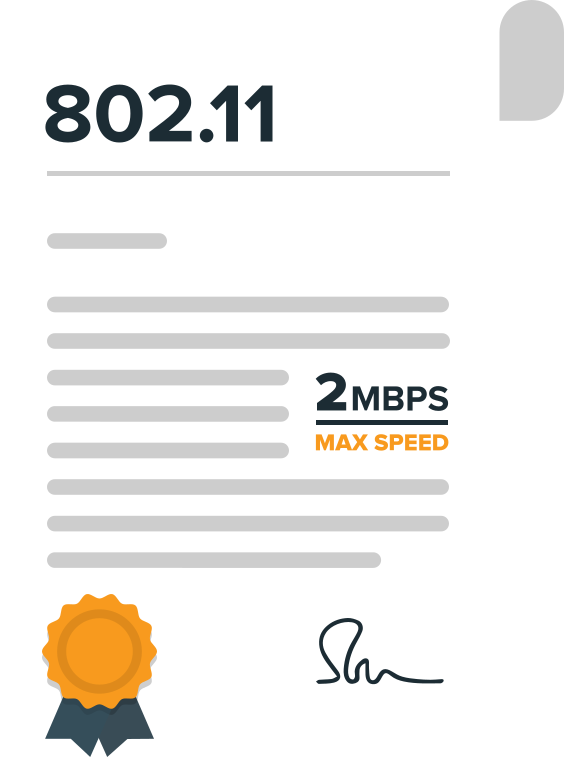
802.11 Protocol
The first version of the 802.11 protocol is released, providing up to 2 Mbps link speeds.
1998
MobileStar Hotspots
MobileStar, a wireless Internet Service Provider, is founded by Mark Goode and Greg Jackson. Mark Goode coins the term “hotspot”, and MobileStar becomes the first company to provide WiFi hotspots in airports, hotels, or coffee shops, signing contracts with American Airlines, Hilton Hotels, and Starbucks.
1999
WiFi Alliance
The WiFi Alliance, a nonprofit trade association working for universal compatibility and quality user experience, is formed. They hold the WiFi trademark and certify products for interoperability.
1999
Apple AirPort
Using technology from Lucent, Apple introduces a WiFi slot in its new iBooks, calling it "AirPort." The iBook was the first consumer computer to have integrated WiFi capability. Apple releases its AirPort Base Station for home WiFi use at the same time.
1999
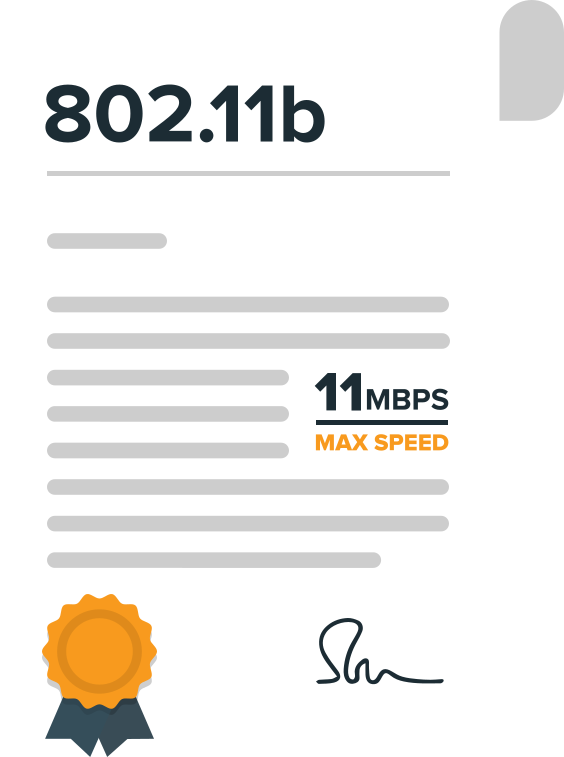
802.11b Protocol
The 802.11b standard is approved, allowing 11 Mbps link speeds on the 2.4Ghz frequency.
2000
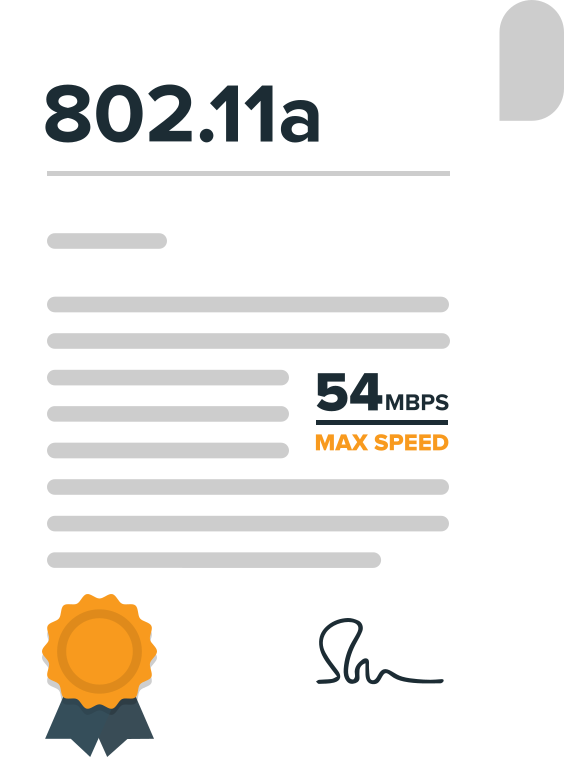
802.11a Protocol
The 802.11a standard is approved a month after 802.11b. It offers faster speeds than 802.11b (upto 54 Mbps) and uses the 5Ghz frequency. Because the necessary hardware is more expensive and the signal range is weaker, it begins to fall behind in popularity.
2003
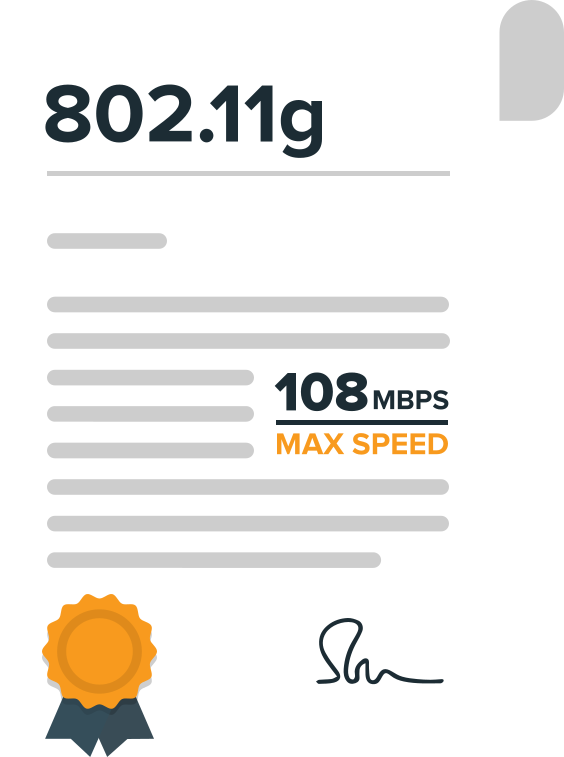
802.11g Protocol
The 802.11g standard is released, combining the faster speeds and distance coverage of the earlier versions, offering up to 54 Mbps. Proprietary extensions to the standard applied to routers and adapters can allow speeds of up to 108 Mbps.
2003
Spectrum Increase
World Radio Conference allocates an additional 455 MHz of radio spectrum in the 5GHz area for wireless access devices.
Radio Spectrum
5GHz
+455MHz
2003
Calypso C1250i
The Calypso Wireless C1250i phone is announced. It’s the first phone to allow both cell phone and WiFi VoIP calls.
2004
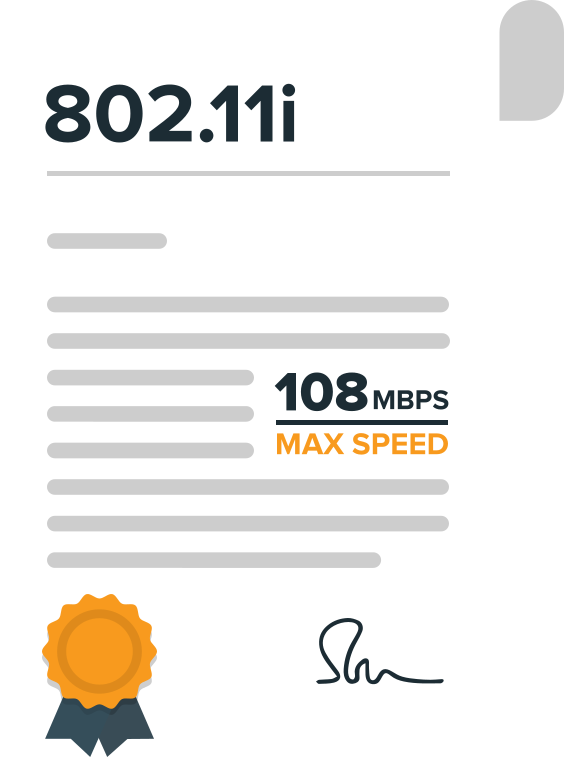
802.11i Protocol
WiFi 802.11i is approved, specifying security mechanisms for wireless networks.
2005
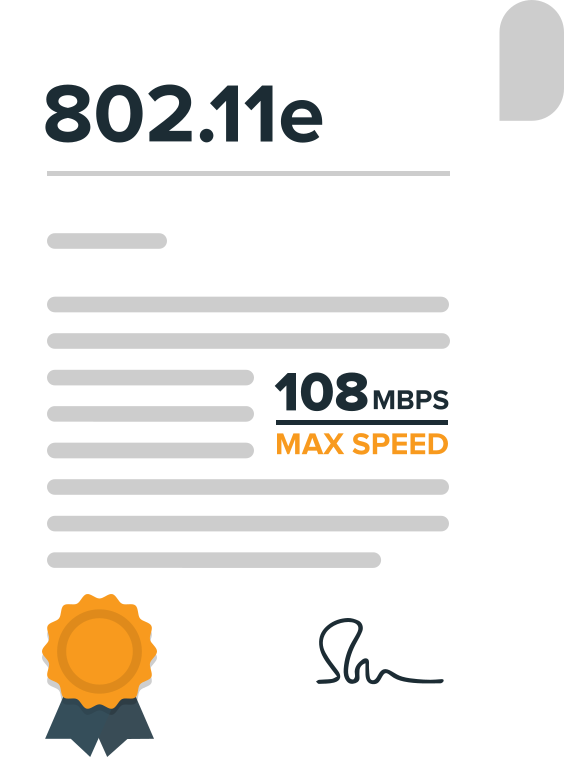
802.11e Protocol
WiFi 802.11e defines Quality of Service enhancements which become critical to the performance of Voice over Wireless LAN and multimedia streaming.
2005
100 Million Chipsets
WiFi chipset shipments top 100 million annually.
100 Million Chipsets Anually
2009
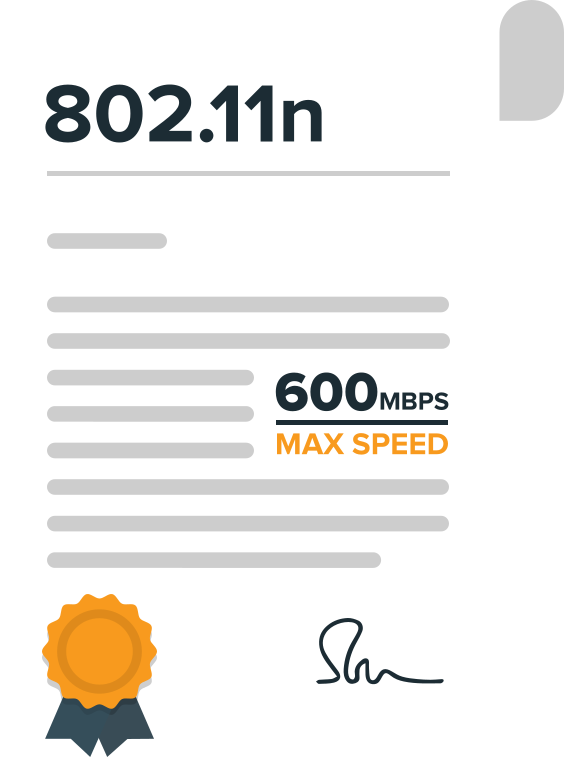
802.11n protocol
WiFi 802.11n is finalized, allowing both 2.4GHz and 5GHz radio bands to be used with simultaneous dual band routers, and reaching maximum speeds of 600 Mbps.
2009
1 billionth Chipset
The 1 billionth WiFi chipset is sold.
1 Billionth Chipset Sold
2009
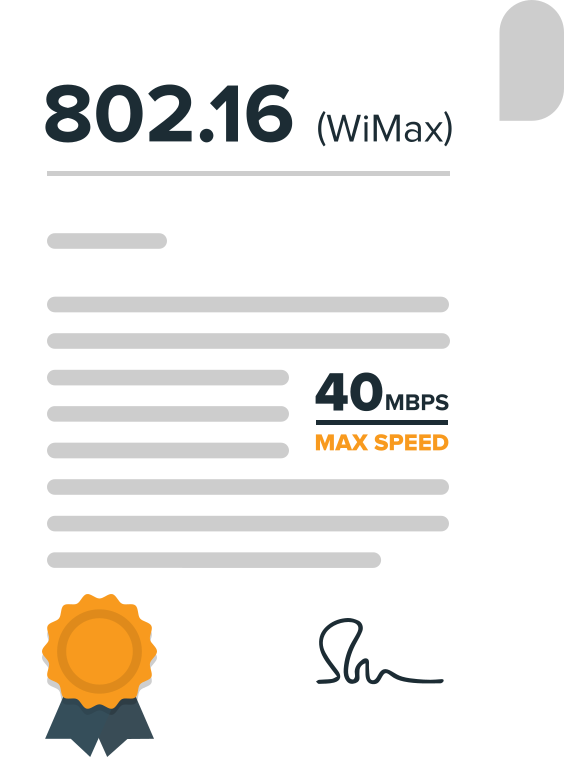
802.16 WiMax protocol
The IEEE 802.16 standard for wireless broadband is approved. It is commercialized under the name WiMax.
2009
CSIRO’S Lawsuit
Australia’s Commonwealth Scientific and Industrial Research Organization (CSIRO) wins a $200 million settlement from major companies including Nintendo, HP and Microsoft, in a lawsuit based on its 1996 patent.
2010
1,000,000 Hotspots
The number of WiFi hotspots around the world reaches 1 million.
2010
Spectrum Increase 2
President Barack Obama, in response to the FCC’s proposed National Broadband Plan, signs a memorandum committing to freeing up 500 MHz of spectrum for the wireless industry.
Radio Spectrum
WiFi
+500MHz
2012
CSIRO’S Lawsuit 2
(CSIRO) receives a further $229 million settlement in its patent cases. It is estimated that total settlements of over $1 billion may be expected in coming years.
2014
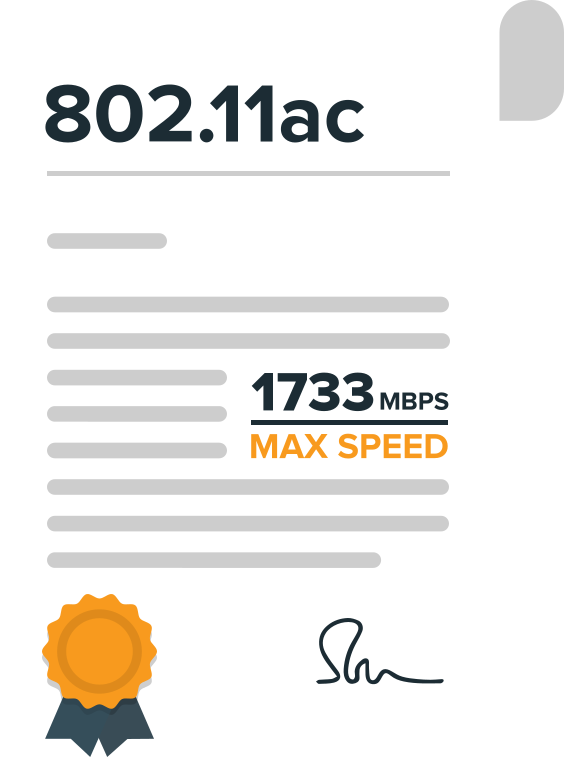
802.11ac protocol
The 802.11ac standard is approved, offering potential speeds of 1733 Mbps in the 5GHz band.
2014
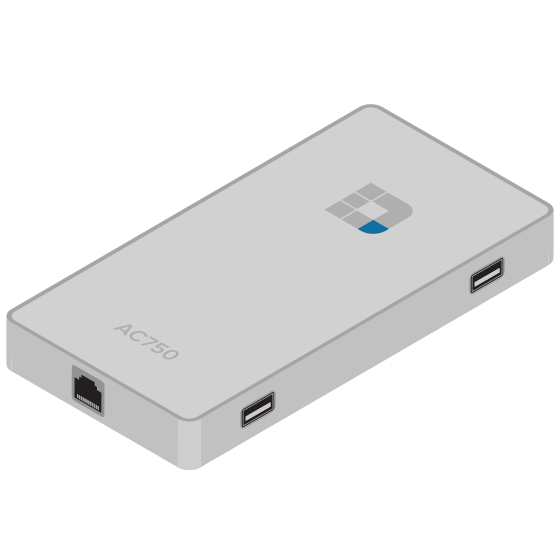
802.11ac Router
D-Link releases the first portable 802.11ac router.
2015
70,000,000 Hotspots
It is estimated that there are nearly 70 million WiFi hotspots worldwide.
2016
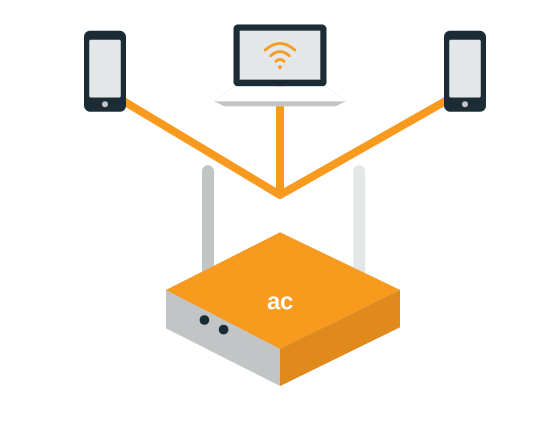
802.11ac Wave 2
Wi-Fi Alliance expands 802.11ac certification with multi-user MIMO, letting a router send data to several devices at once. Support for 160 MHz channels and four spatial streams gives busy networks more room to grow.
2016
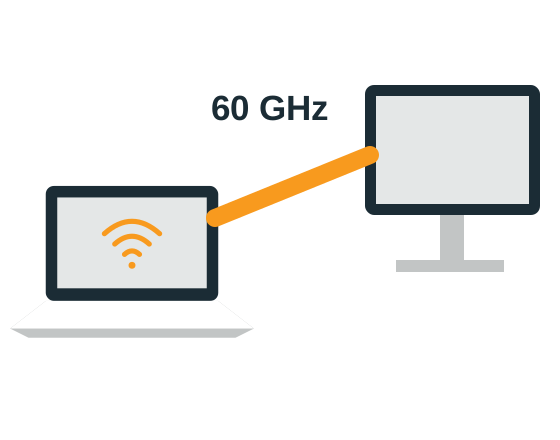
WiGig Arrives
Wi-Fi CERTIFIED WiGig launches, bringing 802.11ad devices into an interoperability program. Using the 60 GHz band, WiGig delivers multigigabit connections over short distances, making wireless docking and high-speed transfers possible within a room.
2017
KRACK Discovery
Researchers disclose KRACK, a set of attacks against the WPA2 handshake. A nearby attacker can exploit vulnerable devices by forcing encryption keys to be reinstalled. Software patches become essential to protecting existing Wi-Fi networks.
2018
Whole-Home Mesh
Wi-Fi CERTIFIED EasyMesh introduces a common approach to networks with several access points. Compatible products from different vendors can work together, adjusting coverage and steering devices toward a better connection as people move around the home.

2018
WPA3 Security
Wi-Fi Alliance introduces WPA3. Its Personal mode uses Simultaneous Authentication of Equals to resist offline password guessing, while an optional 192-bit Enterprise security suite protects sensitive networks. Easy Connect also simplifies adding devices by scanning a QR code.
2018
A Simpler Name
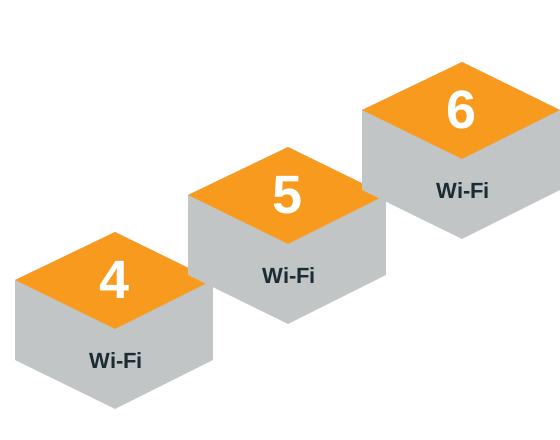
Wi-Fi gets generation numbers. The Wi-Fi Alliance names 802.11n “Wi-Fi 4,” 802.11ac “Wi-Fi 5,” and the upcoming 802.11ax “Wi-Fi 6.” The new labels make it easier to recognize which generation a device supports.
2019
Wi-Fi 6 Arrives
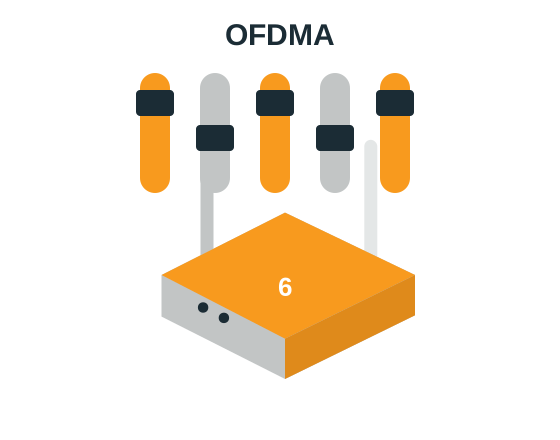
Wi-Fi CERTIFIED 6 launches for devices based on 802.11ax. OFDMA divides channels so several devices can share airtime efficiently, helping crowded networks. Target Wake Time schedules when devices wake to communicate, reducing power use for connected sensors and gadgets.
2020
The 6 GHz Band
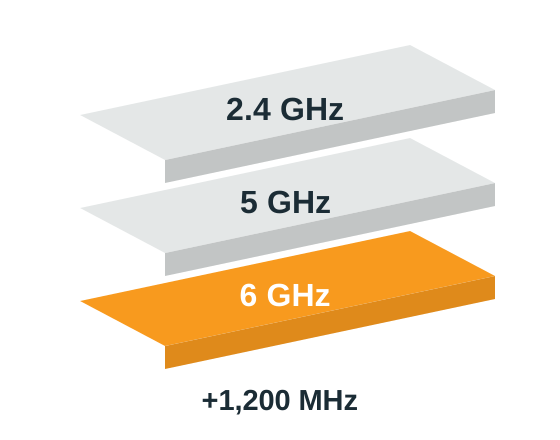
The U.S. FCC opens 1,200 MHz of spectrum in the 6 GHz band for unlicensed use. The decision makes room for wider channels and less congestion, setting the stage for Wi-Fi 6E. Spectrum availability differs around the world.
2020
OpenRoaming
The Wireless Broadband Alliance launches OpenRoaming, a federation built on Passpoint technology. Participating networks and identity providers let users connect securely and automatically across venues, reducing the need to repeatedly choose hotspots and enter login details.

2021
Wi-Fi 6E Arrives
Wi-Fi 6E certification begins, extending Wi-Fi 6 into the newly available 6 GHz band. Compatible routers, phones and computers gain access to additional 160 MHz channels, with WPA3 security and more space for demanding applications such as virtual reality.

2021
Long-Range HaLow
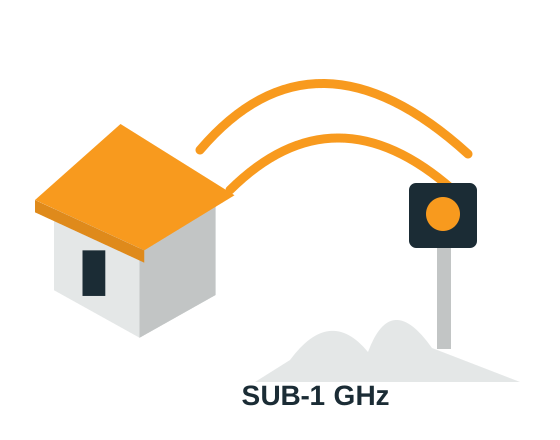
Wi-Fi CERTIFIED HaLow launches for 802.11ah devices. Operating below 1 GHz, it trades high data rates for longer range, better wall penetration and lower power consumption. The technology connects sensors, security systems and other Internet of Things devices.
2022
Wi-Fi 6, Release 2
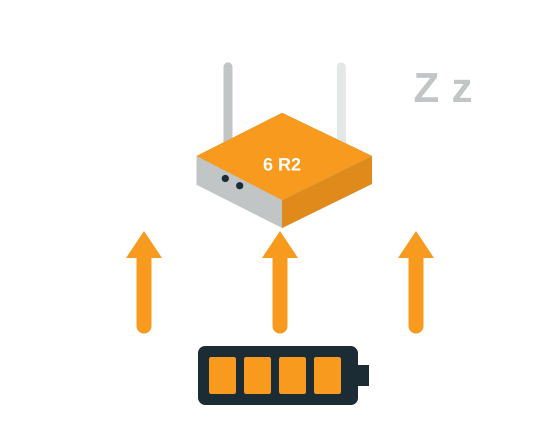
Wi-Fi Alliance expands Wi-Fi 6 certification with uplink multi-user MIMO, allowing several devices to upload at the same time. New power-management features help battery-powered devices sleep longer, improving efficiency across the 2.4, 5 and 6 GHz bands.
2022
A Connected Home
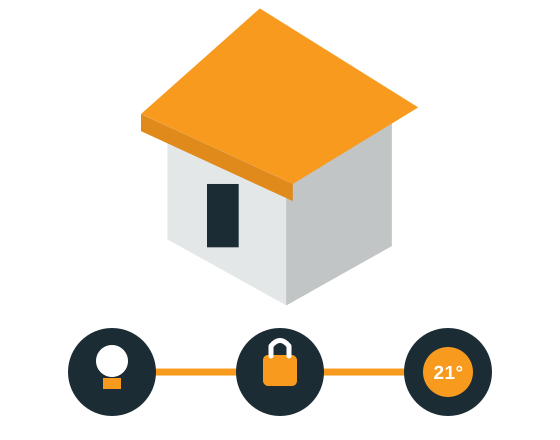
Matter 1.0 launches with a common language for compatible smart-home products. Running over Wi-Fi, Thread and Ethernet, it helps devices from different brands work together. Wi-Fi becomes a foundation for this shared ecosystem of lights, locks and appliances.
2023
Networking With Light
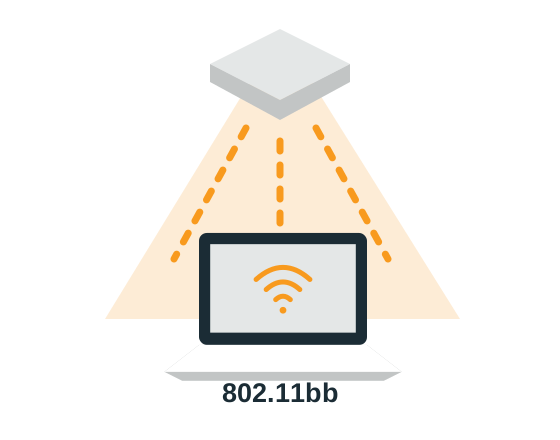
IEEE publishes 802.11bb, bringing light communications into the 802.11 family. Often called LiFi, it uses near-infrared light to carry data with compatible equipment. This optical alternative complements radio-based Wi-Fi in places where radio interference is a concern.
2024
Wi-Fi 7 Arrives
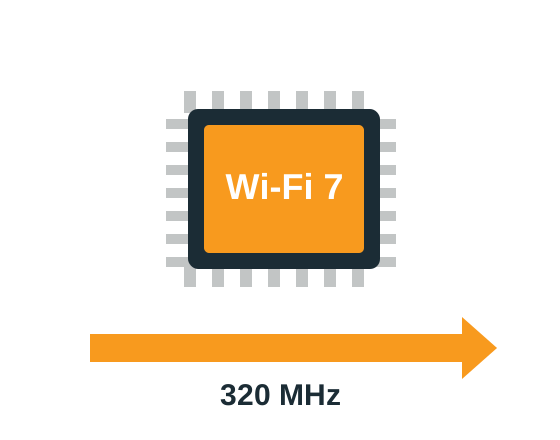
Wi-Fi CERTIFIED 7 launches with 320 MHz channels in the 6 GHz band where permitted, plus 4K QAM to carry more data per transmission. Based on 802.11be, it brings greater capacity for immersive entertainment, busy workplaces and demanding wireless applications.
2024
Multiple Links
Multi-Link Operation becomes a defining feature of Wi-Fi 7 certification. Compatible devices can send and receive data over multiple wireless links, increasing throughput and reducing delays. Connections become more flexible when one channel is busy.

2024
6 GHz Goes Further
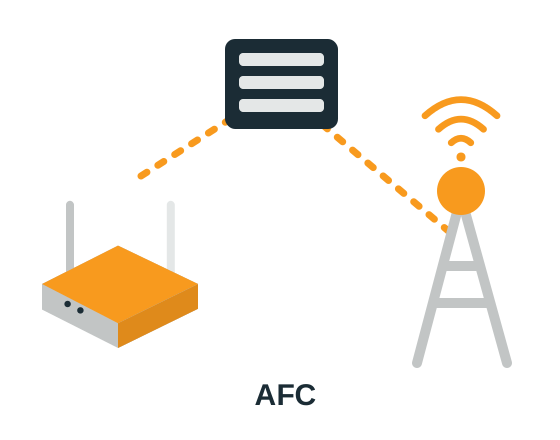
The FCC approves seven Automated Frequency Coordination systems for commercial operation. These systems check location and available frequencies to protect existing licensed users, enabling standard-power 6 GHz access points in the U.S., including outdoor deployments.
2025
Wi-Fi Positioning
IEEE publishes 802.11bk, extending Fine Timing Measurement to 320 MHz channels. Compatible equipment can use these wider signals for more precise distance measurements, advancing indoor positioning where satellite navigation struggles to reach.

2025
Wi-Fi Sensing
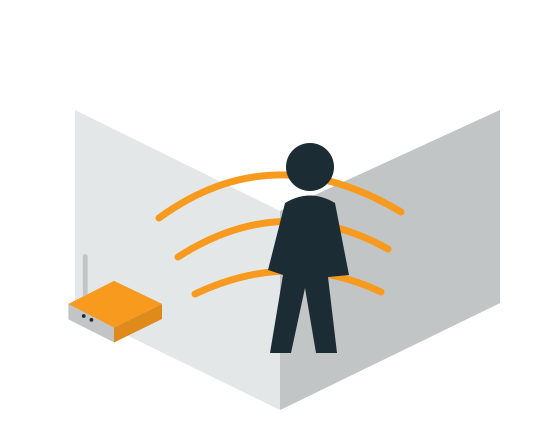
IEEE publishes 802.11bf, standardizing support for wireless LAN sensing. Changes in radio signals can reveal movement and presence, allowing compatible systems to sense their surroundings. Wi-Fi begins to serve as a sensing platform as well as a data connection.
2026
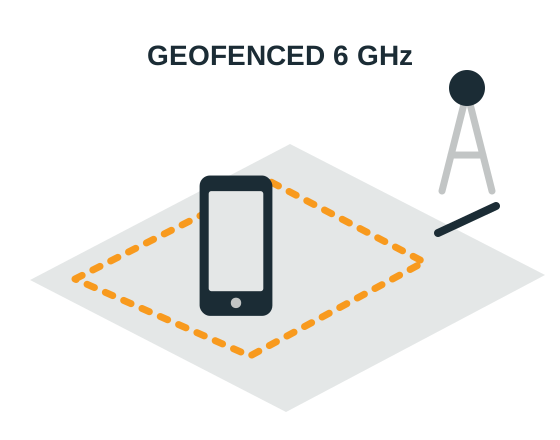
Outdoor 6 GHz
The U.S. FCC creates a geofenced variable power device class for the 6 GHz band. Location-based exclusion zones protect licensed services while allowing higher-power mobile outdoor connections, opening new possibilities for short-range hotspots, wearables and augmented reality.
2026
Wi-Fi 7, Release 2
Wi-Fi 7 Release 2 certification testing expands. In June, TÜV Rheinland Japan announces its authorized testing service, covering refinements to multi-link operation, interference handling and power management. The update builds on Wi-Fi 7’s existing high-speed foundation.
2026
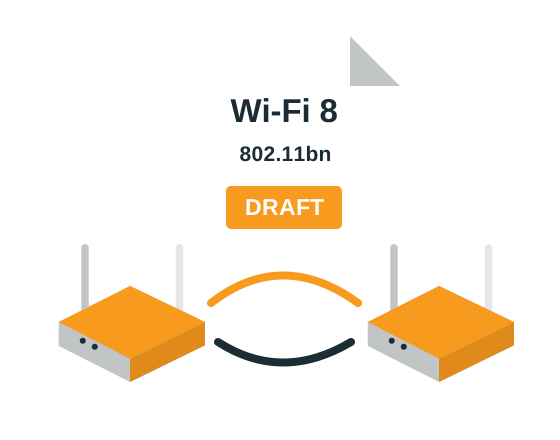
Toward Wi-Fi 8
Work advances on 802.11bn, the developing foundation for Wi-Fi 8. The focus shifts toward more reliable connections, lower delays and better coordination between access points. Draft 2.0 reaches working-group balloting in 2026; the standard is still under development.
2026
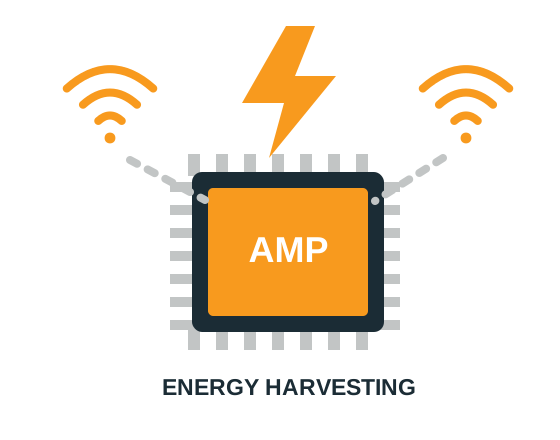
Ambient-Power Wi-Fi
IEEE continues developing 802.11bp for devices powered by harvested energy. A demonstration takes place during the July 2026 meetings, as work progresses toward a first balloted draft. The project aims to connect tiny, low-power devices and remains under development.
Conclusion
From the very first trickles of data to the rapids of Big Data we’re surfing today, WiFi has been a powerful force in the free flow of information around the world. The IEEE 802.11 Working Group is still going strong, continually uncovering better, faster, more reliable and more inspiring ways to bring us WiFi. It continues to mold the ways we work, learn, play, and interpret the world around us.